
Running a YouTube channel in Dubai means reaching a large audience while meeting high production standards and following the official rules for online promotion introducked on 1 February 2026. YouTube content creation in Dubai therefore rewards creators who treat their channel like a small production business. From understanding permits to planning professional filming days, having the right setup can make the process more organised and effective.
Why Dubai Works as a YouTube Base
DataReportal counted 11.3 million internet users in the UAE at the end of 2025, with online penetration at 99%. A UAE social media roundup built on that data puts YouTube’s reach at about 8.37 million users, behind TikTok, LinkedIn, and Facebook but ahead of Instagram. That’s a big audience for long-form video in a small country, and it explains why YouTube content creation in the UAE attracts everyone from solo educators to corporate teams. It also means standing out takes more than a phone and a ring light. Many channels use Shorts to attract new viewers and long-form videos to build loyalty, so plan both from the start rather than bolting one onto the other later.
The population is also multilingual and international, so a channel in English, Arabic, or both can find viewers locally and across the Gulf. The same roundup notes that Arabic-language content tends to earn stronger engagement among Emirati and regional Arab audiences, while English carries reach across an expat-heavy population. Dubai adds practical advantages as well: strong connectivity, a dense community of brands and agencies, and easy travel to other big Gulf markets when you need location footage or guests.
The Rules to Know Before You Monetize
From 1 February 2026, anyone publishing advertising content online from within the UAE needs an Advertiser Permit from the UAE Media Council, paid or unpaid. According to Middle East Briefing, the rule applies regardless of follower count. Residents need a trade or freelance license covering electronic media; the permit lasts a year and renews annually, and fees are waived for the first three years. Visiting creators apply for a separate short-term permit through a licensed agency.
Some categories, such as finance, health, or real estate, may need additional approval before ads run. Creators who only promote their own products through personal accounts may be exempt, but confirm that with the Council before assuming. Check the Media Council’s guidance on whether your permit number must appear in your channel description, and get licensing advice if your setup includes a company or a partner brand. Add a renewal reminder to your calendar, since the permit lasts a year. This is general information rather than legal advice.
A Production Workflow That Won’t Burn You Out
Channels that last tend to share three habits:
- Batching: film several videos in one day, then edit across the week instead of switching modes daily.
- Scripting the opening: write the first thirty seconds word for word, since that’s where viewers decide whether to stay.
- Sound first: viewers leave for bad audio faster than for average picture, so fix the microphone before the camera.
Check YouTube Studio analytics weekly. Average view duration and click-through rate are the two numbers that tell you whether your titles and openings are working, and small changes to either compound over a season.
Steady YouTube content creation in Dubai comes down to a repeatable weekly rhythm. One workable pattern is scripting on Monday, filming on Tuesday, editing on Wednesday and Thursday, and publishing on Friday. The exact days matter less than having them fixed, because a schedule you can repeat is one you’ll still follow in month six.
Dubai adds its own conditions. Summer heat makes outdoor B-roll a morning or evening job. Filming in public or commercial locations, and flying drones, can require permits from the relevant authorities, so check before you shoot rather than after a security guard asks. Keep a simple shot list for each location, and film the exterior footage in one trip so you’re not returning to the same place three times.
When a Studio Beats Your Living Room
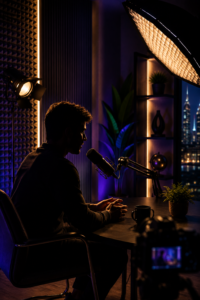
Talking-head videos, interviews, and video podcasts are where a studio earns its fee. You get treated acoustics, controlled lighting, and multi-camera angles that keep a long conversation watchable. The National reports that YouTube has recorded more than 1 billion monthly podcast views, and viewers of that format expect clean audio and more than one angle. If you want to build a studio podcast Dubai audiences can watch weekly, a professional setup removes most of the technical friction.
Interview-based channels benefit most. Instead of chasing three guests across three days, you can schedule them back-to-back in one afternoon, with the same lighting and audio each time, which keeps episodes visually consistent and makes editing faster.
It also feeds your other formats. A single ninety-minute session can yield a full episode and a batch of vertical clips for YouTube Shorts. Gulf Podcast Studios in Business Bay records in 4K and offers editing and social clips, so you can hand off post-production when it starts eating your week. That’s often the point where a studio podcast in Dubai viewers follow stops being a hobby and becomes a business, because hours saved on editing become hours spent on the next idea. When you visit, ask about lighting for different skin tones, whether a teleprompter is available, and how quickly clips can be delivered for Shorts. Those details separate a studio that suits creators from one that only suits interviews.
Conclusion
Dubai offers scale, but the permit rules and the quality bar mean channels do best when they’re run like businesses. Get licensed if you advertise, batch your filming, and spend on sound before picture. If you’d like to see how a shoot works, Gulf Podcast Studios can talk you through a first session, and a studio podcast Dubai audiences return to every week is far easier to sustain when the editing is handled for you.
FAQs
1. Do I need a license to post YouTube videos in Dubai?
Only if you publish advertising content. Since 1 February 2026, that requires a UAE Media Council Advertiser Permit, whether the promotion is paid or unpaid.
2. What equipment do I need to start?
A camera you’re comfortable with, one dynamic microphone, headphones, and soft lighting. Prioritize sound, because audio problems drive viewers away faster than average video.
3. Can I earn money from YouTube in Dubai?
Yes, through ads, sponsorships, and affiliate deals. Sponsored content triggers the permit requirement, so sort out licensing before you sign brand deals.
4. Should I make videos in English or Arabic?
It depends on your audience. English dominates UAE listening and viewing overall, while Arabic often earns stronger engagement locally and in Saudi Arabia.