
Children naturally want to help the people they love. They want to solve problems, protect others, and make things better. However, learning that even good intentions must be guided by thoughtful choices is an important part of growing up.
Children’s books have long helped young readers understand this idea by showing characters who face difficult decisions and experience the results of their actions. Stories provide a safe way for children to explore questions about responsibility, honesty, and consequences.
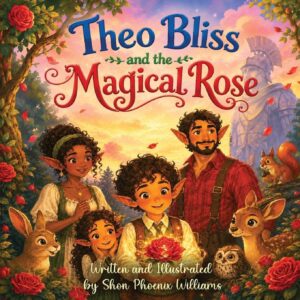
Books such as Theo Bliss and the Magical Rose explore this important lesson through a magical adventure. The story follows Theo Bliss, a young boy whose love for his family leads him to make a difficult choice. His journey shows that intentions can be kind and selfless, while actions can still create unexpected consequences.
Why Children Need Stories About Choices and Consequences
Every day, children make decisions. Some choices are small, such as sharing a toy or telling the truth. Others involve bigger questions, such as how to help someone who is struggling.
Understanding consequences helps children develop:
- Responsibility
- Problem solving skills
- Empathy
- Self awareness
- Better decision making
Children do not learn these lessons only through instructions. Stories allow them to see choices unfold through characters they care about.
When a character makes a decision, faces a challenge, and learns from the outcome, young readers begin to understand that actions have effects.
The Difference Between Good Intentions and Good Decisions
One of the most important lessons children can learn is that wanting to do something good does not always mean the choice itself is correct.
A child may want to protect a friend but tell a lie. They may want to help a family member but ignore important rules. Their motivation may come from kindness, but the method they choose still matters.
This is a complex idea, but stories make it easier for children to understand.
A character’s journey allows young readers to ask:
- Why did the character make that choice?
- What was the character trying to achieve?
- Did the decision create new problems?
- What could the character have done differently?
These questions encourage thoughtful decision making.
Theo Bliss and the Challenge of Making the Right Choice
In Theo Bliss and the Magical Rose, Theo faces a difficult situation after losing his father. His family’s happiness changes, and he sees his mother struggling emotionally. His older sister Tinsel also begins carrying additional responsibilities at home. August 25 – Theo Bliss and the …
Theo wants to fix the situation. He believes that a magical rose from King Malik’s garden could restore happiness to his family.
The magical roses are incredibly powerful, with each petal capable of granting wishes. However, taking a rose without permission is forbidden. August 25 – Theo Bliss and the …
Theo understands this rule, but he believes his reason is different from others who might steal. He does not want wealth or personal power. He wants to help his mother and sister.
This creates the central conflict of the story: a child making a choice based on love, but still facing the consequences of breaking an important rule.
Learning That Rules Exist for a Reason
Rules can sometimes feel frustrating to children, especially when they believe they have a good reason for breaking them.
However, rules often exist to protect people and maintain fairness.
In Theo’s world, the rules surrounding the magical roses exist because of their incredible power. Taking a rose without permission carries a serious consequence. Mrs. Taffy explains that anyone who steals a rose becomes connected to it, and as the rose weakens, so does the person who took it. August 25 – Theo Bliss and the …
This teaches an important lesson: powerful things require responsibility.
The same principle applies in everyday life. Children learn that having good intentions does not mean they can ignore boundaries.
Stories Help Children Understand Mistakes
Mistakes are an important part of learning. Children need opportunities to understand that mistakes do not define them, but they do provide opportunities for growth.
A strong children’s story does not simply punish a character for making a mistake. Instead, it explores what the character learns afterward.
Theo’s decision creates difficulty, but his journey also reveals his courage, love, and willingness to sacrifice for others.
The story shows that understanding a mistake is part of personal growth.
Teaching Responsibility Through Character Journeys
Character development is one of the strongest tools in children’s literature.
A character’s journey often follows a pattern:
A challenge appears
The character faces a problem they cannot ignore.
A decision is made
The character chooses how to respond.
Consequences follow
The character experiences the result of that choice.
Growth happens
The character learns something important.
This structure helps children understand that personal growth comes from experiences.
The Importance of Discussing Stories With Children
Parents and educators can make children’s books even more meaningful by discussing the choices characters make.
After reading a story, adults can ask:
- Was the character trying to help someone?
- Was the choice the best way to solve the problem?
- What happened because of that decision? What lesson can we learn?
These conversations encourage children to think beyond the story.
They begin to recognize that real life also involves choices, responsibility, and learning from experiences.
How Moral Stories Build Stronger Decision Making Skills
Children’s books that explore consequences help young readers develop important life skills.
They learn that:
- Actions affect others.
- Helping people requires thoughtful choices.
- Mistakes can become learning experiences.
- Responsibility is part of growing up.
Stories do not need to provide simple answers. Sometimes the most valuable lessons come from complicated situations where characters must balance emotions and responsibility.
Discover a Story About Courage, Love, and Responsibility
Stories about choices and consequences remain powerful because they reflect real experiences children encounter while growing up.
Theo Bliss and the Magical Rose presents a meaningful fantasy adventure where a young boy learns that love, courage, and responsibility must work together. Theo’s journey encourages readers to think about how their choices affect themselves and others.
Final Thoughts
Children’s books about choices and consequences teach lessons that remain valuable throughout life. They help young readers understand that good intentions are important, but thoughtful actions matter too.
The strongest stories do not show perfect characters. They show characters who make decisions, face challenges, and grow from their experiences.
Through these stories, children learn one of life’s most important lessons: every choice has meaning, and every experience can become an opportunity to learn.