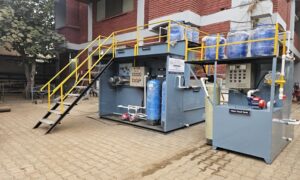

Industrial growth is a key driver of economic development, but it also generates large volumes of wastewater containing harmful pollutants. This wastewater, known as effluent, must be treated before being discharged into the environment. An Effluent Treatment Plant is a specialized system designed to treat industrial wastewater and remove contaminants to meet environmental discharge standards. In India, where industrialization is rapidly expanding, ETPs have become mandatory for many sectors to ensure environmental protection and regulatory compliance.
What Is an Effluent Treatment Plant?
An Effluent Treatment Plant is an engineered system used to treat wastewater produced by industries such as pharmaceuticals, textiles, chemicals, food processing, tanneries, power plants, and refineries. Industrial effluents often contain high levels of BOD, COD, suspended solids, oils, grease, heavy metals, toxic chemicals, and colour. The main objective of an ETP is to remove or reduce these pollutants so that the treated water can be safely discharged or reused.
Why Is an Effluent Treatment Plant Necessary?
ETPs are essential for several important reasons:
- Environmental Protection: Prevents pollution of rivers, lakes, soil, and groundwater
- Legal Compliance: Meets discharge norms set by CPCB and SPCBs
- Public Health Safety: Reduces toxic exposure to humans and ecosystems
- Water Reuse: Enables reuse of treated water in industrial processes
- Sustainable Industrial Growth: Supports eco-friendly and responsible operations
What Are the Main Sources of Industrial Effluent?
Industrial effluent is generated from a wide range of sectors, including:
- Pharmaceutical manufacturing units
- Textile dyeing and processing industries
- Chemical and petrochemical plants
- Food and beverage processing units
- Paper and pulp industries
- Tanneries and leather industries
- Power plants and refineries
How Does an Effluent Treatment Plant Work?
The working of an ETP involves multiple treatment stages, each targeting specific pollutants:
- Preliminary Treatment
This stage removes large solids, debris, and grit using bar screens and grit chambers. It protects downstream equipment from damage and clogging.
- Primary Treatment
In primary treatment, effluent flows into equalization and primary settling tanks. Heavy suspended solids settle at the bottom, while oils and grease are skimmed from the surface. This stage helps stabilize effluent flow and load.
- Chemical Treatment
Chemical treatment is used to remove dissolved pollutants, heavy metals, and color. Coagulants and flocculants are added to destabilize contaminants and form flocs that can be easily removed by sedimentation.
- Secondary (Biological) Treatment
Biological treatment uses microorganisms to break down organic matter. Common biological processes include:
- Activated Sludge Process (ASP)
- Moving Bed Biofilm Reactor (MBBR)
- Sequencing Batch Reactor (SBR)
This stage significantly reduces BOD and COD levels.
- Tertiary Treatment
Tertiary treatment further polishes the treated water by removing residual suspended solids, nutrients, and pathogens using sand filters, carbon filters, and disinfection methods such as chlorine or UV.
- Sludge Treatment
Sludge generated during treatment is thickened, dewatered, and safely disposed of or reused as per environmental guidelines.
What Are the Different Types of Effluent Treatment Plants?
ETPs are designed based on effluent characteristics, discharge norms, and reuse requirements. Common types include:
- Conventional ETP: Suitable for moderate pollution loads
- MBBR-based ETP: Compact and efficient for high organic loads
- SBR-based ETP: Batch process with high treatment efficiency
- MBR-based ETP: Advanced technology providing high-quality treated water
- Zero Liquid Discharge (ZLD) ETP: Recovers maximum water with no liquid waste discharge
What Is Zero Liquid Discharge and Why Is It Important?
Zero Liquid Discharge is an advanced effluent treatment approach where all wastewater is treated and reused within the plant, leaving no liquid effluent for discharge. ZLD systems are increasingly mandatory for water-intensive industries such as textiles, pharmaceuticals, and chemicals. ZLD not only ensures regulatory compliance but also reduces freshwater consumption and environmental impact.
Which Parameters Are Controlled in an ETP?
Key effluent parameters monitored and controlled include:
- pH
- BOD (Biochemical Oxygen Demand)
- COD (Chemical Oxygen Demand)
- TSS (Total Suspended Solids)
- TDS (Total Dissolved Solids)
- Heavy metals
- Oil and grease
What Are the Benefits of Installing an Effluent Treatment Plant?
Installing an ETP offers numerous advantages:
- Ensures compliance with environmental regulations
- Protects natural water resources
- Reduces water procurement costs through reuse
- Enhances corporate environmental responsibility
- Improves workplace and community safety
- Supports long-term industrial sustainability
What Role Does Kelvin Water Technologies Pvt. Ltd. Play in ETP Solutions?
Kelvin Water Technologies Pvt. Ltd. is a trusted name in India for designing and supplying advanced Effluent Treatment Plants for various industries. The company provides end-to-end ETP solutions, including design, manufacturing, installation, commissioning, and maintenance.
Kelvin Water Technologies specializes in:
- Customized ETP design based on effluent analysis
- Advanced treatment technologies like MBBR, SBR, MBR, and ZLD
- Energy-efficient and compact plant layouts
- Compliance with CPCB and SPCB norms
- Turnkey project execution and reliable after-sales support
What Challenges Are Faced in Effluent Treatment?
Some common challenges include:
- High variability in effluent composition
- Rising treatment and energy costs
- Sludge management and disposal
- Meeting increasingly strict discharge norms
What Is the Future of Effluent Treatment Plants in India?
The future of effluent treatment is moving toward automation, smart monitoring, water recovery, and zero-waste systems. Integration of IoT, advanced membranes, and energy recovery technologies will make ETPs more efficient and environmentally friendly. As regulations become stricter, industries will increasingly rely on advanced ETP solutions.
Conclusion
An Effluent Treatment Plant is a critical component of sustainable industrial operations. It ensures safe wastewater treatment, environmental protection, and regulatory compliance while enabling water reuse and conservation. With expert solution providers like Kelvin Water Technologies Pvt. Ltd., industries can implement reliable, efficient, and future-ready ETP systems that support responsible growth and a cleaner environment.