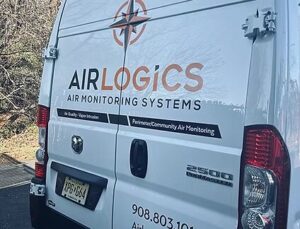

Real-time fenceline air monitoring helps project teams track air conditions near a site boundary. Construction, demolition, excavation, and cleanup work can release dust and airborne compounds that may move toward nearby homes or businesses. Projects may also need to monitor benzene and other volatile organic compounds (VOCs), based on the site history and materials present. The AQS-1 system collects ongoing air measurements, helping teams review changes beyond the active work area and make informed decisions based on recorded data. A clear monitoring plan helps show what is being measured, where readings are collected, and how the results will be reviewed.
Why the Site Boundary Matters
Air inside a work area may differ from the air near its edges. Dust and gases can travel beyond the point of activity, so measurements near the boundary provide useful information about nearby conditions. A fenceline monitoring plan helps identify where readings should be collected and which nearby locations may need attention. This is important for sites close to homes, shops, schools, or other places where people may be present.
For example, digging may raise dust levels, while work on soil with past chemical contamination may affect VOC readings. A monitor placed at a suitable boundary point can record changes as work continues. These results help teams understand possible off-site effects rather than relying only on visible dust or unusual smells. A smell cannot confirm the amount of a compound in the air, and some substances may have little or no noticeable odor. Air measurements provide data that can be checked and compared over time.
What the AQS-1 Can Measure
The AQS-1 is a portable, modular air monitoring system. Its available sensors can measure total VOCs, fine particles known as PM2.5, larger particles known as PM10, total suspended particles, ozone, nitrogen dioxide, and noise. The selected setup depends on the needs of the project. Not every unit will measure every listed parameter unless the required modules are included. This makes it important to define the monitoring goal before choosing the system configuration.
This range of measurements can help teams review more than one air concern at a time. For example, a demolition project may focus on airborne dust, while a site with suspected chemical vapors may also need VOC readings. The monitoring goal should guide sensor selection and placement. Clear planning helps ensure that the collected data answers the right question. Teams should also understand the limits of each sensor so they do not treat a general reading as a result for one specific compound.
How Ongoing Readings Help
A single air sample shows conditions at one point in time. Ongoing readings provide a broader record of how measurements change during site work. If dust levels rise during material removal, the data can help teams compare that change with the activity taking place. A similar review can help flag a change in total VOC levels that needs closer attention. Looking at a series of readings can help show whether a change was brief or continued for a longer period.
The AQS-1 uses a pumped sampling system to draw air through its sensor modules at a controlled flow. Its Automatic Baseline Correction adjusts the zero baseline every 60 seconds to help address sensor drift and cross-interference. These features support consistent data collection, but readings still need proper review and interpretation. Equipment setup, calibration, location, and site conditions can affect how the results should be understood. Teams should follow the monitoring plan and check unusual results before making decisions.
Put Monitoring Points in the Right Places
Good results depend on more than the equipment alone. Teams should review the site layout, nearby properties, likely sources of dust or vapors, and the stages of planned work before choosing monitor locations. A station may be placed near a boundary facing homes or other sensitive locations, based on the monitoring plan. The aim is to collect readings that help assess air conditions beyond the active work area.
The plan should also state which pollutants are being measured and how the results will be reviewed. As excavation or demolition moves across the site, the team may need to reassess the monitoring locations. Keeping records of reading times, monitor positions, and site activities makes later comparisons more useful. Clear records can also help explain why a reading changed and whether further checks are needed.
Turn Measurements Into Useful Site Information
Data becomes more valuable if teams can review it alongside the work schedule and site conditions. A rise in a reading does not, by itself, prove that a project caused the change. Other sources may affect the result. Teams should check unusual readings, follow the monitoring plan, and arrange further sampling or testing if the findings call for it. Careful review helps prevent a reading from being treated as proof without enough supporting information.
For outdoor air quality testing, the AQS-1 can support a site-specific program that tracks selected particles and total VOC levels over time. It is important to understand the limits of each sensor. A total VOC reading does not identify the amount of benzene on its own. Projects that need compound-specific benzene results require a suitable method designed for that purpose. Choosing the correct method helps ensure that the results match the question being asked.
Final Touches:
Real-time fenceline monitoring gives project teams a record of changing air conditions near site boundaries. The AQS-1 can support this work through portable deployment and selected measurement modules. To begin, define the pollutants of concern, choose suitable monitoring points, and set a clear process for reviewing results. A well-planned air pollution monitoring program helps teams assess possible off-site effects and decide whether further investigation is needed. The final report should explain what was measured, where the readings were collected, and what the results can and cannot show.
Ready to plan a fenceline monitoring project? Review the site conditions, identify the measurements required, and select a monitoring setup that matches the project’s goals.