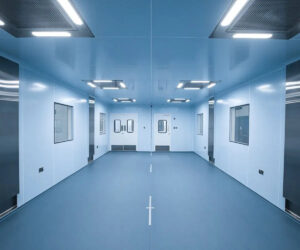

Ask a project manager who has delivered a pharmaceutical cleanroom in Singapore what surprised them most, and the answer is rarely the technology. It’s usually the small stuff: a humidity swing in the afternoon, a gowning room that turned out too tight, a validation protocol written three weeks too late.
Singapore has earned its place as one of Asia’s most trusted pharmaceutical manufacturing hubs. Biopolis, Tuas Biomedical Park and the wider Jurong cluster are home to global names and ambitious local players alike. That reputation comes with expectations. If you’re planning a facility here, the cleanroom is where your quality story either holds together or falls apart.
Start with the regulator, not the drawings.
It’s tempting to open with floor plans. Resist it.
In Singapore, the Health Sciences Authority (HSA) oversees good manufacturing practice, and its expectations align with PIC/S GMP standards. If you plan to export, you’ll also be thinking about the EU, the US or other markets, and each brings its own reading of the rules. Annex 1 of EU GMP, which covers sterile medicinal products, was heavily revised in 2022 and puts real weight on contamination control strategy.
Here’s the practical takeaway: write your contamination control strategy before you finalise the layout. The strategy tells you where people, materials and air should move. The drawings should follow it, not the other way round. Teams that do it backwards usually end up paying for redesign.
Know your grades, and why they matter.
Pharmaceutical cleanrooms are classified in two overlapping ways. ISO 14644-1 sets out particle count classes, while GMP uses Grades A to D. Grade A is your critical zone, such as a filling line or an open-product area. Grade B typically surrounds it as the background environment. Grades C and D handle less critical stages.
A common mistake is to over-specify everything. A Grade B room where Grade C would do doesn’t make you safer. It makes you spend more on air handling, monitoring and gowning for years to come. Match the grade to the actual risk of the process, and be ready to justify your reasoning on paper.
The tropical factor
This is the part that catches overseas teams out. Singapore sits just north of the equator, with high humidity and warm temperatures all year. Your HVAC system isn’t just cleaning air. It’s constantly fighting the weather.
Dehumidification is a major load. Fresh air intake brings moisture in with it, and getting it down to a stable relative humidity range takes serious capacity. Pressure cascades between rooms must hold steady even when doors open and close, and condensation risks around ductwork and panels need thought at the design stage.
Get this wrong, and you’ll see it in your environmental monitoring data: drifting humidity, unstable pressures, and an HVAC team chasing alarms at 2 a.m. Good engineers treat the climate as a design input, not an afterthought.
Space is money here.
Land is scarce and expensive in Singapore, which pushes many facilities upward or into retrofits of existing buildings. That changes the cleanroom conversation in a few ways.
Modular cleanroom systems have become popular for good reason. They’re quicker to install, easier to reconfigure and generate less dust on site than traditional build methods. For a company expecting its product line to change, that flexibility is worth a lot.
Vertical layouts also need careful thought. Where do your air handling units sit? How do materials move between floors without breaking your flow logic? Sketch these paths early, because moving a pass-through hatch after installation is rarely cheap.
People are your biggest contamination source.
You can specify the best HEPA filtration money can buy, and a poorly trained operator can still undo it in seconds. Human beings shed skin cells and particles constantly, and no gown is perfect.
A sensible gowning room design makes the right behaviour the easy behaviour. Clear step-by-step zones, proper benches, mirrors, and enough room to change without brushing against walls all help. Training matters just as much. Operators who understand why the rules exist follow them more consistently than those who’ve simply been handed an SOP.
Singapore’s skilled labour market is competitive, so invest in your people early. Experienced cleanroom technicians and QA staff are hard to replace.
Validation is a project, not a checkbox.
Qualification usually follows the familiar sequence of design, installation, operational and performance qualification. Along the way you’ll run airflow visualisation studies, HEPA integrity tests, particle counts, recovery tests and pressure differential checks.
The trap is leaving this until the end. If your commissioning plan assumes everything passes the first time, your schedule is optimistic. Build in time for remediation, and bring your QA team in at the design stage, not at handover. Every issue found on paper costs far less than one found during a validation run.
Think about running costs, not just build costs.
A cleanroom is a long-term commitment. Air changes, filtration and monitoring consume a great deal of energy, and Singapore’s electricity isn’t cheap. Energy-efficient fans, variable air volume strategies where the grade allows them, and smart controls can lower your operating bill meaningfully over a decade. Sustainability goals, including alignment with the BCA Green Mark scheme, are also becoming part of the conversation for many facility owners.
Choose partners who’ve done it before
The best cleanroom projects share one trait: a team that has already made the expensive mistakes elsewhere. Look for partners who can show you completed pharmaceutical projects, explain their validation approach plainly, and talk honestly about what went wrong on past jobs. Be wary of anyone who promises a smooth ride with no trade-offs.
Read Also: Prefabricated Cleanroom Solutions in India
Final thought
A pharmaceutical cleanroom in Singapore is part engineering, part regulatory strategy and part daily discipline. Plan around the climate, respect the space constraints, design for the people who’ll work inside it, and treat validation as an early partner rather than a late hurdle. Do that, and the room will quietly do its job for years, which is exactly what a good cleanroom should do.