
Ask anyone who has built a conventional cleanroom in India, and you will hear the same story. The drawings were signed off in January, the civil work overran, the HVAC contractor waited on the wall finishers, and by the time validation started, the product launch had slipped by two quarters.
It’s a familiar pattern, and it is a big reason prefabricated cleanroom solutions are moving from “interesting option” to first choice across the country.
What “prefabricated” actually means.
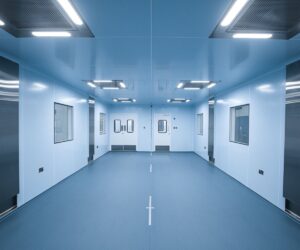
A prefabricated (or modular) cleanroom is built from factory-made panels, ceilings, doors, flooring and service integration components. These are manufactured under controlled conditions, then transported to site and assembled. Instead of bricks, plaster and paint, you get insulated wall and ceiling panels with smooth, sealed, easy-to-clean surfaces.
The important word is controlled. Panels made in a factory are cut and finished to tighter tolerances than anything achieved on a dusty construction site. Joints line up. Coving sits flush. That matters when your entire job is keeping particles out.
Why Indian manufacturers are choosing prefabricated cleanroom solutions
Several things are pushing demand at once.
Regulatory pressure. Pharmaceutical manufacturers face rising expectations around GMP compliance. India’s revised Schedule M, along with the audit requirements of export markets, has made facility quality a business-critical issue rather than a box-ticking exercise. A cleanroom that is designed and documented well from day one makes audits far less painful.
Growth in high-tech manufacturing. Semiconductors, medical devices, biotech, diagnostics, electronics assembly and food processing all need controlled environments, and many of these businesses are new to cleanroom construction. They want a predictable path, not a learning curve.
Speed to market. Whether you are launching a generic, scaling a vaccine line or setting up an assembly floor, time is money. Site preparation and panel manufacturing can happen in parallel, which shortens the overall programme considerably.
Real estate reality. Many Indian manufacturers are retrofitting existing buildings rather than building from scratch. Modular systems suit that perfectly, because they can be installed inside an existing shell with far less disruption.
The practical benefits
Faster installation. Because the components arrive ready to assemble, on-site work is quicker and cleaner. Less dust, less noise, less interference with neighbouring operations.
Predictable cost. Off-site manufacturing reduces the surprises that inflate conventional budgets, such as rework, material wastage and labour delays. You still need a proper scope, but variation is easier to control.
Flexibility. Business needs change. A modular cleanroom can be extended, reconfigured or even relocated when production lines evolve. Try doing that with a brick-and-plaster room.
Better surface performance. Quality panels offer non-shedding, chemical-resistant finishes that tolerate repeated cleaning and disinfection, which is exactly what regulated environments demand.
Easier validation. When wall systems, ceilings, lighting, filters and doors are designed to work together, qualification tends to run more smoothly. Fewer gaps and leakage points mean fewer nasty surprises during testing.
Who is using them
Pharmaceutical and biotech plants are the obvious users, but the list is wider than most people assume: medical device makers, hospital pharmacies and operating theatres, electronics and semiconductor assembly, food and nutraceutical packaging, research laboratories, and cosmetics production. Each has its own cleanliness class, pressure regime and airflow needs. That’s why “one size fits all” doesn’t work, even with prefabricated cleanroom solutions.
Mistakes worth avoiding
Prefabrication is not a shortcut around good design. These are the errors I see most often.
Starting with the panels instead of the process. Your cleanroom should follow your workflow, people movement, material flow and required classification under ISO 14644-1, not the other way round. Get the user requirement specification right first.
Treating HVAC as an afterthought. A cleanroom is really an air-management system with walls around it. Air changes, filtration, pressure cascades and return layouts decide whether you pass or fail.
Choosing on price alone. The cheapest quote often leaves out documentation, testing support or interface work. Compare scope line by line.
Ignoring after-sales support. Filters need replacing, doors need servicing, and requalification comes around every year. Ask who will still be answering the phone in year three.
Skipping documentation. Design qualification, material certificates and as-built drawings are what auditors ask for. If your supplier can’t produce them, that is a warning sign.
Choosing the right partner for prefabricated cleanroom solutions
Look for a team that can handle design, manufacture, installation and validation support under one roof, or at least coordinate them tightly. Ask to see completed installations in your sector. Ask how they handle site constraints like low ceiling heights or existing services. Most importantly, ask how they would help you if your requirements change halfway through. The answer tells you a lot.
Read Also: IPTV Affiliate Program, Channel List & USA Subscription Guide Now
The bottom line
Prefabricated cleanroom solutions won’t suit every project. Very large, highly specialised facilities may still need hybrid construction. But for a growing number of Indian manufacturers, modular is simply the more sensible route: faster, cleaner to build, easier to validate and far kinder to your timeline.
If you are planning a new facility or upgrading an existing one, start with a clear brief, involve your cleanroom partner early, and let the engineering lead the decision. Get those foundations right, and the walls take care of themselves.