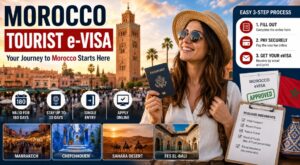

Booking a flight is the easy part. Between the moment a trip to Morocco gets confirmed and the moment feet actually touch down in Marrakech or Casablanca, there’s usually a small mountain of paperwork questions nobody quite plans for. The Morocco Tourist e-Visa answers most of them at once it’s the electronic entry permit built specifically for leisure trips, family visits, and short cultural stays, and the entire process runs online from start to finish.
What This Visa Actually Covers
The Tourist eVisa exists for one purpose: non-business travel. That includes sightseeing, visiting relatives already living in the country, and general recreation. It’s a single-entry document, staying valid for up to 180 days from the date it’s issued, though the actual stay inside Morocco is capped at 30 days within that window.
That distinction trips people up sometimes. Having six months of validity doesn’t mean six months of travel time once you land, the 30-day clock starts, regardless of how much runway was left on the visa itself.
What You’ll Need Before Applying
Two documents form the backbone of every application, no matter where you’re travelling from:
- A recent photo. It needs to meet specific formatting standards, so it’s worth checking the photo requirements before uploading anything.
- A passport copy. A clear, colour scan of the bio page, showing identity details and remaining validity.
Some nationalities have one more step. If yours falls into that group, you’ll also need either a residence permit valid for at least 180 days from an approved country, or a non-electronic multiple-entry visa valid for at least 90 days. Not everyone needs this it depends entirely on nationality, so checking the eligibility list before assuming either way saves confusion later.
What Immigration Wants to See on Arrival
The eVisa gets you through the door, but it’s not the only thing officers check when you land. Alongside the approved eVisa itself, be ready to present:
- A valid passport
- The residence card or sticker visa, if one was used during the application
- A return or onward travel ticket
- Proof of sufficient funds a minimum of seventy euros per person, per day, for the length of the stay
- Travel insurance, which isn’t mandatory but is worth having anyway
None of this is unusual by international standards, but travellers who assume the eVisa alone is enough sometimes get caught off guard at the counter.
How the Application Actually Works
Three stages carry the whole process from start to finish. First, the online form gets filled out completely, with every detail name, passport number, travel dates matching the passport exactly. Second, the visa fee gets paid by card, after which the application enters review. Most decisions land within a matter of days. Third, once approved, the eVisa arrives by email and gets printed for presentation on arrival.
Simple in theory. In practice, the details matter more than people expect — a passport number typed incorrectly or a blurry photo scan is often the difference between smooth approval and an unnecessary delay.
What It Actually Costs
The total price isn’t just the base visa fee. It combines that fee with a service charge, plus whatever extra applies if a faster processing speed gets selected. Three speeds are available:
| Processing Type | Timeframe | Extra Fee |
|---|---|---|
| Standard | 3–6 working days | No |
| Rush | 2–4 working days | Yes |
| Super Rush | 1–2 working days | Yes |
Anyone with flexible travel dates can stick with standard processing at no added cost. Those working against a tighter deadline pay more for a faster turnaround, though document accuracy still matters just as much regardless of speed chosen.
Keeping Track of Your Application
Once submitted, status can be checked using the order ID and passport number through the tracking system. Approved eVisas arrive by email or mobile notification. If an application comes back denied, the stated reason is worth reading carefully before attempting a new submission reapplying blindly with the same issue rarely fixes anything.
Where to Actually Go Once You’ve Landed
Morocco’s draw goes well beyond the paperwork, and a handful of places consistently top the list for first-time visitors.
Marrakech Medina delivers exactly what the postcards promise souks packed with spices and handcrafted goods, along with landmarks like the Bahia Palace and the Koutoubia Mosque anchoring the old city.
Chefchaouen, often called the Blue City, offers something quieter. Its blue-painted streets make for some of the most photographed corners in the country, and the pace there feels noticeably slower than the bigger cities.
The Sahara Desert is where a lot of trips peak. Camel treks across the dunes, followed by a night at a traditional Berber camp under an unusually clear sky, tend to be the memory people carry home.
Fes el-Bali rounds things out for anyone drawn to history. As Morocco’s best-preserved medieval city, it holds onto traditional tanneries and intricately tiled madrasas that feel genuinely untouched by modern renovation.
A Few Practical Habits Worth Adopting
Blending in a little goes a long way in Morocco. Modest clothing covering shoulders and knees is expected, particularly in rural areas and around religious sites. A simple “Salam Alaikum” works well as a greeting, and using the right hand for eating, greeting, or handing over items follows local custom.
Currency runs on Moroccan Dirhams, so carrying smaller denominations helps in local markets where change can be hard to come by. For transport, confirming a taxi fare upfront or asking for the meter avoids the haggling that catches tourists off guard. A few basic French or Arabic phrases, even just Shukran for thank you, smooth over everyday interactions more than most people expect.
Getting the Trip Started on the Right Foot
None of this needs to feel complicated once it’s broken down. Confirm eligibility, gather a clean passport scan and a properly formatted photo, pick a processing speed that matches the travel timeline, and the rest tends to move smoothly. Morocco’s appeal was never really about the paperwork anyway — it’s about what’s waiting on the other side of it.
Common Questions Before Booking
Can a stay be extended once the eVisa runs out?
Yes, through a local immigration office, though starting that process before the original visa expires matters waiting until the last minute isn’t advisable.
Is Morocco generally safe for tourists?
It’s a heavily visited country, and the usual travel precautions apply staying alert to surroundings covers most of what’s needed.
When’s the best time to visit?
Spring and autumn bring the mildest weather. Winter suits desert trips well despite cooler temperatures, while summer heat makes it a better fit for coastal destinations.
Does the Tourist eVisa cover travel to Western Sahara?
No. That region operates under a separate visa system entirely, so the standard eVisa doesn’t extend coverage there.