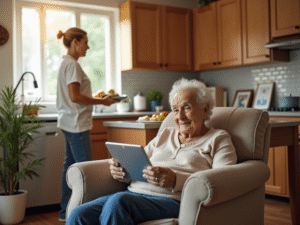

When families begin researching care options for an aging parent or loved one, they quickly encounter a wide range of terms — assisted living, home care, memory care, skilled nursing — but one factor matters more than any label: whether the care is actually personalized to the individual. Personalized elderly care services focus on the specific needs, routines, preferences, and personality of each senior, rather than applying a generic, one-size-fits-all approach. In this guide, we’ll explain what personalized elderly care really looks like, why it matters so much for quality of life, and how to identify a provider that genuinely delivers it.
What Does “Personalized” Elderly Care Actually Mean?
Personalized elderly care means tailoring every aspect of support — daily routines, meals, social activities, medical coordination, and even communication style — to the individual rather than treating every resident or client the same way. It’s the difference between a facility that runs on a fixed institutional schedule and a care setting that adapts to how a person has always lived their life.
True personalization typically includes:
- Individual care plans built around each person’s health needs, mobility level, and personal preferences
- Flexible daily routines that respect a person’s natural habits — when they like to wake up, eat, rest, or socialize
- Getting to know the person, not just their diagnosis — their history, interests, communication style, and what brings them comfort
- Adaptable support that changes as needs evolve over time, rather than forcing a move every time circumstances shift
- Meaningful relationships with caregivers, built through consistency and genuine attention rather than rotating, unfamiliar staff
This kind of individualized approach stands in contrast to larger institutional facilities, where staffing ratios and rigid schedules often make it difficult to give each resident this level of individual attention.
Why Personalized Care Matters So Much for Seniors
It preserves dignity and identity. Aging often comes with a loss of control — over health, independence, and daily choices. Personalized care actively works against that by respecting a person’s preferences and treating them as an individual, not a set of tasks to complete.
It improves physical and emotional well-being. Research consistently shows that seniors who feel genuinely known and respected by their caregivers experience better emotional health, reduced anxiety, and often better physical outcomes. Feeling like “just another resident” in a large, impersonal facility can contribute to isolation and decline.
It reduces the risk of missed needs. A generic care plan can overlook important details — a subtle change in appetite, a preference that reduces agitation, a routine that helps someone feel calm. Caregivers who know a resident well are far more likely to notice small changes early, before they become bigger problems.
It builds trust between families and caregivers. When care feels personal rather than transactional, families gain real confidence that their loved one is being looked after thoughtfully, not just processed through a system.
It supports independence rather than replacing it. Good personalized care doesn’t do everything for a senior — it identifies exactly where support is needed and encourages independence everywhere else, preserving as much autonomy as possible.
What Personalized Elderly Care Looks Like in Practice
Individualized Daily Routines
Rather than a fixed institutional schedule, personalized care adapts to how a person has always lived. If someone has always been an early riser who enjoys a quiet morning coffee before engaging with others, a personalized setting honors that rhythm rather than forcing them into a group schedule that doesn’t fit their natural preferences.
Home-Cooked, Individualized Meals
Nutrition needs and personal preferences vary widely among seniors. Personalized care considers dietary restrictions, cultural food preferences, and simple likes and dislikes — not just a standardized institutional menu. At Graceful Care Haven, residents enjoy home-cooked meals prepared with attention to individual needs, served in a warm, family-style setting rather than a cafeteria-style dining hall.
Consistent Caregiver Relationships
One of the biggest differentiators of personalized care is consistency. When the same caregivers work with a resident regularly, they build a genuine understanding of that person’s needs, moods, and preferences — something that’s far harder to achieve in facilities with high staff turnover or large resident-to-caregiver ratios.
Flexible, Individualized Support with Daily Activities
Personalized care means providing exactly the right level of assistance — no more, no less. Some residents may need significant help with bathing and dressing but want full independence with their daily schedule. Others may need medication reminders but prefer to manage most personal care themselves. A good care provider tailors support accordingly rather than applying a blanket level of assistance to everyone.
Coordination with Existing Healthcare Providers
Personalized care doesn’t happen in isolation from a person’s broader medical picture. Effective care providers coordinate with outside physicians, specialists, and existing treatment plans, ensuring continuity of care rather than starting from scratch.
Meaningful Social Engagement
Rather than generic group activities, personalized care considers what actually brings a specific person joy — whether that’s music, conversation, time outdoors, or simply quiet companionship. Supervised outings and social opportunities are most valuable when they reflect genuine interests rather than a one-size-fits-all activity calendar.
How to Identify Genuinely Personalized Elderly Care
Not every provider that claims to offer “personalized care” actually delivers it. Here’s what to look for when evaluating options for a loved one:
Ask about staff-to-resident ratios. Smaller, more intimate care settings are generally better positioned to provide truly individualized attention than large facilities with high resident counts per caregiver.
Ask how care plans are developed. A good provider will describe a thoughtful process — getting to know the individual’s history, preferences, and needs — rather than a generic intake form.
Observe how staff interact with current residents. During a visit, watch whether caregivers seem to know residents by name, understand their preferences, and interact warmly rather than transactionally.
Ask how the provider adapts as needs change over time. Personalized care should be able to flex as a person’s needs evolve, rather than requiring a disruptive move every time circumstances shift slightly.
Talk to current residents’ families, if possible. First-hand accounts of day-to-day experience often reveal far more than a facility’s marketing materials.
Visit at different times of day. A facility that looks great during a scheduled tour may feel very different during a regular weekday afternoon. Seeing daily life in action gives a more honest picture of the environment.
Why Smaller, Residential-Style Settings Often Deliver More Personalized Care
Larger care facilities can struggle to provide truly individualized attention simply due to scale — with dozens or hundreds of residents, even well-intentioned staff have limited time per person. Smaller, home-style residential care settings are often better positioned to deliver on the promise of personalization, simply because the caregiver-to-resident ratio allows for genuine relationships and closer attention.
At Graceful Care Haven, our residential home in Ellicott City, MD is intentionally structured around this principle. Rather than operating as a large institutional facility, we provide care in a small, family-style home where caregivers have the time and attention to truly know each resident — their routines, preferences, and personality — not just their care requirements. Our services and amenities reflect this approach, including individualized daily living assistance, home-cooked meals tailored to residents’ needs, companionship, and supervised outings built around genuine engagement rather than a rigid activity schedule.
Personalized Care Supports Independence, Not Just Assistance
A common misconception about elderly care is that more support automatically means less independence. In reality, well-executed personalized care does the opposite — it identifies precisely where a senior needs help and provides support only in those specific areas, allowing them to maintain independence and dignity everywhere else. This is a core part of our philosophy at Graceful Care Haven: assistance should strengthen a resident’s ability to live comfortably and confidently, not diminish their sense of self.
This might mean a caregiver quietly assisting with medication management while a resident continues to choose their own daily activities, maintain their personal routines, and make their own decisions about how they spend their time. It’s a fundamentally different approach from institutional care models that apply the same level of oversight to every resident regardless of individual capability.
Questions to Ask When Choosing a Personalized Elderly Care Provider
When evaluating options for a loved one, consider asking:
- How do you get to know a new resident’s history, preferences, and routines before they move in?
- What is your typical caregiver-to-resident ratio?
- How do you handle a resident’s specific dietary needs or preferences?
- How will you communicate changes in my loved one’s condition or needs?
- How does care adapt if my loved one’s needs increase over time?
- Can I speak with current residents’ families about their experience?
The quality of these answers often reveals far more about a provider’s actual approach to personalization than any brochure or website description.
Frequently Asked Questions
Is personalized elderly care more expensive than standard care? Not necessarily. Personalized care is more about the approach and philosophy of a provider than the price point — smaller residential settings can often provide more individualized attention at a comparable or even lower cost than large institutional facilities.
How is personalized care different from standard assisted living? While many assisted living communities describe themselves as personalized, the actual level of individualized attention often depends heavily on staffing ratios and facility size. Smaller, residential-style settings are typically better equipped to deliver genuinely personalized care.
Can personalized care adapt as my loved one’s needs change? Yes — a good provider builds flexibility into their care approach from the start, adjusting support levels as needs evolve rather than requiring a disruptive transition every time circumstances shift.
What’s the best way to evaluate whether a provider truly offers personalized care? Visit in person, observe how staff interact with current residents, ask detailed questions about their care planning process, and if possible, speak with families of current residents about their honest experience.
Experience Personalized Care at Graceful Care Haven
Every senior deserves care that reflects who they are, not just what they need assistance with. At Graceful Care Haven, we’ve built a warm, residential home in Ellicott City, MD around genuine, individualized attention — where caregivers truly know each resident and support their independence, routines, and dignity every day. Schedule a visit to see our home in person, or contact us to talk through your loved one’s specific needs.