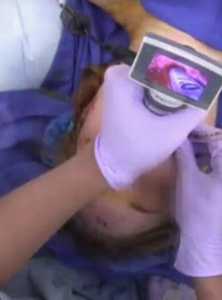

If you have ever been involved in airway management, you already know this truth: intubation looks simple on paper, but in real clinical conditions it is anything but predictable. The difference between first-attempt success and multiple attempts is not just technical skill, it is patient safety, time, and confidence under pressure. This is exactly where a GlideScope Training Course changes the game.
Let’s talk about how.
Why Intubation Success Rate Matters More Than We Think
When an airway is difficult, every extra attempt increases risk. Oxygen levels can drop quickly, visibility can worsen, and stress levels in the room rise sharply. Even experienced clinicians can struggle when anatomy is challenging or when conditions are not ideal.
A higher first-pass success rate is linked with:
- Reduced risk of hypoxia
- Lower airway trauma
- Fewer complications like aspiration
- Improved overall procedural efficiency
So improving intubation success is not just a technical goal, it is a patient safety priority.
What Makes GlideScope Different in Airway Management
Before understanding training impact, it helps to understand the tool itself. The GlideScope is a video laryngoscopy system that uses a camera at the blade tip to provide a clear indirect view of the vocal cords.
Unlike traditional direct laryngoscopy, you are not relying solely on line-of-sight alignment. Instead, you are guided by a real-time video feed.
That sounds easier, but here is the catch:
Using a GlideScope effectively is a skill, not just a switch-from-old-tool moment.
Without proper training, clinicians may still struggle with:
- Tube angulation and navigation
- Eye-hand coordination between screen and patient
- Over-reliance on the screen without proper blade positioning
- Difficulty in bougie or stylet handling
This is where structured learning becomes essential.
How a GlideScope Training Course Improves Success Rates
A well-designed GlideScope Training Course focuses on turning theoretical familiarity into muscle memory. It is not just about showing how the device works, but about building consistency in real scenarios.
Here is how it directly improves outcomes:
1. Builds Repeatable Technique Instead of Trial-Based Learning
Instead of figuring it out during emergencies, clinicians practice standardized steps. This reduces hesitation during real intubations.
2. Trains Hand-Eye Coordination Under Video Guidance
One of the biggest learning curves is adjusting to looking at a screen while working inside the airway. Training helps synchronize movement with visual feedback until it becomes natural.
3. Improves Difficult Airway Decision-Making
Courses often include simulated difficult airway scenarios, helping learners decide:
- When to switch strategies early
- How to avoid repeated failed attempts
- When to escalate without delay
4. Reduces Cognitive Load During Emergencies
When the steps are practiced, the brain spends less time processing “what next” and more time focusing on patient stability.
5. Enhances Familiarity With Adjunct Tools
Stylets, bougies, and tube shaping techniques are often included in training modules, which improves first-pass success significantly.
Skills That Make a Real Difference in Practice
A strong training program does not just teach device handling. It builds airway thinking.
Some core skills developed include:
- Optimizing blade insertion angle for best glottic view
- Controlling tube rotation during advancement
- Managing secretions or fogging on the camera
- Coordinating assistant support effectively
- Maintaining oxygenation strategies during attempts
These may sound small individually, but together they directly influence success rates in real clinical settings.
What Clinicians Often Notice After Structured Training
One of the most consistent outcomes reported after GlideScope training is improved confidence. But more importantly, that confidence is backed by measurable performance changes.
Clinicians often experience:
- Fewer second attempts during routine intubations
- Better handling of anatomically difficult airways
- Reduced stress during emergency airway management
- More efficient team coordination in critical situations
This is not about replacing traditional skills. It is about expanding capability when standard laryngoscopy becomes challenging.
Why Training Matters More Than the Device Itself
It is easy to assume that better technology automatically leads to better outcomes. In reality, technology only performs as well as the person using it.
A GlideScope can provide excellent visualization, but without training, visualization alone does not guarantee successful tube placement. The difference comes from structured repetition, scenario exposure, and guided feedback.
That is what transforms a device into a reliable clinical tool rather than just advanced equipment.
Conclusion:
A GlideScope Training Course improves intubation success rates by turning video laryngoscopy from a technical tool into a practiced clinical skill. It reduces variability, strengthens decision-making under pressure, and builds consistency in airway management performance.
In the broader context of Physician Airway Skill Training, it becomes a critical component in enhancing patient safety, improving first-pass success, and supporting clinicians in managing both routine and difficult airways with greater confidence and precision.