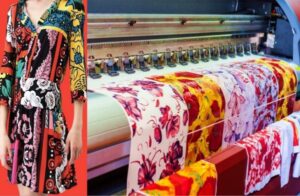

Digital printing on fabric is a modern textile printing method that transfers digital artwork directly onto fabric using specialized inkjet printers. Unlike traditional printing methods that often require screens, rollers, or engraved cylinders, digital systems can produce detailed designs from a computer file with minimal setup. This makes the technology useful for both small custom orders and larger textile production.
The growing use of Digital printing on fabric has changed how designers, clothing manufacturers, interior brands, and promotional businesses produce printed textiles. Complex patterns, photographs, gradients, and customized artwork can be reproduced with high detail. The method also supports shorter production runs, making it practical when businesses do not want to hold large amounts of printed inventory.
What Is Digital Fabric Printing?
Digital fabric is an inkjet-based process in which specially formulated textile inks are deposited onto a prepared fabric surface. The printer reads artwork from a digital file and places tiny ink droplets in precise positions to create the final image.
The printing process is different from printing on paper because fabric fibers absorb ink differently. The correct combination of fabric, ink, printer settings, pretreatment, drying, and finishing is necessary to achieve good color accuracy and durability.
Digital textile printers commonly use technologies such as piezoelectric printheads. These printheads control the placement and volume of ink droplets, allowing manufacturers to produce fine details and smooth tonal changes.
How Does Digital Printing on Fabric Work?
1. Design Preparation
The process begins with artwork created or edited using graphic design software. The file should have appropriate resolution, color settings, dimensions, and repeat specifications when the design is intended for continuous textile patterns.
Before printing, the artwork is usually processed through a Raster Image Processor, commonly called a RIP. The RIP converts the design into instructions that the printer can understand.
2. Fabric Selection and Preparation
The type of textile determines which ink technology should be used. Cotton, polyester, silk, wool, nylon, and blended fabrics have different chemical and physical properties.
Some fabrics require pretreatment before printing. Pretreatment helps control how the ink interacts with the fibers and can improve color strength, sharpness, and consistency.
3. Ink Application
The prepared fabric passes through the digital printer while printheads deposit microscopic droplets of ink. Multiple ink channels are combined to reproduce the required colors.
Unlike screen printing, there is no need to create a separate screen for every color. This is one reason digital printing works particularly well for detailed, multicolor artwork.
4. Drying and Fixing
After printing, the ink must be fixed to the fabric. The exact process depends on the ink chemistry.
Reactive inks commonly require steaming and subsequent washing. Pigment inks generally require heat curing. Dye-sublimation inks are transferred into polyester fibers through heat, where the dye changes from a solid to a gas and bonds with the fiber.
Proper fixation is important because insufficient curing or washing can result in poor wash resistance, color loss, or rubbing problems.
Types of Digital Fabric Printing
Reactive Printing
Reactive printing is widely used for natural cellulose fibers such as cotton. The dye chemically bonds with the fiber during the fixation process. It can produce strong colors and good wash durability when properly processed.
Pigment Printing
Pigment printing can be used on a broad range of textile materials. The pigment sits on the fiber surface and is held in place by a binder. It generally requires fewer wet-processing stages than reactive printing, which can make it attractive for certain applications.
Dye-Sublimation Printing
Dye-sublimation is particularly suitable for polyester and polyester-rich fabrics. The process produces vibrant images and is commonly used for sportswear, flags, soft signage, banners, and interior textiles.
Acid Printing
Acid dyes are commonly used for fibers such as silk, wool, and some polyamides. The process can produce bright colors and detailed patterns, making it useful for scarves, fashion fabrics, and other specialty textiles.
Major Benefits of Digital Printing on Fabric
Detailed and Complex Designs
Digital systems can reproduce fine lines, photographic images, gradients, and numerous colors without preparing individual screens for each design element.
Suitable for Short Production Runs
Traditional printing can involve significant setup work. Digital printing reduces much of that preparation, making it economical for samples, customized garments, limited collections, and small orders.
Faster Design Changes
A manufacturer can change a digital artwork file without producing new screens or cylinders. This helps designers test different colors, patterns, and layouts more efficiently.
Reduced Material Waste
Digital printing can reduce setup-related waste because production starts directly from a digital file. However, the overall environmental impact still depends on ink chemistry, pretreatment, washing, energy use, fabric choice, and production practices.
Personalization
Names, photographs, unique patterns, and customized graphics can be incorporated into textile products. This makes digital printing useful for personalized fashion, home décor, promotional products, and event materials.
Where Is Digital Fabric Printing Used?
Digital textile printing has applications across several industries.
Fashion: Dresses, shirts, scarves, skirts, jackets, and other garments can feature detailed custom prints.
Home textiles: Curtains, cushions, bedding, table coverings, and decorative fabrics can be produced with customized patterns.
Sportswear: Polyester-based digital printing is widely suited to team uniforms, cycling clothing, activewear, and performance apparel.
Advertising: Fabric banners, displays, backdrops, and flags can be printed with logos and promotional graphics.
Interior design: Designers can create custom wall fabrics, upholstery patterns, and decorative textile panels.
Key Factors That Affect Print Quality
The quality of a printed textile depends on more than the printer itself. Fabric construction is important because tightly woven and smooth fabrics generally provide better image definition than highly textured materials.
Color management is another critical factor. The colors displayed on a monitor may not exactly match the finished textile. Calibration, ICC profiles, ink characteristics, fabric properties, and printer settings all influence the final result.
Print resolution should also match the intended viewing distance. Extremely high-resolution artwork is not automatically better if the fabric application does not require it.
Common Challenges and Considerations
Digital printing offers flexibility, but it has limitations. The cost per meter can be higher than conventional printing for very large quantities, depending on the equipment, ink, fabric, and workflow.
Color matching can also require careful testing. A design that appears correct on a computer screen may look different after printing because textile substrates absorb and reflect color differently.
Fabric preparation is another consideration. Poor pretreatment, contamination, incorrect tension, or uneven fabric can cause banding, bleeding, inconsistent color, or other defects.
Businesses should also consider the complete production process rather than comparing printers only by advertised speed. Ink consumption, maintenance, pretreatment, fixation, washing, drying, labor, and fabric waste can all influence the final production cost.
Practical Benefits and Key Insights
For businesses considering digital textile printing, several practical points are worth remembering:
- Choose ink technology according to the fiber, not simply the desired color.
- Test the actual fabric before full production because different substrates can produce different results.
- Use color management when accurate brand or repeat colors are important.
- Check wash and rubbing performance for garments and frequently handled textiles.
- Calculate total production cost, including pretreatment and finishing.
- Keep artwork files organized so designs can be reproduced or modified efficiently.
- Consider order volume because digital printing is especially valuable when customization, design variety, or short runs are important.
Frequently Asked Questions
1. Is digital printing on fabric better than screen printing?
Neither method is universally better. Digital printing is particularly useful for detailed designs, photographs, gradients, customization, and short runs. Screen printing can be more economical for certain high-volume orders with simpler artwork.
2. Can digital printing be used on cotton?
Yes. Cotton can be digitally printed using suitable textile ink systems, including reactive and pigment technologies. The appropriate process depends on the desired quality, durability, equipment, and production requirements.
3. Does digital fabric printing last after washing?
It can provide good durability when the correct ink, fabric preparation, fixation, and finishing process are used. Washing instructions also affect the lifespan of the print.
4. Is digital printing suitable for small businesses?
Yes. It can be useful for businesses producing customized clothing, limited collections, home décor, samples, and personalized products because designs can be changed without extensive screen preparation.
5. What fabrics are suitable for digital printing?
Many textile materials can be digitally printed, including cotton, polyester, silk, wool, nylon, and blends. However, each material requires a compatible ink and processing method for reliable results.
Conclusion
Digital printing on fabric provides textile producers with a flexible way to create detailed, customized, and visually complex designs. Its direct-to-fabric workflow reduces some of the setup associated with conventional printing and makes short production runs more practical.
The best results depend on selecting the right fabric and ink technology, preparing the textile correctly, managing color accurately, and using appropriate fixation and finishing methods. While digital printing is not the ideal solution for every production volume or textile application, its combination of design flexibility, personalization, detail, and efficient sampling makes it an important technology in modern textile manufacturing.