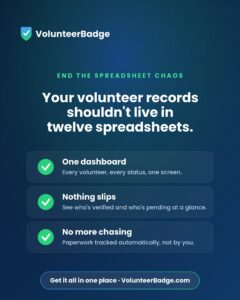

Operating a mission-driven organization relies heavily on the generosity, passion, and time of everyday people. Whether mentoring youth, organizing food drives, or managing community outreach, volunteers form the beating heart of the nonprofit sector. However, welcoming individuals into vulnerable environments introduces a critical operational responsibility: safeguarding participants, staff members, and community assets. Implementing reliable volunteer background checks for nonprofits helps organizations assess applicants, support safer volunteer placements, and manage potential risks while preserving a welcoming, trusting community atmosphere. Balancing thorough security with tight operating budgets remains one of the greatest hurdles for modern community leaders. Understanding how to navigate screening compliance, manage costs effectively, and protect organizational integrity ensures your mission thrives without compromise.
Why Nonprofits Need a Structured Screening Policy
Establishing a formal vetting protocol goes far beyond ticking regulatory boxes. It forms the foundational layer of an organization’s risk management strategy. When individuals step forward to assist with programs involving children, elderly populations, or sensitive community services, leadership has a legal and moral obligation to verify their background.
Without a clear screening framework, organizations expose themselves to severe liabilities, including negligent hiring and supervision claims. Furthermore, thorough screening safeguards organizational reputation. Donors and grantmakers increasingly expect rigorous governance standards before committing funds. A transparent vetting process signals that leadership takes safety seriously, bolstering public trust and securing long-term community support.
Understanding the Legal Landscape: FCRA Compliance
Navigating federal and state employment laws can feel overwhelming for resource-constrained organizations. In the United States, volunteer screening is governed by the Fair Credit Reporting Act (FCRA). Because third-party consumer reporting agencies compile these records, organizations must adhere strictly to statutory requirements.
- Written Disclosure: Before initiating any screening, organizations must provide a clear, standalone written disclosure informing the candidate that a background check will be conducted.
- Explicit Authorization: The applicant must sign a formal consent form authorizing the search. Bundling this authorization into general volunteer applications violates federal standards.
- The Adverse Action Process: If a report reveals records that lead an organization to deny a volunteer position, a multi-step adverse action procedure must be followed. This includes providing a copy of the report, a summary of consumer rights, and a window for the individual to dispute inaccuracies before a final decision is made.
Ignoring these compliance mandates can result in costly legal challenges, underscoring the importance of utilizing screening tools built with integrated regulatory guardrails.
Balancing Thoroughness and Budget Constraints
A persistent challenge for community organizations is the disparity between commercial screening costs and nonprofit budgets. Historically, vetting providers saddled small organizations with steep monthly platform fees, expensive multi-tier packages, and hidden charges for address history verification or adverse action documentation.
Because the vast majority of volunteer screenings yield completely clean results, paying exorbitant fees per report drains vital resources away from direct program execution. Modern screening solutions have disrupted this model by offering streamlined, cost-effective options—such as foundational national criminal checks priced around $5 per report—allowing organizations to allocate funds where they matter most: community impact.
Core Elements of an Effective Screening Workflow
An efficient volunteer vetting program integrates smoothly into your onboarding pipeline without creating friction for applicants.
- Digital Applications: Replace paper forms with secure digital portals that automatically capture required FCRA disclosures and secure e-signatures.
- Address History Verification: Cross-reference reported residential history against public records before incurring criminal search fees. Identifying address gaps early catches discrepancies instantly.
- Comprehensive Criminal Searches: Screen national sex offender registries, federal and county courts, and global watchlists to capture relevant history across jurisdictions.
- Automated Re-Screening: Track volunteer tenure and set automated reminders or alerts for annual renewals, ensuring long-term programs remain compliant over time.
Frequently Asked Questions
Do volunteers legally require background checks?
While federal law does not mandate screening for every volunteer role, state laws frequently require criminal background checks for nonprofits individuals working with children, healthcare patients, or vulnerable populations. Additionally, governing boards and insurance providers often mandate screening as part of their risk management policies.
How much do volunteer background checks typically cost?
Traditional screening agencies often charge between $25 and $80 per report, sometimes supplemented by monthly subscription fees. However, modern platforms designed specifically for community organizations offer national criminal checks starting around $5, making comprehensive screening accessible for organizations of any size.
What does a standard volunteer screening report include?
A standard screening typically includes a multi-jurisdictional national criminal database search, state and federal court record checks, sex offender registry searches across all 50 states, and a verified address history trace to confirm the applicant’s recent residences.
Are background checks compliant with FCRA guidelines for volunteers?
Yes. Any screening report compiled by a third-party consumer reporting agency must comply with the Fair Credit Reporting Act. This requires obtaining explicit written authorization from the volunteer and following the formal adverse action process if a report impacts their placement.
How long does it take to receive screening results?
Most digital screening solutions return results within 24 to 72 hours. Instant database hits appear immediately, while county-level verifications or specific court record lookups may require a short manual review window by compliance specialists.
Can volunteers be asked to pay for their own screening?
Yes. Many organizations invite volunteers to cover their screening costs during the application process through secure payment portals. While optional, this practice helps smaller charities eliminate screening expenses entirely while maintaining rigorous safety standards.