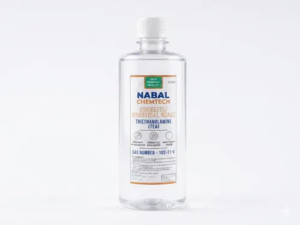

pH control is essential across water treatment, chemicals, pharmaceuticals, food processing, textiles, and other industrial operations where acidity or alkalinity can influence product quality, equipment performance, chemical reactions, and environmental compliance. pH adjusters—including acids, alkalis, and buffering agents—help maintain process conditions within required ranges. As India expands manufacturing and water-treatment infrastructure, precise chemical control is becoming increasingly important across both municipal and industrial applications.
A recent study by Markntel Advisor highlights that the India pH adjuster landscape was valued at USD 82 million in 2025, is estimated at USD 85 million in 2026, and is projected to reach USD 123 million by 2032, registering a CAGR of 6.35% during 2026–2032. Growth is being supported by rising demand from water treatment, food processing, pharmaceuticals, specialty chemicals, and India’s expanding manufacturing base.
Water Treatment Creates Consistent Demand
Water-treatment processes depend heavily on maintaining appropriate pH levels. Acidity and alkalinity can affect coagulation, disinfection, corrosion, scaling, and the effectiveness of other treatment chemicals. Municipal utilities therefore need reliable pH monitoring and adjustment during drinking-water production and distribution.
The Jal Jeevan Mission water-quality framework includes technical resources for drinking-water monitoring and treatment, demonstrating the importance of systematic water-quality management across India.
Industrial Wastewater Requires Chemical Control
Manufacturing facilities can generate wastewater with pH levels that are unsuitable for direct discharge or further treatment. Depending on the process involved, industries may need acids to reduce alkalinity or alkaline chemicals to neutralise acidic wastewater.
Central Pollution Control Board standards specify pH limits for several categories of industrial effluent, illustrating why neutralisation remains an important stage of wastewater management. Proper pH adjustment can also improve downstream biological treatment and help protect treatment equipment from corrosive conditions.
Drinking Water Standards Reinforce pH Management
pH also influences the acceptability and chemical stability of drinking water. Water that is excessively acidic can contribute to corrosion, while highly alkaline conditions may affect taste and interfere with treatment processes.
The Bureau of Indian Standards specifies a pH range of 6.5 to 8.5 for packaged drinking water in its packaged water requirements. Maintaining water within appropriate limits therefore requires accurate monitoring and, when necessary, controlled use of pH-adjustment chemicals.
Chemical Manufacturing Depends on Process Stability
Chemical production frequently involves reactions that perform efficiently only within defined pH ranges. Small deviations can influence reaction rates, product purity, precipitation, solubility, or final material characteristics.
pH adjusters are therefore used throughout specialty chemicals, coatings, detergents, industrial cleaners, and intermediate chemical production. Manufacturers may select sodium hydroxide, acids, carbonates, or specialised buffering agents according to process requirements and compatibility with other ingredients.
Food Processing Uses Acidity Control
Food and beverage producers rely on acidity regulators to manage taste, texture, preservation, processing behaviour, and product stability. Different formulations require carefully controlled pH conditions depending on ingredients and manufacturing methods.
Acids such as citric and phosphoric acid may be used to reduce pH, while alkaline compounds can increase it. Food-grade applications require controlled purity and formulation practices because pH adjustment directly influences the final product rather than only the surrounding production equipment.
Pharmaceuticals Require Precise Formulation Conditions
Pharmaceutical production is another technically demanding application for pH adjustment. Drug formulations, injectable products, buffers, cleaning systems, and manufacturing processes may require narrow pH ranges to maintain stability and intended product characteristics.
Regulatory documentation in India shows pharmaceutical formulations using buffering and pH-adjusting ingredients such as sodium hydroxide and phosphoric acid to achieve defined formulation conditions. This illustrates how precise pH management forms part of controlled pharmaceutical manufacturing.
Automated Dosing Improves Chemical Efficiency
Industrial users increasingly combine pH sensors with automated dosing systems rather than adjusting chemicals manually. Sensors continuously measure process conditions, while control equipment adds acid or alkali according to predefined limits.
Automation can improve consistency and reduce unnecessary chemical consumption. It can also prevent large pH swings caused by over-dosing, helping facilities maintain more stable treatment processes while controlling operating costs.
Safety Remains an Important Operational Consideration
Many common pH adjusters are corrosive chemicals that require appropriate storage, handling, protective equipment, and dosing systems. Concentrated acids and alkalis can damage equipment or create workplace risks if managed incorrectly.
Facilities therefore need chemical-resistant storage systems, suitable pumps, trained personnel, emergency procedures, and accurate monitoring. Product selection must consider not only adjustment performance but also transportation, storage, worker safety, and compatibility with surrounding materials.
Process Efficiency Will Shape Future Adoption
India pH adjusters are becoming increasingly connected with water treatment, wastewater management, pharmaceuticals, food processing, and specialty chemical manufacturing. Their value lies in maintaining controlled chemical environments where small changes in acidity or alkalinity can significantly affect process performance.
Future development will depend on industrial expansion, water-treatment investment, automated dosing, product purity, and safer chemical handling. As India strengthens both manufacturing and water infrastructure, dependable pH management will remain an important part of efficient industrial and environmental operations.