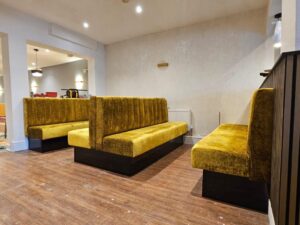

Picture a new banquette on opening night. Firm, colourful, spotless. Now picture it a year later, with a faded patch where the sun hits, a shiny strip along the front edge and a stubborn ring left by a glass of Malbec.
The cover you pick decides which version you end up with. Owners often ask What is the best fabric for restaurant seating in Leicester?, and while no single material wins everywhere, the choice gets much simpler once you know what to weigh up.
A Restaurant Is a Hard Place for Fabric
A sofa at home might see two people for a few hours each evening. A restaurant chair can see twenty different diners in a day, along with sauce, oil, cleaning spray and the occasional wet umbrella.
Fabric here has to put up with:
- Thousands of sit-and-slide movements every month
- Grease, coffee, wine and sticky fingers
- Daily wipe-downs with fairly harsh products
- Bright light from shopfront glazing
- Fire safety rules that domestic fabrics may not meet
Get the choice right and the seating earns its keep. Get it wrong and you’ll be pricing up reupholstery long before you’d planned.
Your Main Options
Faux Leather and Vinyl
Nothing is easier to clean. A damp cloth clears most spills in seconds, and today’s versions are much softer and better looking than the sticky vinyl many of us remember.
They suit cafés, diners, pubs and family restaurants with fast table turnover. On the downside, they can feel warm on a hot day and lack the richness of natural materials.
Real Leather
Leather ages beautifully. It softens, darkens slightly and tells a story, which is why steakhouses and hotel dining rooms have used it for generations.
It does cost more and needs regular conditioning. If your budget and maintenance routine allow for that, it is hard to fault.
Performance Fabrics
These are woven textiles built for hospitality, with finishes that repel liquids and resist staining. You get a warm, tactile surface without the fragility of ordinary upholstery cloth.
For many independent venues, this is the best all-rounder. It balances comfort, colour choice and durability.
Velvet
Velvet has had a huge revival, and it’s easy to see why. It looks rich and inviting under low lighting.
Ordinary velvet, though, marks and crushes easily. Insist on a contract-grade or performance version, and ask the supplier where it’s already in use.
What to Check Before You Commit
The Martindale Rub Test
This lab test measures how many abrasion cycles a fabric survives. For restaurant use, around 40,000 rubs is a sensible minimum, and heavily used seating deserves more.
If a supplier can’t tell you the rating, treat that as a warning sign.
Fire Safety
Upholstered furniture in commercial premises must comply with the Furniture and Furnishings (Fire) (Safety) Regulations. Ask for written confirmation, particularly if you’re sourcing fabric separately from the frames.
Colour, Pattern and Cleaning
Mid-tones and subtle patterns forgive far more than pale plain colours. Ask how each option copes with red wine, curry and cooking oil, and which cleaning products are safe to use on it.
Choosing by Type of Venue
- Cafés and casual restaurants: Faux leather or a tough performance weave keeps daily cleaning quick.
- Fine dining: Textured performance fabric or good leather feels more considered and stays comfortable through a long meal.
- Pubs and gastropubs: Buttoned leather-look banquettes suit the traditional feel and cope with busy weekends.
- Family restaurants: Patterned, stain-resistant covers hide the inevitable chaos.
Leicester’s dining scene is a good illustration of why one answer doesn’t fit all. A busy curry house on the Golden Mile faces very different wear from a quiet bistro in the city centre or a country pub out in the county.
Don’t Forget What’s Under the Cover
Even the toughest fabric can’t save a badly built seat. Foam that flattens or a frame that flexes will ruin the look within months.
Ask about foam density and joinery, not just the cover. Solid frames and high-resilience cushioning are what let good fabric do its job.
Talk to a Specialist Face to Face
Swatches on a screen rarely tell the truth. Holding a sample, checking it under your own lighting and asking how it copes with your cleaning routine will teach you more in ten minutes than an hour of browsing.
Upholstery firms such as JST Upholstery work with hospitality clients on new seating and reupholstery, so it’s worth asking any supplier for samples and examples of past projects.
Reupholstery is also worth considering. If your frames are sound, fresh foam and a new cover can transform tired seating for far less than replacing it.
Final Thoughts
So, What is the best fabric for restaurant seating in Leicester? For most venues, a hospitality-rated performance fabric or quality faux leather offers the best balance. Real leather suits those with the budget, and contract-grade velvet works where atmosphere comes first.
Whatever you choose, check the Martindale rating, confirm fire compliance and look at the construction beneath. Ask yourself What is the best fabric for restaurant seating in Leicester? for your room, your clientele and your cleaning routine, rather than for someone else’s.
Choose with the long term in mind, and your seating will look good well beyond opening night.