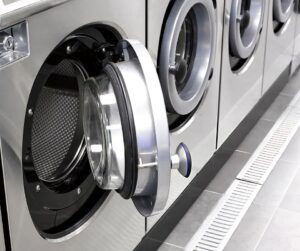

In Qatar, a hotel or hospital laundry runs on a tight schedule. Guest towels, bed linen, surgical gowns and patient bedding all have to be washed, dried and back on the floor within hours. The washer-extractor often gets the attention, but the drying tumbler is usually where the schedule is won or lost. A poorly matched dryer slows the whole line, wastes energy and wears out fabric early.
This guide explains how to choose a drying tumbler that works properly alongside your hotel laundry machines, whether you run a resort in Doha, a business hotel in Lusail or a hospital laundry in Al Wakrah.
Why the Drying Tumbler Matters as Much as the Washer
Washing removes soil, but drying decides how fast linen gets back into circulation and what condition it is in. A dryer that is too small creates a backlog of wet linen. One that is too hot shortens fabric life. One with weak airflow takes longer per cycle and raises your utility bill.
Think of washing and drying as one system. If your washer-extractors produce a certain load every cycle, the tumbler has to match that output. Otherwise one machine always waits for the other.
Step 1: Match Capacity to Your Washer Output
The most common mistake is buying a dryer without checking it against the washers. As a general rule of thumb, a tumbler’s drum volume should be about two to three times the volume of the washer drum feeding it, because wet linen needs room to open up and tumble freely.
A simple way to work it out:
- Note the capacity of your washer-extractor in kilograms.
- Add up how many washer loads you produce per hour at peak.
- Choose a tumbler, or several, that can dry that quantity in the same period.
For many properties, two medium dryers are more practical than one large one. If a single large machine breaks down, your whole operation stops. With two, you keep running at reduced capacity. Always confirm the exact ratio with the manufacturer, since it varies by model.
Step 2: Understand Your Linen Mix
Hotels and hospitals dry very different things.
Hotels mostly handle bath towels, bath mats, bed sheets, duvet covers, pillowcases, robes and restaurant linen. Towels are heavy and hold water, so they take the longest. Sheets dry quickly but wrinkle if left in the drum.
Hospitals handle bedding, patient gowns, scrubs, theatre linen and sometimes blankets. These items need thorough drying because moisture left in fabric can support microbial growth. Hospital linen also often needs a defined temperature to support hygiene, so your dryer must be able to hold the settings your infection control policy requires.
If your laundry serves both hotel-style and clinical linen, which can happen at hospitality-linked healthcare facilities, keep the processes separate and plan the equipment accordingly.
Step 3: Choose the Right Heating Source
Tumblers are typically available with electric, gas or steam heating. The right choice depends on what your building already has.
- Electric: Simple to install and suitable for smaller laundries. Running costs depend on your tariff, so ask for the machine’s rated power consumption before you decide.
- Gas: Often heats quickly and can lower running costs where gas supply is reliable. It needs correct ventilation and safe installation.
- Steam: Suits large facilities that already generate steam centrally, such as big hotels and hospital campuses.
Check what utilities your site offers and what your landlord or facility manager permits before you shortlist machines.
Step 4: Look at Energy Efficiency and Moisture Control
Dryers use a large share of a laundry’s energy. In Qatar’s hot climate, where cooling already pushes electricity use up, an inefficient dryer also adds heat to the laundry room and strains ventilation.
Features worth asking about:
- Moisture sensors that stop the cycle when linen is dry, instead of running to a fixed timer. This saves energy and prevents over-drying, which damages fibres.
- Good insulation to keep heat in the drum, not in the room.
- Efficient lint filtration so airflow stays strong throughout the day.
- Programmable cycles for towels, sheets and delicate items.
Linen that has been through a high-speed extraction in the washer arrives with less water, so it dries faster. A well-matched washer-extractor and tumbler pair therefore saves time and energy together.
Step 5: Plan for Qatar’s Climate and Site Conditions
Local conditions affect dryer performance more than people expect.
- Heat and humidity: Coastal humidity can slow drying and stress ventilation. Make sure the laundry room has proper exhaust ducting and enough make-up air.
- Dust: Fine dust is common, so check how easy it is to clean filters and keep the machine’s intake clear.
- Power supply: Confirm voltage and phase requirements match your building’s supply before ordering.
- Space: Allow clearance for loading, servicing and ducting. Cramped installations make maintenance harder and shorten machine life.
Step 6: Prioritise Build Quality and Daily Durability
A hotel or hospital dryer may run many cycles a day. Look for a robust drum, a durable bearing system and a strong frame. Stainless steel drums are generally preferred because they are smooth on fabric, resist corrosion and are easier to keep hygienic.
Ask about the machine’s intended duty. A dryer designed for light commercial use will not hold up in a hospital laundry that runs around the clock.
Step 7: Check Safety Features and Compliance
Dryers involve heat and lint, so safety matters. Look for:
- Overheat protection and automatic shut-off
- Easy-access lint filters and clear cleaning guidance
- Emergency stop functions
- Compliance with the electrical and safety standards that apply in Qatar
Hospitals should also check that the dryer supports their infection control procedures, and should confirm requirements with their own facility or compliance team. This article is general guidance and does not replace your hospital’s policies or local regulations.
Step 8: Evaluate After-Sales Support and Spare Parts
A dryer is only useful when it is working. In a hospitality or healthcare setting, downtime means linen shortages and unhappy guests or patients. Before buying, ask the supplier:
- Do you have a local service team in Qatar?
- How quickly can technicians respond?
- Are common spare parts kept in stock?
- What does the warranty cover, and for how long?
- Do you provide operator training?
A slightly cheaper machine with no local support often costs more over its lifetime.
Step 9: Calculate Total Cost of Ownership
The purchase price is only one part of the cost. Compare:
- Energy consumption per cycle
- Expected maintenance and spare parts
- Cycle time, since faster drying means more output per shift
- Fabric wear, since gentler drying extends linen life
- Installation and ducting costs
Request written quotes and ask for specifications in the same format so you can compare machines fairly.
Quick Checklist Before You Buy
- Does the tumbler’s capacity match your washer output?
- Is it suited to your linen mix, hotel, hospital or both?
- Does it use a heat source your building supports?
- Does it have moisture sensing and good insulation?
- Can your laundry room handle the ventilation and power needs?
- Is the build suited to daily heavy use?
- Are safety features included?
- Is local service and spare parts support available in Qatar?
- Have you compared total cost of ownership, not just price?
Final Thoughts
Choosing a drying tumbler is not about picking the biggest or the cheapest machine. It is about a
In Qatar, a hotel or hospital laundry runs on a tight schedule. Guest towels, bed linen, surgical gowns and patient bedding all have to be washed, dried and back on the floor within hours. The washer-extractor often gets the attention, but the drying tumbler is usually where the schedule is won or lost. A poorly matched dryer slows the whole line, wastes energy and wears out fabric early.
At Supershine Laundry, we look at washing and drying as one connected system. This guide explains how to choose a drying tumbler that works properly alongside your hotel laundry machines, whether you run a resort in Doha, a business hotel in Lusail or a hospital laundry in Al Wakrah.
Why the Drying Tumbler Matters as Much as the Washer
Washing removes soil, but drying decides how fast linen gets back into circulation and what condition it is in. A dryer that is too small creates a backlog of wet linen. One that is too hot shortens fabric life. One with weak airflow takes longer per cycle and raises your utility bill.
If your washer-extractors produce a certain load every cycle, the tumbler has to match that output. Otherwise one machine always waits for the other.
Step 1: Match Capacity to Your Washer Output
The most common mistake is buying a dryer without checking it against the washers. As a general rule of thumb, a tumbler’s drum volume should be about two to three times the volume of the washer drum feeding it, because wet linen needs room to open up and tumble freely.
A simple way to work it out:
- Note the capacity of your washer-extractor in kilograms.
- Add up how many washer loads you produce per hour at peak.
- Choose a tumbler, or several, that can dry that quantity in the same period.
For many properties, two medium dryers are more practical than one large one. If a single large machine breaks down, your whole operation stops. With two, you keep running at reduced capacity. Always confirm the exact ratio with the manufacturer, since it varies by model.
Step 2: Understand Your Linen Mix
Hotels and hospitals dry very different things.
Hotels mostly handle bath towels, bath mats, bed sheets, duvet covers, pillowcases, robes and restaurant linen. Towels are heavy and hold water, so they take the longest. Sheets dry quickly but wrinkle if left in the drum.
Hospitals handle bedding, patient gowns, scrubs, theatre linen and sometimes blankets. These items need thorough drying because moisture left in fabric can support microbial growth. Hospital linen also often needs a defined temperature to support hygiene, so your dryer must hold the settings your infection control policy requires.
If your laundry serves both hotel-style and clinical linen, keep the processes separate and plan the equipment accordingly.
Step 3: Choose the Right Heating Source
Tumblers are typically available with electric, gas or steam heating. The right choice depends on what your building already has.
- Electric: Simple to install and suitable for smaller laundries. Running costs depend on your tariff, so ask for the machine’s rated power consumption before you decide.
- Gas: Often heats quickly and can lower running costs where gas supply is reliable. It needs correct ventilation and safe installation.
- Steam: Suits large facilities that already generate steam centrally, such as big hotels and hospital campuses.
Check what utilities your site offers and what your facility manager permits before you shortlist machines.
Step 4: Look at Energy Efficiency and Moisture Control
Dryers use a large share of a laundry’s energy. In Qatar’s hot climate, where cooling already pushes electricity use up, an inefficient dryer also adds heat to the laundry room and strains ventilation.
Features worth asking about:
- Moisture sensors that stop the cycle when linen is dry instead of running to a fixed timer. This saves energy and prevents over-drying, which damages fibres.
- Good insulation to keep heat in the drum, not in the room.
- Efficient lint filtration so airflow stays strong throughout the day.
- Programmable cycles for towels, sheets and delicate items.
Linen that has been through high-speed extraction in the washer arrives with less water, so it dries faster. A well-matched washer-extractor and tumbler pair therefore saves time and energy together.
Step 5: Plan for Qatar’s Climate and Site Conditions
Local conditions affect dryer performance more than people expect.
- Heat and humidity: Coastal humidity can slow drying and stress ventilation. Make sure the laundry room has proper exhaust ducting and enough make-up air.
- Dust: Fine dust is common, so check how easy it is to clean filters and keep the machine’s intake clear.
- Power supply: Confirm voltage and phase requirements match your building’s supply before ordering.
- Space: Allow clearance for loading, servicing and ducting. Cramped installations make maintenance harder and shorten machine life.
Step 6: Prioritise Build Quality and Daily Durability
A hotel or hospital dryer may run many cycles a day. Look for a robust drum, a durable bearing system and a strong frame. Stainless steel drums are generally preferred because they are smooth on fabric, resist corrosion and are easier to keep hygienic.
Ask about the machine’s intended duty. A dryer designed for light commercial use will not hold up in a hospital laundry that runs around the clock.
Step 7: Check Safety Features and Compliance
Dryers involve heat and lint, so safety matters. Look for:
- Overheat protection and automatic shut-off
- Easy-access lint filters and clear cleaning guidance
- Emergency stop functions
- Compliance with the electrical and safety standards that apply in Qatar
Hospitals should also confirm that the dryer supports their infection control procedures with their own facility or compliance team. This article is general guidance and does not replace your hospital’s policies or local regulations.
Step 8: Evaluate After-Sales Support and Spare Parts
A dryer is only useful when it is working. In a hospitality or healthcare setting, downtime means linen shortages and unhappy guests or patients. Before buying from any supplier, including Supershine Laundry, ask:
- What service support is available for your location in Qatar?
- How quickly can technicians respond?
- Are common spare parts kept in stock?
- What does the warranty cover, and for how long?
- Is operator training provided?
A slightly cheaper machine with no reliable support often costs more over its lifetime.
Step 9: Calculate Total Cost of Ownership
The purchase price is only one part of the cost. Compare:
- Energy consumption per cycle
- Expected maintenance and spare parts
- Cycle time, since faster drying means more output per shift
- Fabric wear, since gentler drying extends linen life
- Installation and ducting costs
Request written quotes and ask for specifications in the same format so you can compare machines fairly.
Quick Checklist Before You Buy
- Does the tumbler’s capacity match your washer output?
- Is it suited to your linen mix, hotel, hospital or both?
- Does it use a heat source your building supports?
- Does it have moisture sensing and good insulation?
- Can your laundry room handle the ventilation and power needs?
- Is the build suited to daily heavy use?
- Are safety features included?
- Is service and spare parts support available for your site?
- Have you compared total cost of ownership, not just price?
Final Thoughts
Choosing a drying tumbler is not about picking the biggest or cheapest machine. It is about fitting the dryer to your washers, your linen and your site so the whole laundry runs smoothly. Start from your daily linen volume, match capacity carefully, pay attention to energy use and local conditions, and make sure support is available.
If you are upgrading your hotel laundry machines or setting up a new laundry for a hotel or hospital in Qatar, talk to the Supershine Laundry team. Share your linen volumes and requirements, and get advice on a washer and dryer combination that saves time, lowers costs and keeps linen in good condition for longer.
the dryer to your washers, your linen and your site so the whole laundry runs smoothly. Start from your daily linen volume, match capacity carefully, pay attention to energy use and local conditions, and make sure support is available nearby.
If you are upgrading your hotel laundry machines or setting up a new laundry for a hotel or hospital in Qatar, speak with an experienced supplier, share your linen volumes and let them recommend a setup. A well-planned washer and dryer combination saves time, lowers costs and keeps linen in good condition for longer.