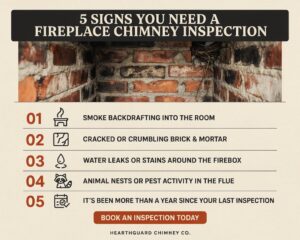

A fireplace can make a home warmer and more inviting, but it also needs regular attention to remain safe. Over time, chimneys can develop cracks, blockages, moisture damage, or a buildup of combustible material. Some problems are easy to spot, while others can remain hidden inside the chimney structure.
A fireplace chimney inspection can help identify these issues before they become expensive repairs or create a safety hazard.
But how do you know when an inspection is necessary? Here are five signs that it may be time to have your fireplace and chimney checked by a qualified professional.
1. You Notice a Strong or Unusual Chimney Odor
A noticeable smell coming from your fireplace, particularly when the fireplace is not being used, can indicate a problem.
One possible cause is creosote, a dark, combustible substance that forms when wood or other materials burn. Creosote can accumulate on the interior walls of a chimney. Depending on the amount and type of buildup, it may produce a strong smoky or tar-like odor.
Moisture can make the smell more noticeable. Rain and humidity may enter a chimney when the flashing, crown, cap, or other components are damaged or missing.
An odor does not automatically mean there is a dangerous amount of buildup, but it is a reason to investigate further.
A professional inspection can help determine whether the smell is related to:
- Creosote or soot buildup
- Excess moisture inside the chimney
- Animal nests or debris
- Damaged chimney components
- Poor ventilation or drafting
If the odor is persistent or suddenly becomes stronger, consider having the chimney inspected before using the fireplace again.
2. Smoke Enters the Room Instead of Going Up the Chimney
A properly functioning fireplace should direct smoke and combustion gases through the chimney and outside the home. If smoke repeatedly comes back into the room, something may be interfering with the chimney’s draft or ventilation.
Several issues can cause this problem. The chimney may be blocked by debris, leaves, or an animal nest. A damaged or improperly positioned chimney cap can also contribute to problems. In some cases, changes to the home—such as new insulation, exhaust fans, or other ventilation modifications—can affect how air moves through the house.
The design and condition of the chimney itself may also be a factor.
Smoke entering the living space should not simply be treated as an inconvenience. Wood-burning fireplaces produce combustion gases, including carbon monoxide, which is dangerous when it accumulates indoors.
Stop using the fireplace if it is producing excessive indoor smoke and have the system evaluated. Make sure your home also has functioning carbon monoxide alarms.
3. You Can See Cracks, Damaged Mortar, or Deterioration
Your chimney is exposed to rain, wind, temperature changes, and repeated heating and cooling. These conditions can gradually affect masonry and other components.
Look at the visible portions of the chimney for signs such as:
- Cracked or missing mortar
- Loose bricks
- Cracks in the chimney crown
- Damaged flashing around the roof
- Rust around the damper or other metal components
- Water stains near the fireplace
- Pieces of masonry inside the fireplace
Small cracks may not appear serious at first, but they can allow moisture to penetrate the chimney. Freeze-thaw cycles can make masonry deterioration worse in colder climates.
Some damage cannot be seen from the ground or from inside the fireplace. An inspection can provide a closer look at areas that are difficult for a homeowner to evaluate safely.
This is especially important when purchasing an older property. If you’re arranging a home inspection los angeles , for example, it is worth asking whether the property’s fireplace and chimney require a separate evaluation by a qualified chimney professional.
4. You Haven’t Had the Chimney Inspected in a Long Time
One of the simplest warning signs is also one of the easiest to overlook: you cannot remember the last time the chimney was inspected.
Chimneys do not necessarily show obvious symptoms when problems are developing. Buildup, deterioration, or hidden damage may progress gradually without affecting the appearance of the fireplace.
How frequently a chimney needs inspection depends on factors such as how often it is used, what type of fuel is burned, the chimney’s age and construction, and whether problems have previously been identified.
For homeowners who use their fireplace regularly, periodic professional evaluation can help identify changes before they become major issues.
An inspection may also be particularly appropriate when:
- You have recently purchased the home
- The fireplace has not been used for several seasons
- You have started using the fireplace more frequently
- The chimney has undergone repairs or modifications
- You recently experienced a chimney or house fire
- You notice changes in how the fireplace operates
A professional can recommend an appropriate inspection schedule based on the condition and use of the system.
5. You Find Signs of Water Damage
Water is one of the biggest threats to a chimney’s long-term condition. Chimneys are exposed to the elements year-round, and damaged flashing, crowns, caps, or masonry can allow water to enter.
Inside the home, you may notice signs such as:
- Brown or yellow stains around the fireplace
- Damp patches on walls or ceilings
- Peeling paint near the chimney
- A musty smell
- Crumbling masonry
- Rust on fireplace components
Water damage should not be ignored simply because the fireplace still works. Continued moisture exposure can damage masonry, metal components, surrounding roofing materials, and parts of the home’s interior.
A chimney inspection can help identify where water may be entering and whether additional repairs are needed.
What Does a Fireplace Chimney Inspection Check?
A professional inspection generally involves examining accessible parts of the fireplace and chimney for hazards, damage, and signs of deterioration.
Depending on the chimney and the level of inspection required, the professional may evaluate:
- The firebox – Looking for cracks, damage, and deterioration.
- The damper – Checking whether it operates properly.
- The chimney interior – Looking for obstructions, buildup, cracks, or other problems.
- The exterior masonry – Checking bricks, mortar, and the chimney crown.
- The roof connection – Examining flashing and areas where water could enter.
- The chimney cap – Checking for damage, blockage, or missing components.
More detailed inspections may involve specialized equipment, particularly when portions of the chimney cannot be adequately evaluated through a basic visual examination.
Don’t Wait for a Serious Problem
A chimney problem does not always announce itself with dramatic warning signs. Sometimes the first indication is a strange odor, a little smoke, a small crack, or evidence of moisture.
If you notice any of these signs, having the fireplace and chimney inspected can help determine whether the system is safe to use and whether maintenance or repairs are necessary.
Regular attention is particularly important for older chimneys and fireplaces that are frequently used. Keeping the chimney in good condition can also help protect the surrounding structure of your home.
Final Thoughts
A fireplace should provide comfort—not unexpected safety concerns. Strong odors, smoke entering the room, visible damage, long gaps between inspections, and signs of water intrusion are all reasons to take a closer look.
If you notice one or more of these warning signs, avoid assuming the problem will resolve itself. A qualified professional can inspect the fireplace and chimney, identify potential issues, and explain what maintenance or repairs may be appropriate.
Taking care of small chimney problems early can help prevent them from developing into larger and more expensive problems later.