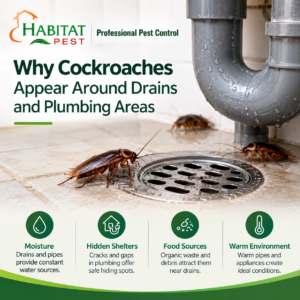

Finding a cockroach beside a kitchen sink, bathroom drain, or exposed pipe can make it seem like the insect came straight through the plumbing. That is not always the case. Plumbing areas can attract cockroaches because they provide access to moisture, food, shelter, or concealed spaces.
In Palo Alto neighborhoods with irrigated yards and landscaping close to the house, activity near a drain can also trace back to damp soil, water meter boxes, or small openings along the exterior walls. The type of cockroach you find usually narrows it down quickly.
Water, Shelter, and Food Under the Sink
Water is an important factor. A slow leak under a sink, condensation around pipes, or damp material inside a cabinet can create conditions that support cockroach activity.
Sinks and cabinets can also provide shelter. Dark spaces beneath counters and behind plumbing are rarely disturbed, allowing insects to remain hidden during the day.
Kitchens add another factor: food residue. Grease, crumbs, organic material, and waste around sinks can provide an accessible food source.
Keeping plumbing areas dry and clean can reduce these attractants, but continued sightings may indicate another access point or an established population.
Can Cockroaches Actually Come Through a Drain?
Sometimes, but the drain itself should not automatically be considered the source.
Some larger cockroach species are associated with sewers, storm drains, water meter boxes, and other damp outdoor locations. American cockroaches, for example, are commonly found in moist areas such as sewers and drains. Turkestan cockroaches are also primarily outdoor insects and may be found around drainage areas and sheltered exterior spaces.
A large cockroach near a garage drain or ground-floor bathroom may have entered from outside through a nearby opening.
German cockroaches present a different pattern. They are primarily associated with indoor environments and can establish populations in warm, protected areas such as kitchens.
So before blaming the drain, take a good look at the roach itself.
What to Check Around Sinks and Bathrooms
Kitchens and bathrooms have several potential hiding and entry points. Inspect:
• Supply lines and drain connections
• Pipe openings through walls, cabinets, and floors
• Damp areas beneath sinks
• Spaces behind cabinets and appliances
• Floor drains and utility spaces
• Areas around toilets, tubs, and vanities
Guest bathrooms and floor drains are worth a look too. If a drain goes unused for weeks, the water in its trap can evaporate and leave an open path from the pipe. Running water through it now and then keeps that seal in place.
The Pattern of Activity Matters
The type and frequency of sightings can tell you more than a single encounter.
One large cockroach appearing occasionally near a bathroom is different from finding several small cockroaches around a kitchen every few days. Repeated activity, particularly alongside droppings, shed skins, egg cases, or young cockroaches, deserves closer attention. Seeing them out during the day is another warning sign, since it often means their hiding spots are crowded.
Where the activity shows up is the other half of the picture. Kitchen sightings usually point to cockroaches living indoors, while an occasional large roach near the garage is more likely coming in from outside.
Cockroaches Can Enter Through Multiple Routes
Plumbing is only one possible route into a building.
Cockroaches can move through gaps around pipes, foundation openings, doors, screens, utility areas, and other accessible points. Outdoor conditions can also support activity before insects enter the home.
When sightings continue, useful exterior areas to inspect include:
• Irrigation and drainage areas
• Water meter boxes
• Gaps around pipe penetrations
• Foundation openings
• Garage and exterior door gaps
• Sheltered areas near the building
Checking these spots after dark with a flashlight is often the quickest way to see where roaches are actually moving.
Why Spraying the Drain May Not Solve the Problem
Treating a cockroach at the point where it was found does not necessarily address the source.
If an indoor population is established, killing individual insects will not remove hidden cockroaches or egg cases. If insects are entering from outside, treatment around a drain will not close the entry route. Likewise, continued moisture from a plumbing leak can keep an area attractive.
In Palo Alto kitchens where cockroaches keep coming back after repeated store-bought sprays, the problem may be harder to knock down than it looks.
German cockroaches can develop resistance to some insecticides, and repeated spraying can push them deeper into walls and cabinets.
Effective cockroach control should address the conditions supporting the activity. Depending on the situation, this may include:
• Repairing plumbing leaks
• Reducing unnecessary moisture
• Sealing accessible gaps
• Removing food residue and waste
• Monitoring areas with repeated activity
• Targeted treatment in the areas where activity is concentrated
Household insecticides should not be poured or released into public storm drains or sewer systems, as chemicals can enter waterways without addressing the underlying problem.
Look Beyond the Drain
If you’ve fixed leaks, cleaned up, and kept unused drains filled, and cockroaches still show up every few days, the source is probably somewhere you haven’t looked yet.
That’s usually when a cockroach exterminator is worth calling. Habitat Pest Control can check the plumbing areas, entry points, and other parts of the property where the activity is coming from.