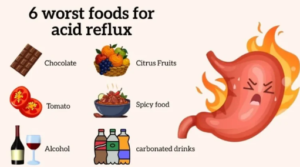

Acid reflux can disrupt your daily life, sleep, and eating habits. Knowing the worst foods for acid reflux helps you reduce symptoms and protect your digestive health without extreme restrictions.
In this article, you will learn how acid reflux works, which foods most often trigger heartburn, why they cause symptoms, what to eat instead, and practical strategies to prevent reflux naturally.
What Is Acid Reflux and Why Food Matters
Acid reflux happens when stomach acid flows back into your esophagus. This causes burning, discomfort, and irritation.
Food plays a major role because certain items relax the lower esophageal sphincter or increase stomach acid. Avoiding the worst foods for acid reflux reduces symptom frequency and severity.
How Trigger Foods Worsen Acid Reflux
Some foods increase acid production. Others slow digestion or weaken the esophageal valve.
When this valve relaxes, acid escapes upward. Repeated exposure leads to heartburn, chest pain, and throat irritation.
Worst Foods for Acid Reflux You Should Avoid
Fried and Greasy Foods
Fried foods digest slowly and increase stomach pressure.
Common triggers include fries, fried chicken, burgers, and doughnuts. These are among the worst foods for acid reflux.
High-Fat Dairy Products
Whole milk, cream, cheese, and butter can worsen reflux.
They relax the esophageal sphincter and delay stomach emptying.
Spicy Foods and Hot Peppers
Chili peppers, hot sauces, and spicy curries irritate the esophagus.
They may not cause reflux but can intensify burning symptoms.
Citrus Fruits and Juices
Oranges, lemons, grapefruits, and citrus juices are highly acidic.
They increase esophageal irritation, especially on an empty stomach.
Tomatoes and Tomato-Based Products
Tomatoes are naturally acidic.
Sauces, ketchup, pizza, and salsa are common acid reflux triggers.
Chocolate and Cocoa Products
Chocolate contains caffeine and theobromine.
Both relax the lower esophageal sphincter, increasing reflux risk.
Caffeinated Beverages
Coffee, energy drinks, and strong tea stimulate acid production.
Caffeine also weakens the esophageal barrier.
Carbonated Drinks
Soda and sparkling water increase stomach pressure.
This pressure pushes acid upward into the esophagus.
Alcoholic Beverages
Alcohol relaxes the esophageal sphincter and irritates the lining.
Wine, beer, and spirits are among the worst foods for acid reflux symptoms.
Peppermint and Mint-Flavored Foods
Peppermint relaxes smooth muscle.
This relaxation can worsen reflux despite its digestive reputation.
Hidden Foods That Trigger Acid Reflux
Processed and Packaged Foods
Preservatives, additives, and excess fat worsen digestion.
Chips, packaged snacks, and fast food are frequent triggers.
Onions and Garlic
Raw onions and garlic are common reflux triggers.
Cooked versions may be better tolerated.
Sugary Desserts and Baked Goods
High sugar and fat content slows digestion.
Cakes, pastries, and cookies often worsen heartburn.
Portion Size and Eating Habits Matter
Large meals stretch the stomach.
This increases pressure and acid backflow. Smaller meals reduce symptoms even when trigger foods are limited.
Eating late at night also worsens reflux. Gravity helps keep acid down.
Best Food Swaps to Reduce Acid Reflux
Lean Proteins
Choose grilled chicken, turkey, fish, or tofu.
These digest easily and reduce reflux risk.
Low-Acid Fruits
Bananas, melons, apples, and pears are safer options.
They are less irritating to the esophagus.
Vegetables That Soothe Digestion
Green beans, broccoli, spinach, and zucchini are reflux-friendly.
Avoid frying or heavy seasoning.
Whole Grains and Fiber
Oatmeal, brown rice, and whole grains absorb acid.
They also promote better digestion.
Drinks That Help Prevent Heartburn
Water remains the best choice.
Herbal teas like chamomile or ginger may help. Avoid mint-based teas.
Low-fat milk alternatives such as almond milk may reduce symptoms.
Lifestyle Tips to Avoid Acid Reflux Triggers
Eat slowly and chew well.
Avoid lying down for at least three hours after meals.
Maintain a healthy weight to reduce abdominal pressure.
Elevate your head while sleeping to prevent nighttime reflux.
When to See a Doctor
Occasional reflux is common.
Frequent symptoms may indicate GERD and need medical evaluation. Avoiding the worst foods for acid reflux is helpful but not a replacement for care.
Final Thoughts on Worst Foods for Acid Reflux
Avoiding the worst foods for acid reflux is one of the most effective ways to prevent heartburn naturally. Fatty, spicy, acidic, and processed foods place stress on your digestive system.
Focus on balanced meals, mindful eating, and lifestyle habits that protect your esophagus. With consistent changes, you can reduce discomfort and improve long-term digestive health.
FAQ: Worst Foods for Acid Reflux
- Are fried foods bad for acid reflux?
Yes. They slow digestion and increase stomach pressure. - Is coffee one of the worst foods for acid reflux?
Yes. Caffeine increases acid and relaxes the esophageal valve. - Do spicy foods always cause acid reflux?
No. Sensitivity varies, but they worsen symptoms in many people. - Are tomatoes bad for acid reflux?
Yes. They are acidic and commonly trigger heartburn. - Can chocolate cause acid reflux?
Yes. It relaxes the lower esophageal sphincter. - Is alcohol safe with acid reflux?
No. Alcohol frequently worsens reflux symptoms. - Are citrus fruits always harmful?
Yes. Their acidity often irritates the esophagus. - Does peppermint help acid reflux?
No. Peppermint can worsen reflux by relaxing muscles. - Can portion size affect acid reflux?
Yes. Large meals significantly increase reflux risk. - Is diet enough to control acid reflux?
Sometimes. Chronic symptoms may need medical treatment.