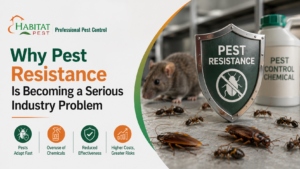

Pests are getting smarter, and the chemicals we use to stop them are slowly losing their power. This is not a future problem. It is happening right now, and it is changing the way pest control works across the country. Homeowners and businesses are already feeling this shift, and many are turning to a reliable pest control service in Santa Clara to find approaches that actually keep up with it. Old solutions are no longer enough.
Why Pest Resistance Happens in the First Place
Resistance does not develop because a single pest survives a treatment. It builds over generations. When a pesticide is applied, most pests die, but a small number with a natural genetic advantage survive. Those survivors reproduce, and their offspring carry that same resistance. Over time, the entire population becomes harder to kill. This process is called natural selection, and pests are very good at it.
Insects like cockroaches, bedbugs, and houseflies reproduce quickly, sometimes within weeks. That fast reproduction cycle means resistance can develop in a surprisingly short time. A product that worked well five years ago may now have little to no effect on the same species in the same area.
The Role of Overuse and Misuse
One major reason resistance has grown so fast is overuse. Many people reach for the same pesticide spray repeatedly, hoping more applications will fix the problem. Instead, it speeds up the resistance cycle. When pests are exposed to the same active ingredient again and again, it creates stronger selection pressure, meaning resistant pests thrive even faster.
Misuse is also a big factor. Using a product at the wrong dose, at the wrong time, or in the wrong way gives pests partial exposure instead of a full lethal dose. Partial exposure is almost worse than no treatment at all, because it allows weaker pests to develop immunity without being fully eliminated.
Which Pests Are Leading the Resistance Problem
Some species have become especially hard to control. Here are a few that pest professionals now watch closely:
• German cockroaches have shown resistance to multiple classes of insecticides, including pyrethroids and organophosphates, in many urban areas.
• Bedbugs were nearly wiped out decades ago but came back strong, partly because they evolved resistance to DDT and later to common modern treatments.
• Houseflies and mosquitoes have developed resistance in agricultural and suburban zones due to repeated chemical applications over decades.
• Rodents, particularly rats, have shown resistance to anticoagulant poisons in several regions, making bait stations less reliable than before.
This list is growing, not shrinking. Researchers keep finding new cases of resistance in species that were once easy to manage.
How This Affects the Pest Control Industry
The pest control industry is under real pressure right now. Companies that relied on a handful of trusted products for years are now finding those products less effective. This forces professionals to rotate chemicals, combine treatment strategies, and invest more time and money into each job.
A Mountain View exterminator working in a dense residential area, for example, may need to use multiple approaches just to handle a single infestation that would have been straightforward a decade ago.
This also pushes up costs. More complex treatments mean more labor, more products, and more follow-up visits. For businesses and homeowners, that translates to higher service bills and longer treatment timelines.
Integrated Pest Management as a Smarter Path Forward
The industry is responding with a method called Integrated Pest Management, or IPM. Instead of relying only on chemicals, IPM combines several approaches. It looks at the pest’s biology, the environment, physical barriers, and chemical treatments together. The goal is to reduce pest populations while slowing down resistance development.
IPM also focuses on prevention. Sealing entry points, removing food sources, and fixing moisture problems reduce the conditions pests need to survive. This takes more effort upfront but leads to better long-term results. Many pest professionals now consider IPM the most responsible and effective approach available.
Why Rotating Products Matters More Than Ever
One practical way the industry is fighting resistance is through chemical rotation. Instead of using the same product every time, professionals switch between active ingredients from different chemical classes. This prevents pests from adapting to a single compound. It is a straightforward idea, but it requires knowledge, planning, and access to a wider range of products.
A pest service in Santa Clara operating with a rotation strategy is more likely to deliver lasting results than one that defaults to a single go-to product. Rotation is not just good practice anymore. It is becoming necessary for effective pest control.
Why You Should Know About Resistance Before Calling a Pro
Understanding resistance helps you ask better questions. Not every pest problem needs the heaviest chemical treatment available. In fact, that approach may backfire. Asking a pest professional about their rotation strategy, their use of non-chemical methods, and their follow-up plan gives you a clearer picture of what you are actually paying for.
Knowledge Is Your Best Defense Against Resistant Pests
Pest resistance is a growing challenge, but it is not unbeatable. The key is working with professionals who stay current on resistance trends and adapt their methods accordingly. A well-informed pest service in Santa Clara will approach your pest problem with more than one tool, and that makes all the difference. The more informed you are as a customer, the better the outcome you can expect.