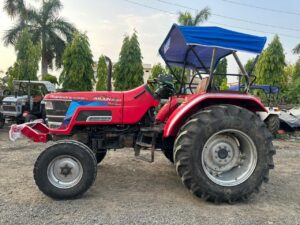

A few years ago, many farmers were focused only on buying new machines. Now the conversation has started changing. More people are actively searching for old tractors, and not just because they are cheaper. There is a growing appreciation for machines that have already proved themselves in real farming conditions.
I’ve noticed this especially in smaller towns and villages. A tractor that has worked for ten or fifteen years and still starts every morning earns a different kind of respect. Farmers trust what they’ve seen with their own eyes.
The Charm of a Machine That Has Already Proved Itself
New tractors often come with advanced features, but old tractors have something equally valuable: a track record.
When a machine has spent years ploughing fields, pulling loaded trolleys, and handling rough village roads, people know what it can do. There is less guesswork involved.
That reliability is difficult to measure on paper, but you feel it when the tractor works through a long day without creating unnecessary problems.
Why Many Farmers Prefer Older Models
For a lot of buyers, the decision comes down to practicality.
- Lower purchase cost
- Affordable spare parts
- Easy repairs
- Good resale demand
- Strong pulling power
Honestly, many people overlook the repair side of the equation. In rural areas, local mechanics are often very familiar with older tractor models. If something goes wrong, getting it fixed is usually straightforward.
A Quick Comparison
Old vs New Tractor (General Comparison)
|
Feature |
Old Tractor |
New Tractor |
|
Purchase Cost |
Lower |
Higher |
|
Repair Simplicity |
Usually easier |
More complex |
|
Electronics |
Minimal |
Advanced |
|
Fuel Efficiency |
Moderate |
Often better |
|
Initial Investment |
Budget-friendly |
Expensive |
What to Check Before Buying an Old Tractor
If you’re planning to buy one, don’t get distracted by fresh paint. A shiny body doesn’t always mean a healthy machine.
Here’s a simple inspection checklist:
Inspection Checklist
Start the engine when it is cold.
Look for excessive smoke.
Test all gears.
Check hydraulic lifting.
Inspect tyres for uneven wear.
Look underneath for oil leaks.
A quick field test tells you far more than a seller’s description.
One Lesson I Learned From Experienced Farmers
“A tractor’s condition matters more than its age.”
That sounds simple, but it’s true. I’ve seen fifteen-year-old tractors work beautifully because they were maintained properly. I’ve also seen much newer machines with constant issues because servicing was ignored.
Where Old Tractors Still Shine
Older tractors are especially useful for:
- Ploughing
- Cultivation
- Seedbed preparation
- Trolley transport
- Harvest support work
- Small and medium farms
Not every farm needs a high-tech machine. Sometimes a dependable workhorse is the better investment.
Finding Reliable Used Tractors
One challenge is knowing where to buy. Random local listings can be risky because service history is often unclear.
Tractor Factory has become a useful option for many buyers because it brings together different used tractor choices in one place. Instead of searching village to village, farmers can compare models, check specifications, and explore machines that fit their budget.
That saves a surprising amount of time.
Keeping an Old Tractor Running Strong
A simple routine goes a long way:
- Change engine oil on schedule.
- Clean the air filter regularly.
- Check coolant levels.
- Grease moving parts.
- Inspect belts and hoses.
- Store the tractor under cover when possible.
These small habits often make the difference between a tractor that lasts five more years and one that becomes a constant repair project.
The Real Reason Old Tractors Remain Popular
Farmers continue buying old tractors because they offer a practical balance of cost, reliability, and performance. They may not look flashy, but many of them keep working season after season with remarkable consistency.
And when a machine helps you finish the day’s work without drama, that reliability becomes worth a lot more than shiny paint.