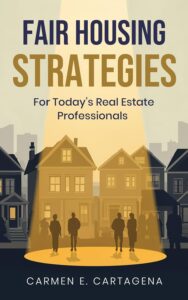

Real estate professionals play an important role in helping people buy, sell, rent, and secure housing opportunities. Every conversation, showing, and recommendation has the potential to affect a client’s experience and housing choices. Because of this responsibility, providing Equal Service is one of the most important commitments an agent or broker can make.
In Fair Housing Strategies for Today’s Real Estate Professionals, Carmen E. Cartagena repeatedly emphasizes the importance of treating all clients and customers equally. Throughout the book, the author explains how unequal treatment can occur through bias, affinity bias, steering, and other practices that place both consumers and professionals at risk. The message is clear: Equal Service is essential for maintaining professionalism, complying with fair housing laws, and supporting housing opportunities for all.
What Does Equal Service Mean?
At its core, Equal Service means providing the same level of professionalism, attention, and opportunity to every client and customer regardless of who they are.
This includes:
- Providing access to available properties.
- Offering the same quality of communication.
- Following the same office procedures.
- Presenting information consistently.
- Treating every person with respect and professionalism.
The book reminds readers that real estate professionals should focus on serving individuals rather than making assumptions based on personal characteristics or perceived differences.
Every client deserves the same commitment and effort throughout the transaction process.
Why Equal Service Is Important
The author explains that housing is one of the most significant decisions people make in their lives. Real estate professionals help guide that process, which means their actions can have a lasting impact.
When Equal Service is provided consistently, clients and customers receive fair access to information and opportunities. They can make decisions based on their own needs, goals, and preferences rather than being influenced by the assumptions of others.
The book also points out that unequal treatment can affect more than a single transaction. It can impact trust, professional reputation, and public confidence in the real estate industry.
Providing Equal Service protects both consumers and professionals.
How Unequal Treatment Can Occur
One of the themes discussed throughout the book is that unequal treatment is not always intentional.
Factors that may influence service include:
- Implicit bias.
- Affinity bias.
- Assumptions about clients.
- Comfort levels with certain individuals.
- Personal beliefs about neighborhoods.
The author explains that these influences can affect decision-making without a person fully realizing it. As a result, some clients may receive different information, different levels of attention, or different experiences.
This is why awareness is so important. Professionals must regularly evaluate their actions to ensure that Equal Service remains consistent for everyone.
The Connection Between Equal Service and Fair Housing
The book highlights how fair housing laws are designed to promote equal opportunity in housing.
Providing Equal Service supports these principles by ensuring that housing opportunities are made available fairly and consistently. Real estate professionals should focus on providing access, presenting options, and allowing buyers to make informed decisions based on their own preferences.
The author repeatedly encourages agents and brokers to avoid practices that could lead to disparate treatment and instead concentrate on serving every client according to the same professional standards.
When Equal Service becomes a daily practice, fair housing compliance becomes stronger as well.
Practical Ways to Provide Equal Service
The book offers several lessons that help professionals maintain consistency in their work.
Follow the Same Procedures for Everyone
Using the same standards and processes for all clients helps reduce the risk of unequal treatment.
Avoid Assumptions
Clients and customers should be evaluated as individuals. Assumptions can interfere with professional judgment and decision-making.
Remain Professional
Professionalism creates consistency. It helps ensure that every interaction is guided by established practices rather than personal preferences.
Reflect on Your Actions
The author encourages self-reflection as a tool for growth. Taking time to review interactions can help identify areas where improvements may be needed.
Continue Learning
Education and awareness can help professionals strengthen their ability to provide Equal Service in every situation.
Building Trust Through Equal Service
Trust is one of the most valuable parts of any client relationship. Clients want to know that they are receiving honest guidance, professional support, and access to opportunities that meet their needs.
When Equal Service is consistently provided, clients are more likely to feel respected and valued. They gain confidence in the process and in the professional assisting them.
The book suggests that treating everyone fairly is not only the right approach but also strengthens long-term professional relationships.
Conclusion
Equal Service is more than a professional responsibility. It is a commitment to fairness, consistency, and respect in every real estate transaction.
Throughout Fair Housing Strategies for Today’s Real Estate Professionals, Carmen E. Cartagena encourages agents and brokers to examine their practices, recognize potential influences on their decision-making, and remain committed to serving all clients equally. By following consistent procedures, avoiding assumptions, and maintaining professionalism, real estate professionals can provide Equal Service while supporting housing opportunities for everyone.
In every transaction, Equal Service helps create trust, strengthens professional integrity, and supports the goal of housing equality for all.