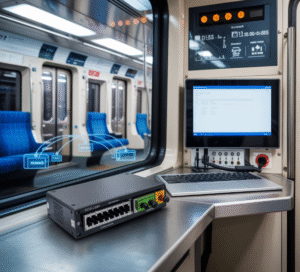

In today’s data-driven transportation landscape, modern railway systems depend heavily on robust, secure, and real-time communication networks. At the core of this transformation are EN50155 Ethernet Switches and embedded industrial-grade computers—technologies specifically engineered to handle the complexities and harsh environments of railway operations.
This article explores the critical role of EN50155 Ethernet Switches in railways, the synergy with embedded industrial-grade computers, the tradeoffs of deployment, and the challenges industries face in selecting the right solutions.
What is an EN50155 Ethernet Switch?
An EN50155 Ethernet Switch is a rugged networking device designed in compliance with the EN50155 standard, which outlines the conditions for electronic equipment used in railway applications. These switches ensure uninterrupted communication across rolling stock, passenger systems, and control centers, even under extreme vibration, temperature fluctuations, humidity, and electromagnetic interference.
With the integration of EN50155 Ethernet Switches, modern trains can manage multiple data streams—from surveillance systems and passenger Wi-Fi to real-time diagnostics and signaling.
Role of Embedded Industrial-Grade Computers in Rail Networks
Embedded industrial-grade computers are compact, fanless computing units designed for durability and continuous operation in harsh environments. In rail systems, they operate in tandem with EN50155 Ethernet Switches to process, store, and transmit mission-critical data.
These computers often handle:
-
Real-time video processing from CCTV
-
Predictive maintenance analytics
-
Passenger information systems
-
Train control and monitoring systems
The seamless integration of embedded industrial-grade computers with Ethernet switches enables faster decision-making and supports safer and more efficient operations.
Why EN50155 Ethernet Switches Are Indispensable
-
Reliability in Harsh Conditions
EN50155-certified switches are built to endure high shock, vibration, and temperature variations. This ruggedness ensures consistent performance in the dynamic environment of railways. -
Data Integrity and Safety
These switches are designed with redundant power supplies and advanced security protocols to maintain network uptime and ensure safety-critical communications are uninterrupted. -
Efficient Network Architecture
By connecting multiple systems—like control panels, onboard sensors, and passenger interfaces—EN50155 Ethernet Switches create a unified network backbone for streamlined operations. -
Compliance and Standardization
The EN50155 standard guarantees that devices can work reliably in railway environments. This ensures interoperability and long-term support across global railway networks.
Tradeoffs and Challenges
Tradeoffs
-
Performance vs. Power Consumption: High-performance embedded industrial-grade computers may demand more power, creating a tradeoff in mobile environments like trains.
-
Cost vs. Durability: Investing in fully rugged EN50155 Ethernet Switches involves higher upfront costs but ensures fewer downtimes and lower maintenance in the long run.
Challenges
-
Integration Complexity: Coordinating data flow between multiple embedded industrial-grade computers and Ethernet switches requires expert configuration and testing.
-
Legacy Compatibility: Ensuring new systems communicate effectively with older infrastructure remains a major hurdle in modernizing rail systems.
-
Scalability: As data requirements grow with technologies like AI and IoT, older switches and computers may not support the required bandwidth or processing capacity.
Conclusion
As rail systems evolve into intelligent, connected ecosystems, the importance of deploying reliable, high-performance networking solutions cannot be overstated. EN50155 Ethernet Switches and embedded industrial-grade computers are not just supporting components—they’re critical enablers of the digital railway revolution.
Organizations must consider environmental demands, data needs, and future scalability when choosing networking infrastructure. Balancing performance, durability, and cost will ensure long-term success and safety in railway operations.
Top 5 FAQs About EN50155 Ethernet Switches and Embedded Industrial-Grade Computers
1. What makes an EN50155 Ethernet Switch different from standard Ethernet switches?
EN50155 Ethernet Switches are certified to meet railway-specific standards, offering resistance to vibration, shock, temperature extremes, and electromagnetic interference.
2. How do embedded industrial-grade computers enhance railway operations?
These computers offer rugged performance, real-time data processing, and long-term reliability, making them ideal for managing surveillance, control, and communication systems on trains.
3. Are EN50155 Ethernet Switches compatible with modern IIoT devices?
Yes, many EN50155 switches support IIoT applications, enabling edge connectivity for sensors, controllers, and smart systems onboard.
4. What should I look for when choosing an embedded industrial-grade computer for railway use?
Look for features such as fanless design, wide operating temperature range, shock resistance, and compliance with railway certifications like EN50155 or EN50121.
5. Can EN50155 Ethernet Switches reduce downtime in railway systems?
Absolutely. Their rugged design and redundancy features minimize failure rates and support 24/7 operation, reducing service interruptions and maintenance costs.
Need to learn more: https://dynalogindia.com/