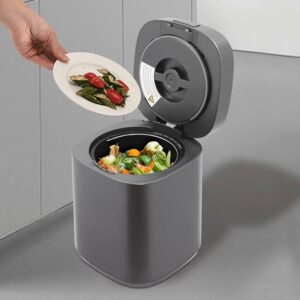

Composting used to be a yard activity. You needed a corner of the garden, a tumbler or a wire bin, a few bags of dried leaves, and the willingness to manage a pile through every season. For most of the last century, that’s what composting meant. The people who did it generally did it well, and the rest didn’t bother.
The math has shifted. Households that always wanted to compost but never had the space, time, or stomach for an outdoor pile are picking up a smart composter instead. The shift is quietly changing who composts and how.
A few patterns explain the move.
The Speed Gap Is Enormous
A traditional pile takes between three months and a full year to produce finished compost, depending on the season, the balance of materials, and how often it gets turned. An automatic composter processes scraps overnight. Most models complete a full cycle in 9 to 24 hours.
That gap isn’t incremental. It’s a different category of effort entirely. The outdoor pile is a long-term project that rewards patience. The countertop unit is a daily appliance that requires almost no maintenance.
Mental Load, Quantified
The hidden cost of traditional composting isn’t time. It’s attention. A backyard pile asks questions all year long. Is the ratio of greens to browns right? Is it too wet, too dry? When was it last turned? Are pests getting in? Is it heating up properly? What do you do when winter arrives, and the pile freezes solid?
An automatic composter removes nearly all of those decisions. You add scraps. You press a button. The appliance manages temperature, moisture, and aeration internally. Composting goes from being a recurring mental thread to a 30-second task. For households juggling work, school pickups, and meal planning, that reduction in mental load matters more than the kilowatt cost of running the machine.
Indoor Means Year-Round
Outdoor composting depends on weather in ways most people don’t think about until they’re standing in a January snowdrift holding a scrap bucket. Cold weather slows decomposition to a near halt for months. Wet weather waterlogged piles. Hot summer turns piles into fly nurseries that the neighbors complain about.
Indoor placement sidesteps all of it. The cycle runs at the same speed in January as in July. The output is consistent regardless of what the weather is doing outside the window. For households in apartments, condos, or homes without yards, indoor isn’t a perk. It’s the only option.
The Visibility Effect
There’s a behavioral pattern worth noting in households that own connected composters. The companion app turns composting into a measurable habit. Total weight composted. Weekly trends. Equivalent carbon avoided. Daily streaks of consistent use. The data is small, but it’s visible.
Visible habits tend to stick. A pile in the back corner of a yard is easy to ignore for a month. An app notification that you’ve diverted forty pounds of food waste this quarter is harder to dismiss. Households that track the data often report composting more, not less, over time. That’s the unspoken value of a smart composter for busy families. It makes the work legible, and what gets measured tends to get done.
What’s Actually Different About the Output
Here’s where honesty matters. The output from a countertop unit isn’t identical to traditional finished compost. Traditional compost is fully microbial, broken down by bacteria, fungi, and worms over many months. The end product is biologically active and rich in living microorganisms that continue feeding the soil after they’re added.
Countertop output is a soil amendment. It contains the same nutrients in a different form. It is dry, ground-up organic matter that improves soil structure and slowly releases nutrients. It’s just produced through heat and grinding rather than slow microbial action. Use it to topdress garden beds, mix into potting soil, or steep into a mild liquid feed for indoor plants.
There’s also a timing difference worth naming. A countertop unit produces a steady weekly stream you can use as you go. The steady stream usually beats the seasonal flood for most households.
For households comparing both options, the practical question isn’t which version is more “real.” It’s an honest self-assessment:
- Will you actually maintain a pile through winter?
- Do you have the space, time, and tolerance for the smell?
- Will the output justify the effort or sit unused?
For households where the honest answer is no, the switch makes sense. The composter that gets used beats the one that doesn’t.