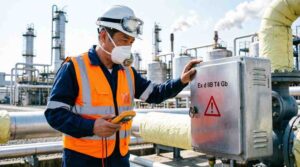

Who Needs IECEx Certification?
If your business works near flammable gas, vapor, or combustible dust, you need to know this. IECEx Certification confirms that equipment, systems, or people meet international safety standards for explosive atmospheres. It is not a formality. It is a safety requirement that protects lives, assets, and operations.
This article explains exactly who needs it, which industries require it, and how to check if your business is one of them.
Which Industries Require IECEx Certification?
Any industry with explosive gas, vapor, or dust needs IECEx compliance. This includes oil and gas, chemical plants, mining, pharmaceuticals, and grain processing facilities.
These industries share one thing: a hazardous area where a single spark can trigger disaster. IECEx sets the safety bar for equipment used in these zones.
Industries that typically require IECEx Certification include:
- Oil and gas – drilling rigs, pipelines, refineries
- Petrochemical plants – processing units, storage tanks
- Mining – underground coal mines, methane-prone sites
- Chemical manufacturing – solvent handling, reactor rooms
- Offshore platforms – separators, compressors, control rooms
- LNG facilities – liquefaction and regasification units
- Pharmaceutical plants – solvent-based drug production
- Food and grain processing – flour mills, grain silos, sugar refineries
Each of these sites has zones where flammable substances mix with air. That mix creates explosion risk. IECEx Certification proves your equipment won’t be the ignition source.
Which Equipment Requires IECEx Certification?
Equipment installed in classified hazardous zones needs IECEx Certification. This covers electrical devices, instrumentation, and mechanical equipment that could generate a spark or hot surface.
Hazardous zones fall into two categories:
Gas and vapor zones:
- Zone 0 – explosive atmosphere present continuously
- Zone 1 – explosive atmosphere likely during normal operation
- Zone 2 – explosive atmosphere unlikely, short duration only
Dust zones:
- Zone 20 – combustible dust present continuously
- Zone 21 – combustible dust likely during normal operation
- Zone 22 – combustible dust unlikely, short duration only
Common equipment types requiring certification:
- Motors and pumps
- Junction boxes and enclosures
- Lighting fixtures
- Sensors and transmitters
- Control panels
- Cable glands and connectors
- Portable gas detectors
If it carries current, generates heat, or sits inside a classified zone, it likely needs certification. Learn more about zones and protection concepts to understand how zone classification drives equipment selection.
Which Professionals Need IECEx Certification?
Engineers and technicians who design, install, inspect, or maintain equipment in hazardous areas need IECEx Certification. This includes electrical, instrumentation, and maintenance staff.
Certification proves a person understands explosion protection rules under IEC 60079. Without it, mistakes during installation or repair can cause serious accidents.
Professionals who typically need certification:
- Electrical engineers – designing Ex-rated circuits and systems
- Instrumentation engineers – calibrating sensors in hazardous zones
- Maintenance technicians – repairing or servicing Ex equipment
- Safety officers – auditing hazardous area compliance
- Inspectors – verifying installations meet IECEx standards
- Project engineers – planning hazardous area layouts
Personal certification differs from equipment certification. A person earns a Certificate of Personnel Competence (CoPC) after training and assessment. Explore IECEx certification training to see how professionals qualify.
Do Manufacturers Need IECEx Certification?
Not every manufacturer needs IECEx Certification. Only manufacturers producing equipment intended for hazardous areas require it.
A manufacturer making standard office equipment doesn’t need certification. A manufacturer making a pump for an offshore platform does.
Here’s how to tell the difference:
| Manufacturer Type | Needs IECEx? | Reason |
|---|---|---|
| Standard electronics maker | No | Products not used in hazardous zones |
| Ex-rated motor manufacturer | Yes | Equipment installed in Zone 1/2 areas |
| Sensor maker for refineries | Yes | Devices operate in explosive atmospheres |
| Office furniture supplier | No | No exposure to explosion risk |
| Cable gland producer for oil rigs | Yes | Used in classified hazardous zones |
If your product ends up inside a hazardous zone, certification isn’t optional. Buyers in oil, gas, and chemical sectors won’t purchase uncertified Ex equipment. It’s a market requirement, not just a legal one.
Is IECEx Certification Mandatory?
IECEx Certification is mandatory in many countries through local regulations, even though IECEx itself is a voluntary international scheme.
Many governments and regulators reference IECEx standards directly in law. Others require equivalent national certification built on the same IEC 60079 series.
Key points to understand:
- IECEx is a global scheme, not a single country’s law
- Many countries adopt IECEx as their legal baseline
- Some regions require local certification alongside IECEx
- Insurance companies often demand IECEx compliance
- Clients and contractors frequently mandate it in tenders
Check requirements for your region. For example, businesses operating in the Gulf should review IECEx Certification requirements in the UAE, where hazardous area compliance is closely enforced across oil, gas, and industrial sectors.
Industries That Benefit Most from IECEx Compliance
Industries with high explosion risk and heavy regulatory scrutiny benefit most. This includes oil and gas, mining, chemical processing, and LNG operations.
| Industry | Hazardous Area Risk | IECEx Requirement | Typical Equipment |
|---|---|---|---|
| Oil & Gas | Very High | Mandatory | Pumps, sensors, control panels |
| Chemical Manufacturing | High | Mandatory | Reactors, valves, junction boxes |
| Mining | High | Mandatory | Lighting, gas detectors, motors |
| Pharmaceutical Plants | Medium-High | Often Required | Mixers, solvent handling units |
| LNG Facilities | Very High | Mandatory | Compressors, flame arrestors |
| Food & Grain Processing | Medium | Often Required | Dust collectors, conveyors |
Practical examples:
- Oil & Gas: A drilling rig uses Ex-rated lighting to prevent ignition near gas leaks.
- Chemical Manufacturing: A solvent tank room requires certified pumps and valves.
- Mining: Underground coal mines use certified gas detectors to catch methane buildup.
- Pharmaceutical Plants: Solvent extraction rooms need certified mixers and motors.
- LNG Facilities: Liquefaction units use certified compressors to prevent sparks.
- Food and Grain Processing: Flour mills install certified dust collectors to stop dust explosions.
Business Benefits of IECEx Certification
Certification reduces accidents, lowers insurance costs, and opens access to international markets. It also builds trust with regulators and clients.
Businesses gain:
- Fewer workplace incidents and shutdowns
- Easier compliance across multiple countries
- Stronger tender and contract eligibility
- Lower insurance premiums in many cases
- Faster equipment approval during audits
Certification costs vary by scope and equipment type. Review this IECEx certification cost guide to budget accurately before starting the process.
Common Misconceptions
Many businesses misunderstand what IECEx actually covers. Clearing up these points saves time and money.
- “IECEx is only for oil and gas.” False. Mining, pharma, and food processing need it too.
- “All equipment needs certification.” False. Only equipment used in classified hazardous zones does.
- “IECEx and Compex are the same.” False. One certifies equipment and systems; the other certifies personnel competence. Compare IECEx vs Compex certification for clarity.
- “Certification is a one-time task.” False. Recertification and audits happen regularly.
- “Small businesses don’t need it.” False. Size doesn’t matter. Hazardous zone exposure does.
Businesses That Should Consider IECEx Certification
Use this checklist to check your exposure:
- [ ] You operate near flammable gas, vapor, or dust
- [ ] You install or maintain electrical equipment in hazardous zones
- [ ] You manufacture equipment for oil, gas, or chemical clients
- [ ] Your clients require IECEx compliance in contracts
- [ ] Your insurance policy references hazardous area standards
- [ ] Your site has classified Zone 0, 1, 2, 20, 21, or 22 areas
- [ ] Regulators in your country reference IECEx or IEC 60079
If you checked even one box, certification likely applies to you.
How to Determine Whether Your Business Needs IECEx Certification
- Identify hazardous materials on site. Check for flammable gas, vapor, or combustible dust.
- Map your hazardous zones. Classify areas as Zone 0, 1, 2, 20, 21, or 22.
- List equipment in those zones. Note motors, sensors, lighting, and panels.
- Check client and contract requirements. Many tenders demand IECEx compliance.
- Review local regulations. Confirm whether your country mandates it.
- Consult an IECEx expert. Get a site audit before making assumptions.
Audit Scenario: How an Inspector Checks Compliance
An inspector visits a chemical plant with a solvent storage room. First, they check the zone classification drawing for that room.
Next, they inspect installed equipment. They look for Ex markings, certificate numbers, and proper installation methods.
Then, they check maintenance records. Poor maintenance can void certification even on approved equipment.
Finally, they interview staff. Technicians must show they understand hazardous area handling procedures.
If any equipment lacks proper certification or installation, the inspector flags it. The plant must fix the issue before operations continue.
Frequently Asked Questions
Who needs IECEx Certification?
Businesses and professionals working in explosive atmospheres need it. This includes oil, gas, mining, chemical, and food processing sectors.
Is IECEx Certification mandatory everywhere?
No. It’s mandatory where local law adopts it. Many countries reference it directly in hazardous area regulations.
Does every manufacturer need IECEx Certification?
No. Only manufacturers producing equipment for hazardous zones need it.
Which professionals should get certified?
Electrical engineers, instrumentation engineers, maintenance technicians, and safety officers should get certified.
What equipment requires IECEx Certification?
Motors, sensors, lighting, panels, and cable glands used in classified zones require it.
How is IECEx different from Compex?
IECEx certifies equipment and systems globally. Compex certifies personnel competence, mainly in the UK and some regions.
Where can I get proper training for IECEx Certification?
Start with a structured IECEx certification training guide to understand course levels and requirements.
IECEx Certification protects people, equipment, and business reputation. If your operations touch hazardous zones, this isn’t a box to skip. Get your site assessed, train your team, and certify your equipment before regulators or accidents force the issue.