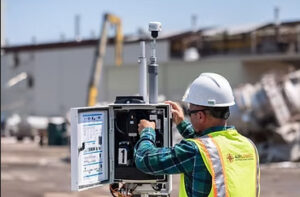

Accurate volatile organic compound detection is an important part of monitoring air conditions around construction, demolition, excavation, and remediation projects. The right monitoring system should do more than collect numbers. It should provide clear information that helps project teams understand changing site conditions and identify air movement near project boundaries.
A complete monitoring system should measure more than one parameter at the same time. VOC data, particulate readings, and meteorological conditions work together to provide a clearer picture of what is happening around the site. The Classic 2.0 System combines these capabilities into one integrated platform, allowing continuous field measurements with real-time updates throughout the project.
Compound Specific Analysis Makes the Difference
Many monitoring systems only report total VOC readings. Although total values are useful, they may not explain which compounds are present. The Classic 2.0 System uses a portable field gas chromatograph that performs compound-specific analysis. This allows the system to identify individual VOCs instead of reporting only a combined value.
The system can operate in Total Volatile Organic Compound mode during normal monitoring. If readings rise above a selected action level, it automatically changes to compound-specific analysis. This process provides more detailed information without interrupting monitoring activities. A high-quality volatile organic compound meter should provide this level of flexibility because changing site conditions often require more detailed results.
One System That Measures More Than VOCs
Reliable monitoring depends on several environmental measurements working together. VOC concentrations tell only part of the story. Wind direction, wind speed, temperature, humidity, and airborne particles all help explain how air conditions change around a project.
The Classic 2.0 System includes direct-reading particulate monitors that measure PM10, PM2.5, and Total Suspended Particulates. These measurements help project teams understand dust movement near monitoring locations. The system also includes a meteorological tower that continuously records local atmospheric conditions.
This information is processed by the central computer, which identifies monitoring stations as upwind, downwind, or crosswind. This feature helps place VOC readings into proper context and improves interpretation of collected field data.
Continuous Monitoring Supports Faster Decisions
Air conditions can change throughout a project. A reliable volatile organic compound monitor should collect information continuously instead of relying on occasional sampling events. Continuous monitoring allows changing conditions to be identified as they happen.
Real-time information also allows project teams to review current measurements without waiting for laboratory reports. This helps improve awareness of site conditions while monitoring continues. Continuous data collection creates a complete record that can be reviewed throughout different stages of project activity.
The ability to combine compound-specific VOC analysis, particulate monitoring, and meteorological measurements within one system provides a practical monitoring solution for projects where accurate field information is important.
Built to Adapt as Site Conditions Change
No two projects are exactly alike. Monitoring needs can change as work progresses from one area of the site to another. A flexible monitoring system should adjust to these changes without interrupting data collection. The Classic 2.0 System is designed with this need in mind. Its integrated components continue collecting information while site activities move, allowing project teams to maintain a consistent understanding of surrounding air conditions.
The system automatically processes meteorological information every few minutes. By identifying which stations are upwind, downwind, or crosswind, it helps users interpret monitoring results more accurately. Instead of reviewing separate data sets, users receive connected information that supports better field evaluation. This approach improves confidence in the collected measurements and simplifies routine monitoring throughout the project.
Reliable Technology That Supports Better Monitoring
Good monitoring equipment should provide dependable performance while remaining simple to operate. The Classic 2.0 System combines advanced measurement capabilities with an easy workflow. The portable gas chromatograph measures compound-specific VOC concentrations in real time, while particulate monitors track airborne dust levels using direct reading technology.
Because all major measurements are collected within one system, users spend less time coordinating separate instruments. Real-time information remains available throughout the monitoring period, making it easier to review conditions as they change. This combination of compound-specific VOC analysis, particulate monitoring, and meteorological data gives project teams a complete view of site conditions without adding unnecessary complexity.
Final Thoughts:
The Classic 2.0 System stands out because it combines compound-specific VOC analysis, particulate monitoring, and meteorological measurements into one reliable platform. Automatic switching between Total VOC mode and compound-specific analysis provides detailed information exactly where it is needed. This allows users to understand changing air conditions with greater confidence and supports effective volatile organic compound testing throughout a project. Choosing a monitoring system with these capabilities can improve data quality, simplify field operations, and provide dependable information from the beginning of monitoring through project completion.
If you are comparing monitoring systems for your next project, review the features carefully. A solution that combines compound-specific VOC analysis, dust monitoring, and meteorological measurements in one platform can provide more useful information and support better monitoring decisions from start to finish.