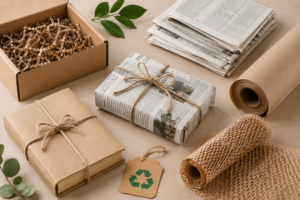

If you ship products regularly, you’ve probably noticed how much packaging gets used for a single order. A box, some filler, tape, and often extra wrapping. It all serves a purpose, but it also creates waste once the parcel reaches the customer.
That is why eco-friendly packaging has become such a talking point. Businesses are looking for materials that protect products without leaving behind piles of unnecessary waste. In my experience, recycled cardboard, kraft paper products, paper fillers, biodegradable cushioning, and paper-based mailing solutions are some of the best options available today. They are practical, easy to work with, and fit naturally into modern shipping operations. Better still, customers are increasingly expecting to see sustainable choices when they open a package.
What Are Eco-Friendly Packaging Materials?
Eco-friendly packaging materials are simply packaging products designed with waste reduction in mind.
Some are made from recycled content. Others can be recycled once used. Some naturally break down over time rather than sit in landfill for years.
The aim is not to reinvent packaging. The aim is to use materials more responsibly. Good packaging should protect products first. Sustainable packaging happens to do that while creating less waste afterwards.
Why Is Eco-Friendly Packaging a Global Priority?
A few years ago, most customers rarely thought about packaging. They cared about what was inside the box.
That has changed.
Today, people notice excessive plastic, oversized boxes, and unnecessary fillers. Businesses notice it too, especially as regulations and sustainability targets continue to evolve.
Some of the biggest reasons include:
- Growing concerns about landfill waste.
- Pressure to reduce plastic use.
- Increasing customer awareness.
- Environmental regulations.
- Corporate sustainability commitments.
The conversation is no longer limited to large companies. Small businesses are making changes as well.
What Materials Can Help Reduce Packaging Waste?
Reducing waste often starts with simple swaps.
You do not need to change every packaging material overnight. Replacing one or two products can make a noticeable difference over time.
|
Material Type |
How It Helps |
|
Recycled cardboard |
Can be recycled repeatedly |
|
Kraft paper |
Easy to recycle |
|
Paper fillers |
Replace plastic alternatives |
|
Compostable fillers |
Break down naturally |
|
Recycled paper |
Reduces virgin material use |
|
Reusable packaging |
Extends product life |
|
Paper mailers |
Reduces plastic waste |
Small improvements tend to add up faster than many businesses expect.
Types of Eco-Friendly Packaging Materials
Recycled Corrugated Cardboard Boxes
There is a reason cardboard boxes remain a favourite.
They are dependable, widely recycled, and suitable for almost every type of shipment.
- Strong enough for everyday shipping.
- Easy for customers to recycle.
- Available in many sizes.
- Suitable for a wide range of products.
Kraft Paper and Parcel Wrap
Sometimes simple solutions work best. Parcel wrap and kraft paper products have been used for years because they are practical and effective.
- Recyclable after use.
- Flexible and easy to handle.
- Suitable for wrapping products.
- Provides an extra protective layer.
Paper Void Fill
Most shipping damage occurs when products shift inside a box.
Paper void fill helps prevent that.
- Fills empty spaces effectively.
- Easy to recycle.
- Lightweight option.
- Suitable for fragile products.
Recycled Paper Products and Newspaper Offcuts
Many packing teams still use recycled paper because it does exactly what it needs to do. Newspaper offcuts are particularly useful when extra cushioning is needed.
- Made from recycled paper.
- Cost-effective solution.
- Useful for void filling.
- Helps reduce paper waste.
Paper Mailing Bags
Paper mailing bags have become increasingly common in e-commerce.
They are simple, practical, and easy for customers to dispose of responsibly.
- Fully recyclable.
- Lightweight.
- Easy to store.
- Professional appearance.
Paper-Based Book Wraps
Books can arrive damaged surprisingly easily. Bent corners are one of the most common complaints from customers. That is why book wraps remain popular.
- Protect corners and edges.
- Secure fit around products.
- Recyclable materials.
- Quick packing process.
Biodegradable Packing Peanuts
Many businesses have moved away from traditional foam fillers. Biodegradable alternatives offer a more responsible option.
- Break down naturally.
- Good shock absorption.
- Lightweight.
- Lower environmental impact.
Paper Packaging Tape
Tape is often overlooked during sustainability discussions.
Yet it can make a difference.
- Recyclable alongside cardboard.
- Strong sealing performance.
- Reduces plastic use.
- Supports easier recycling.
Why Should You Use Eco-Friendly Packaging Materials?
Customers Are Paying Attention
People notice packaging more than they used to.
- Creates a better first impression.
- Builds trust.
- Reflects responsible practices.
- Encourages repeat business.
Waste Reduction Matters
Less waste benefits everyone involved.
- Fewer materials discarded.
- Better resource use.
- Cleaner operations.
- Improved sustainability efforts.
Regulations Continue to Change
Packaging requirements are evolving across many industries.
- Easier compliance.
- Reduced future risk.
- Better preparedness.
- Greater flexibility.
It Makes Long-Term Sense
Many sustainable decisions pay off over time.
- Supports environmental goals.
- Strengthens reputation.
- Demonstrates responsibility.
- Helps future-proof operations.
Final Thoughts
There is no shortage of eco-friendly packaging options today. The challenge is choosing the right combination for your products. Recycled cardboard, paper fillers, biodegradable cushioning, parcel wrap, newspaper offcuts, and book wraps continue to be trusted by businesses because they are practical, effective, and easier on the environment. If you are reviewing your packaging process, starting with these materials is a sensible step. You do not need to change everything at once. Even small improvements can make a meaningful difference.
FAQs
- What is the most widely recycled packaging material?
Corrugated cardboard is one of the most commonly recycled packaging materials worldwide.
- Are eco-friendly packaging materials suitable for fragile products?
Yes. Many sustainable materials provide excellent cushioning and protection during transit.
- Can small businesses afford sustainable packaging?
In most cases, yes. Many eco-friendly options are available at competitive prices.
- Are book wraps only used for books?
No. They can also be used for catalogues, documents, and other flat products.
- Why are more businesses switching to eco-friendly packaging?
Customers expect it, regulations are changing, and businesses want to reduce waste where possible.