
When planning to enter the rapidly growing online grocery delivery market—projected to expand at around 11% CAGR through the next decade—one of the first major decisions you’ll face is choosing between a white-label solution and a custom-built app. Both options can help you establish a presence in this booming industry, but they serve very different business needs, budgets, and growth strategies. Understanding the distinction is critical for any entrepreneur or business seeking grocery delivery app development services.
Understanding the Core Difference
At its simplest, the choice between white-label and custom apps is like deciding whether to buy a move-in-ready house or build one from the ground up.
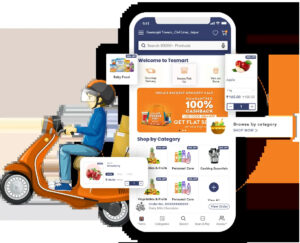
A white-label grocery app is a pre-built, ready-made software solution created by a development company that you can rebrand and launch as your own. Think of it as a fully furnished home—all the essential rooms, plumbing, and electrical systems are already in place. You can repaint the walls (add your logo and brand colors), rearrange the furniture (customize some features), and move in quickly.
A custom grocery app, on the other hand, is built entirely from scratch to your exact specifications. This is the equivalent of designing your dream home with an architect—every room is positioned exactly where you want it, with specific materials and unique features tailored to your lifestyle. However, this approach takes significantly more time, money, and expertise to complete.
White-Label Grocery Apps: Speed and Affordability
White-label solutions have become increasingly popular among startups and small-to-medium businesses looking to test the waters without massive upfront investment. These solutions come with core functionality already built, tested, and market-ready.
Key Advantages
Rapid Time-to-Market: Perhaps the most compelling advantage is speed. While custom development typically takes 4–6 months, white-label apps can be launched in as little as 2–4 weeks—sometimes even within 5 days. In the fast-moving grocery delivery space, this first-mover advantage can be critical.
Cost-Effectiveness: The cost difference is staggering. White-label grocery apps typically range from $5,000 to $30,000, while custom development can cost anywhere from $40,000 to $400,000—an 85–90% cost reduction. This makes white-label solutions accessible for bootstrapped startups and small retailers.
Reduced Technical Expertise Required: White-label providers handle the heavy technical lifting, allowing you to focus on marketing, customer acquisition, and operations rather than coding and system architecture. You don’t need an in-house development team to manage the platform.
Pre-Integrated Features: Leading white-label solutions come with essential integrations already in place—payment gateways like Stripe and PayPal, real-time tracking APIs, admin dashboards, and separate apps for customers, drivers, and store owners.
No Third-Party Commission Loss: Unlike using platforms like Instacart or DoorDash, which can take 15–30% of each order’s profit, a white-label app lets you keep 100% of your revenue while building direct customer relationships.
Limitations to Consider
However, white-label apps do have constraints. Customization is typically limited to branding elements like logos, colors, and some layout changes. You’ll also be sharing the same underlying codebase with hundreds of other businesses, which means your app may look similar to competitors. Additionally, scaling beyond the platform’s intended capabilities or adding truly unique features may be challenging or impossible.
Custom Grocery Apps: Total Control and Long-Term Vision
Custom grocery app development is the choice for businesses with ambitious long-term goals, unique operational requirements, or substantial budgets. This approach offers complete flexibility and ownership over every aspect of the final product.
Key Advantages
Unlimited Customization: With custom development, you control everything—from user interface design and user experience flows to unique features that differentiate your brand. Want AI-powered personalized recommendations, blockchain-based supply chain tracking, or gamification elements to boost customer retention? Custom development makes it possible.
Scalability and Future-Readiness: Custom apps are built with your future growth in mind. You can design the architecture to handle millions of users, integrate with any third-party system you choose, and add new features as your business evolves.
True Brand Differentiation: In a crowded market, standing out matters. A custom app allows you to create a unique user experience that reflects your brand identity and values, potentially increasing customer retention by up to 25% when paired with personalized features.
Complete Data Ownership and Security: You retain full control over your customer data, enabling deeper analytics, personalized marketing, and stronger data protection measures tailored to your compliance requirements.
The Trade-Offs
The primary drawbacks are the significant upfront investment (often hundreds of thousands of dollars) and extended development timelines (typically 4–6 months or more). You’ll also need to assemble and manage a development team or partner with an agency, requiring ongoing technical expertise for maintenance and updates.
Making the Right Choice for Your Business
When evaluating grocery delivery app development services, the decision ultimately depends on your business stage, goals, and resources.
Choose a white-label solution if you:
-
Are a startup or small business testing the market
-
Have a limited budget ($5,000–$30,000)
-
Need to launch quickly (within weeks)
-
Don’t have in-house technical expertise
-
Want to minimize risks and validate your business model
Choose custom development if you:
-
Have a well-funded enterprise or established business
-
Need unique features not available in off-the-shelf solutions
-
Have ambitious long-term growth and scaling plans
-
Want complete control over user experience and brand differentiation
-
Can invest $40,000–$400,000+ and wait 4–6+ months
Many businesses actually start with a white-label solution to validate their concept and generate revenue, then migrate to a custom platform as they grow and can justify the investment. This phased approach minimizes initial risk while building toward long-term success.
Conclusion
Both white-label and custom grocery apps have their place in the ecosystem of grocery delivery app development services. White-label solutions offer speed, affordability, and proven functionality—making them ideal for market entry and testing. Custom development provides ultimate flexibility, differentiation, and scalability for businesses with larger budgets and ambitious visions. By carefully evaluating your current needs, future goals, and available resources, you can make the strategic choice that sets your grocery delivery business up for sustainable growth.