
Walk through any industrial facility, offshore platform, food processing unit, or chemical plant and stainless steel bolts are doing their job somewhere in the background. They are holding flanges together, securing equipment to foundations, and keeping structural assemblies intact. Nobody notices them when they are working correctly. The attention comes when they are not.
In demanding environments, bolt selection is not a minor procurement decision. The wrong grade, the wrong manufacturing process, or the wrong specification for the application can lead to failures that are expensive and sometimes dangerous to fix. So what actually makes stainless steel bolts the right choice, and what should buyers be looking at before placing an order?
The Environment Decides the Grade
The bolt selection decision should always begin with a clear understanding of what the environment actually demands. The grade of stainless steel in the bolt determines how it will behave in the specific conditions it is going to face.
Grade 304 is the most widely used stainless fastener grade and handles general industrial environments, moderate moisture exposure, and most atmospheric conditions reliably. But take that same bolt into a marine environment, a chemical processing unit, or anywhere chlorides are present regularly, and Grade 316 is the more reliable specification. The molybdenum content in 316 handles chloride environments considerably better than 304 can.
For high temperature applications, grades like 310 or 321 come into consideration. And where both high strength and corrosion resistance are needed together, duplex grades are increasingly being specified. The environment is the starting point for every bolt selection decision.
The Manufacturing Process Matters Too
Specifying the right grade is necessary but not sufficient on its own. The manufacturing process behind the bolt determines whether those material properties actually carry through to the finished fastener.
Thread accuracy plays a bigger role in bolt performance than most buyers account for at the sourcing stage. A bolt with poorly formed threads does not engage correctly with the nut, which creates uneven load distribution and stress concentration points that lead to failure under vibration or repeated loading. Heat treatment, where applicable, affects the mechanical properties of the bolt in ways that are not visible but show up clearly under stress.
Surface finish is something that often gets overlooked at the sourcing stage. In corrosive environments, surface defects give corrosion an entry point. A bolt that looks fine when it arrives may start showing signs of attack at surface irregularities within months of installation.
Traceability and Standards Compliance
In sectors like oil and gas, infrastructure, and defence, the documentation behind the bolt matters as much as the bolt itself. Material test certificates, grade verification, and standards compliance are baseline requirements. A stainless steel brand in India that has built its reputation on consistent documentation and process traceability makes procurement considerably easier for buyers in these sectors.
This is also where the difference between sourcing from an established manufacturer and a trading intermediary becomes clear. Traceability is only as reliable as the process behind it.
The Viraj Approach
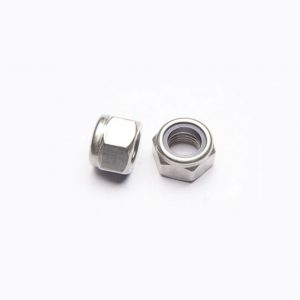
Viraj Profiles Pvt. Ltd. manufactures stainless steel bolts and a full range of fasteners including nuts, screws, studs, and washers across standard grades and specifications. With in house dimensional control, heat treatment, and quality testing, the process behind every fastener is controlled and documented. For buyers sourcing for demanding applications, that consistency across orders is what actually matters.
Final Thought
A stainless steel bolt earns its place in a demanding environment through grade selection, manufacturing quality, and consistent process control. Getting all three right from the sourcing stage is considerably easier than dealing with failures after installation. Visit the Viraj Profiles website to explore the fastener range or discuss your specific requirements with the team.