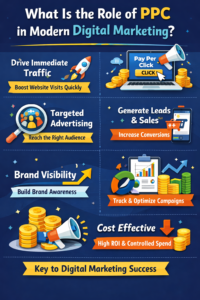

In today’s fast-paced digital environment, businesses are constantly searching for effective ways to reach their target audience and generate measurable results. Among the many strategies available, Pay-Per-Click (PPC) advertising has emerged as one of the most powerful and reliable tools in modern digital marketing.
Unlike traditional marketing methods that often rely on broad targeting and delayed results, PPC offers precision, control, and immediate visibility. It allows businesses to place their message directly in front of potential customers at the exact moment they are searching for relevant products or services.
Understanding PPC in Simple Terms
PPC, or Pay-Per-Click advertising, is a model where advertisers pay a fee each time someone clicks on their ad. Instead of earning traffic organically, businesses buy visits to their website through platforms like search engines and social media.
The most common example of PPC is search engine advertising, where ads appear at the top of search results. These ads are typically triggered by specific keywords that users type into search engines.
This means businesses can target users based on intent, making PPC one of the most effective forms of digital advertising.
The Shift Toward Performance-Based Marketing
Modern digital marketing is increasingly focused on performance. Businesses want measurable outcomes such as clicks, leads, and conversions—not just impressions.
PPC fits perfectly into this model because:
-
Every click can be tracked
-
Budgets can be controlled
-
Campaigns can be adjusted in real time
This level of accountability makes PPC a preferred choice for businesses looking to maximize their return on investment.
Instant Visibility in a Competitive Market
One of the biggest advantages of PPC is speed. While search engine optimization (SEO) can take months to show results, PPC campaigns can start driving traffic almost immediately after launch.
This is especially valuable for:
-
New businesses trying to establish a presence
-
Product launches
-
Time-sensitive promotions
By appearing at the top of search results, businesses can gain instant visibility even in highly competitive markets.
Targeting the Right Audience
A key role of PPC in modern digital marketing is precise audience targeting. Unlike traditional advertising, which often reaches a broad and sometimes irrelevant audience, PPC allows businesses to define exactly who sees their ads.
Targeting options include:
-
Keywords and search intent
-
Geographic location
-
Device type
-
Time of day
-
User behavior and interests
This ensures that marketing efforts are focused on users who are most likely to convert.
Enhancing Brand Awareness
While PPC is often associated with direct conversions, it also plays an important role in building brand awareness. Even if users do not click on an ad, repeated exposure helps them recognize and remember the brand.
Over time, this familiarity increases trust and makes users more likely to choose that brand when they are ready to make a decision.
Supporting the Customer Journey
Modern customers rarely make decisions instantly. They go through multiple stages, including awareness, consideration, and decision-making.
PPC helps businesses stay visible throughout this journey by:
-
Targeting informational searches at the awareness stage
-
Promoting comparisons during the consideration stage
-
Encouraging action at the decision stage
This multi-stage approach ensures that businesses remain relevant at every step.
Data-Driven Decision Making
One of the most powerful aspects of PPC is the data it provides. Every campaign generates detailed insights that can be used to improve performance.
Key metrics include:
-
Click-through rates (CTR)
-
Conversion rates
-
Cost per click (CPC)
-
Return on ad spend (ROAS)
By analyzing this data, businesses can identify what works and refine their strategies accordingly.
Flexibility and Control
PPC campaigns offer a high level of flexibility. Businesses can:
-
Set daily or monthly budgets
-
Pause or adjust campaigns anytime
-
Test different ad variations
-
Scale successful campaigns quickly
This control allows businesses to adapt to changing market conditions and optimize their marketing efforts continuously.
Integration with Other Marketing Channels
PPC does not work in isolation. It complements other digital marketing strategies, creating a more comprehensive approach.
For example:
-
PPC can drive immediate traffic while SEO builds long-term visibility
-
Social media campaigns can support PPC efforts
-
Email marketing can nurture leads generated through PPC
This integration ensures a balanced and effective marketing strategy.
Local and Global Reach
PPC campaigns can be tailored for both local and global audiences. For businesses targeting specific regions, local PPC campaigns can drive highly relevant traffic.
For instance, a business working with the best ppc agency in North Carolina can create campaigns focused on local customers, ensuring that ads reach users within a specific geographic area.
This level of localization helps businesses connect with their immediate community while still having the option to expand globally.
Improving Conversion Rates
Driving traffic is only part of the goal—the real success lies in converting visitors into customers. PPC plays a crucial role in optimizing this process.
By directing users to targeted landing pages that match their search intent, businesses can significantly improve conversion rates.
Key elements include:
-
Clear messaging
-
Strong calls to action
-
Relevant content
-
Fast-loading pages
When these elements align, PPC becomes a powerful conversion tool.
Testing and Experimentation
PPC provides an ideal environment for testing marketing ideas. Businesses can experiment with:
-
Different headlines
-
Ad formats
-
Keywords
-
Audience segments
This testing helps identify the most effective strategies without committing large resources upfront.
Staying Competitive
In today’s digital landscape, competition is intense. Businesses that do not invest in PPC risk losing visibility to competitors who do.
By consistently running optimized PPC campaigns, businesses can:
-
Maintain a strong online presence
-
Capture market share
-
Stay ahead of competitors
This makes PPC an essential component of modern digital marketing.
Challenges and How to Overcome Them
While PPC offers many benefits, it also comes with challenges such as:
-
High competition for keywords
-
Rising costs
-
Ad fatigue
To overcome these challenges, businesses should:
-
Focus on high-intent keywords
-
Continuously optimize campaigns
-
Refresh ad creatives regularly
Strategic management is key to long-term success.
The Future of PPC
As technology evolves, PPC continues to adapt. Trends such as automation, artificial intelligence, and voice search are shaping the future of digital advertising.
These advancements will make PPC:
-
More efficient
-
More personalized
-
More data-driven
Businesses that stay updated with these trends will have a significant advantage.
Conclusion
PPC has become a cornerstone of modern digital marketing due to its ability to deliver fast, targeted, and measurable results. It allows businesses to connect with the right audience at the right time, making it an invaluable tool for growth.
From increasing visibility and driving traffic to improving conversions and supporting long-term strategies, PPC plays a vital role in achieving marketing success.
As the digital landscape continues to evolve, businesses that leverage PPC effectively will be better positioned to compete, adapt, and thrive in an increasingly competitive environment.