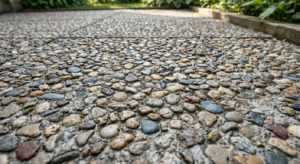

Plain grey concrete has a reputation for being flat, cold, and forgettable. It does the job structurally, but it rarely adds any personality to a driveway, patio, or pathway. That’s exactly why more homeowners and builders are turning to a washed stone concrete finish – a decorative technique that keeps all the strength of standard concrete while giving it a textured, natural stone appearance that instantly lifts the look of any outdoor space.
If you’ve been searching for a way to upgrade a dull slab without ripping it out and starting from scratch, understanding this finish is a good place to begin.
What Exactly Is a Washed Stone Concrete Finish?
A washed stone concrete finish is created by mixing decorative aggregate – typically small stones, pebbles, or crushed rock – directly into the concrete before it’s poured. Once the slab is laid and begins to cure, the top layer of cement paste is carefully washed and brushed away. This exposes the stones sitting just beneath the surface, revealing their natural texture, shape, and colour.
The result isn’t a smooth, uniform slab. It’s a surface with visible texture, subtle variation, and depth that mimics the appearance of natural stone paving, without the cost or installation complexity that comes with laying individual pavers or tiles.
Unlike a stamped or stencilled finish, which imprints a pattern onto the surface of the concrete, a washed finish physically reveals the aggregate embedded within the slab itself. That’s what gives it such a genuine, tactile quality underfoot.
Why Homeowners Are Choosing This Finish
There are a few practical reasons this style has become so popular for outdoor areas, beyond simply looking good.
Slip resistance. The exposed texture creates natural grip, which makes it a smart choice for pool surrounds, entryways, and driveways that get wet regularly.
Durability. Because the aggregate is bound into the concrete itself rather than sitting on top as a coating, the finish doesn’t peel, flake, or wear away the way some painted or stencilled surfaces eventually do.
Low maintenance. A simple wash and an occasional reseal are usually all that’s needed to keep the surface looking fresh for years.
Design flexibility. The stones used can be sourced in a wide range of shades, meaning the finished look can lean warm and earthy, cool and contemporary, or somewhere in between.
Where This Finish Works Best
Washed stone finishes are commonly used across several areas of a home:
- Driveways, where the added grip and durability handle daily vehicle traffic well
- Pool surrounds and alfresco areas, where slip resistance really matters
- Garden paths and stepping areas, where the natural texture blends with landscaping
- Entryways and porches, where first impressions count
Because the finish reads as more premium than standard broom-finished concrete, it’s often used to lift the overall street appeal of a property without the expense of full paving or natural stone installation.
Choosing the Right Aggregate and Colour
One of the most enjoyable parts of planning a washed finish is selecting the aggregate. Suppliers offering washed aggregate Perth homeowners rely on typically stocking a range of stone sizes and finishes, from fine pebble mixes to larger, chunkier aggregate for a bolder look.
Colour plays just as big a role as texture. When browsing aggregate concrete colours, it helps to think about how the finish will sit against the rest of the property – the roofline, brickwork, fencing, and any existing landscaping. Warmer tones like tan, gold, and terracotta tend to complement brick homes, while cooler greys and charcoal blends often suit more modern, minimalist exteriors. Many suppliers offer sample boards or small test panels, which is worth requesting before committing to a full driveway or patio pour.
Giving an Old Concrete Surface New Life
Not every washed stone project starts from bare ground. In many cases, homeowners are looking to refresh a driveway or path that’s cracked, stained, or simply outdated. This is where a resurfacing approach comes in – rather than demolishing the old slab, a new decorative layer is applied over the existing concrete, saving significant time, cost, and disruption compared to a full replacement.
This is the kind of transformation Repave specialises in, helping homeowners upgrade tired concrete surfaces with a washed stone finish that looks brand new, without the mess and expense of a complete tear-out.
If you’re planning to repave concrete driveway surfaces that have seen better days, resurfacing with a washed finish is often the most cost-effective way to get a premium result while extending the life of the concrete underneath.
Final Thoughts
A washed stone concrete finish offers something a plain slab simply can’t: genuine texture, natural colour variation, and a surface that feels considered rather than default. It’s slip-resistant, long-lasting, and adaptable to almost any style of home, which is exactly why it’s becoming the go-to choice for driveways, patios, and pathways alike. Whether you’re pouring fresh concrete or breathing new life into a tired old surface, this finish delivers a result that’s as practical as it is beautiful — a small change that makes a lasting difference to how your home looks and feels from the moment you walk up to it.
Frequently Asked Questions
- How long does a washed stone concrete finish last?
With proper installation and periodic resealing, a washed finish can last 15–20 years or more, similar to standard concrete, while resisting wear better than many decorative alternatives. - Is a washed stone finish more expensive than plain concrete?
Yes, it typically costs more than a basic broom finish due to the aggregate and labour involved in washing and exposing the stone, but it’s generally more affordable than natural stone paving. - Can this finish be applied over existing concrete?
In many cases, yes. Resurfacing over an existing slab is a common and cost-effective way to achieve the look without a full demolition and repour. - How slippery is a washed aggregate surface when wet?
The exposed texture provides considerably more grip than smooth, trowel-finished concrete, which is why it’s a popular choice around pools and entryways. - How do I choose the right stone colour for my home?
Consider your home’s existing brickwork, roofing, and landscaping. Requesting sample panels from your supplier before the pour is the best way to see how a colour will actually look in your setting. - How much maintenance does a washed finish require?
Maintenance is minimal – regular sweeping or hosing down, along with a reseal every few years, is usually enough to keep the surface looking as good as new.