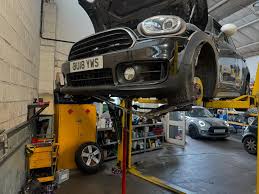

Preparing a car for its annual MOT test involves a lot more than just having a brief look at it. Many car parts are thoroughly tested, and if one fails to meet the minimum standard, this can lead to a failure. Brakes are always one of the most common reasons for cars to fail their MOT across the UK.
It helps greatly if drivers know the ins and outs of how the different brake systems work as well as what the examiners expect. This way, not only will they be able to pass the test more easily, but they will also avoid doing a costly retest.
How Brake Condition Affects MOT Results
The MOT brake test aims to raise safety standards through a thorough mix of physical inspection and efficiency measurement using equipment. The examiners carefully look at the condition of the brake components visually and, after that, use the brake testing equipment to check their stopping power.
Visual Inspection Criteria
The examiner is looking for signs that the brake components are not operating safely or that they may fail very soon. One of the most serious risks is heavily corroded brake pipes, which can burst under pressure.
Main brake rubber hoses which show external cracks or give signs of bulging indicate the deterioration of the inner lining, which may even cause the hose to restrict the fluid flow or fail under pressure. Piston leaks, visible as stains of brake fluid near the piston seals, indicate that the seal has failed. Any of these conditions will mean the vehicle has failed the MOT Testing Stockport or any other DVSA-authorised centre, no matter how well the brakes are felt during the normal drive.
Brake Performance Thresholds
DVSA determines the minimum performance levels that each vehicle must reach during the test. The main brake for passenger cars should be at least 50 per cent efficient. The difference in braking forces between the left and right wheels on each axle should not exceed 30 per cent.
The secondary brake or hand brake must achieve a minimum efficiency of 16 per cent on vehicles first used after 1 January 1968. These numbers are not rough guesses. The rolling road brake tester notes down the figures accurately, and these are then recorded on the MOT certificate.
Primary Service Brakes on Vehicles
On today’s cars, various brake systems are employed depending on the axle location and the vehicle model. Knowing the differences between the various systems will allow the vehicle owner to identify a malfunction without having to rely solely on a warning.
Disc Brakes
A rotating metallic disc is the main element of a disc brake system. Two brake pads put in a calliper hold the disc. The calliper pistons are pushed outward by the hydraulic pressure after the brake pedal is pressed and the pads are pressed against the disc. The generated friction converts the kinetic energy into heat and leverages the vehicle’s deceleration.
Disc brakes are better at heat dissipation than drum brakes, and that is why they are by default installed on front axles and, in most cases, on all four corners of modern vehicles. The calliper is able to slide on lubricated pins, which makes the pads retract a little after the braking has stopped.
Seized slide pins will not allow the pads to fully retract, and this will cause the pads to be in continuous contact with the disc. This leads to the creation of heat during everyday driving, and thus the pads and the disc get worn out faster.
Drum Brakes
Drum brakes are still, in the majority of cases, the type of brake system used for the rear axles of smaller vehicles. The wheel is attached to the outside of a rotating cylindrical drum. The brake shoes have a curved shape and are pressed outward against the drum’s inside surface when the driver operates the brake.
Drum brakes generate the muscle needed for manual brakes, as most rear axles with drum-equipped brakes have this mechanism directly functionally integrated.
Drum brakes tend to perform worse than disc brakes when they get hot, and they also need to be regularly adjusted as the shoe lining wears and the clearance between the shoe and drum increases.
When to Seek Brake Repair
- If someone’s car pulls to one side when they brake, the symptom is a sign that one side is braking harder than the other, causing uneven braking. This condition may be due to a calliper being seized or the pads being worn unevenly.
- If, when they are braking moderately, their brake pedal starts to vibrate, then this condition means that the brake discs are warped. This causes inconsistent force in releasing the brakes and changes the overall feel of braking.
- When they hear a grating or metal-on-metal noise while braking, it means the brake pads have been worn down to the metal, and now the discs are in contact directly with the metal of the pads.
- Having a soft or spongy brake pedal indicates that there is air or moisture in the hydraulic system. This results in a loss of the pressure that needs to be transmitted to the callipers.
Dealing with the mentioned symptoms during Brake Repair Stockport services professionally before the MOT testing time may avoid a fail and additionally double their chances of keeping a car running and safe throughout its entire lifespan.
Conclusion
In fact, the performance of a vehicle’s brakes is something that authorities cannot compromise on, and even the safety is at the highest level in braking standards. The MOT testing covers these aspects by setting specific standards for measurable braking performance that all vehicles are required to meet. Knowing what each type of disc and drum system does and what cannot be driven without is a great help for drivers in recognising early signs of failure.
In such cases, a first visual look at the brakes is usually enough inspection, and the evaluation results in very uncharacteristic pedal movements that quickly lead to a need for professional help. A prompt response to these warning signs is the best way to keep the braking system functioning properly and, at the same time, minimise the chance of a very last-minute MOT failure.