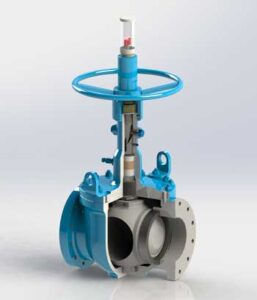

Have you ever wondered how industries control the flow of liquids in pipes safely and effectively? The answer often lies in floating ball valves. These valves are key parts in many industrial systems, ensuring smooth operation, preventing leaks, and providing high reliability under tough conditions. Their simple design hides a clever mechanism that makes them essential in oil, gas, chemical, and water treatment industries.
Floating ball valves work by using a round ball with a hole in the middle that spins inside the valve body. When the hole lines up with the pipe, fluid flows through easily. When turned 90 degrees, the solid part of the ball blocks the flow completely. The “floating” part means that the ball moves a little and presses against the downstream seat, creating a tight seal even under high pressure. This design makes floating ball valves perfect for jobs where stopping the flow completely is important.
Design and Construction of Floating Ball Valves
Modern floating ball valves are built with high precision using the latest computer software, ensuring the best performance and safety. They come in different designs, including one-piece, two-piece, and three-piece bodies. Sizes usually range from ½ inch to 10 inches, and they can handle pressures from ASME 150 to 2500 classes.
Some standard features of these valves include:
- Fire-tested according to API 607 5th edition
- Blow-out proof stem for safe operation
- Anti-static design to prevent electrical problems
- Actuator mounting pads that follow ISO 5211 standards
- Cup and cone stem packing for most sizes
- Bi-directional flow for flexible use
- Locking devices to keep the valve in place
High-quality fasteners, such as B7M/2HM or B8M/8M, are used, and valves in high-pressure classes undergo special tests to ensure they are strong and safe. These standards make floating ball valves trustworthy in industries where failure is not an option.
Applications of Floating Ball Valves
These valves are very useful in many different industries. In water treatment plants, they help control how water flows with high accuracy. In oil and gas pipelines, they handle high-pressure liquids while preventing leaks. Their ability to handle harsh chemicals safely makes them useful in chemical and petrochemical industries.
In HVAC systems, floating ball valves help manage cooling water flow, while in food and beverage plants, they make sure everything flows cleanly and safely. In short, wherever fluid control is crucial, these valves provide the perfect balance of efficiency, safety, and reliability.
Advantages of Using Ball Float Valve
At the heart of the system, the ball float valve plays a special role. Unlike regular ball valves, a ball float valve automatically controls fluid levels using a floating ball that is connected to the valve mechanism. This removes the need for manual control and lowers the risk of overflow or running dry.
The automatic feature is helpful in places like water tanks, cooling systems, and chemical storage. Also, these valves need very little maintenance, last a long time, and can handle different temperatures and pressures. These benefits make ball float valves a smart choice for both industrial and commercial systems.
Choosing the Right Valve for Your System
Picking the right floating ball valve involves looking at factors like pipe size, pressure needs, flow requirements, and material compatibility. You can choose between full bore or reduced bore options depending on how much flow you need and your budget. One, two, or three-piece bodies provide different options for easier setup and maintenance.
Industry standards make sure the valves meet safety, performance, and environmental needs. Features like stem sealing that follow fugitive emission rules and anti-static designs make these valves even more reliable in tough conditions.
End Summary: Why Ball Valve and Float Matter
In short, a ball valve and float combination gives excellent control, safety, and convenience. Floating ball valves offer tight shut-off and high reliability, while adding a ball float valve makes fluid control automatic, making your system run more smoothly. Choosing the right design and features guarantees long-term performance, less maintenance, and safer operations.
For industries dealing with water, chemicals, or high-pressure fluids, investing in these valves is not just smart; it is essential for smooth and safe operations. Knowing how floating ball valves and ball float valves work together helps operators make their systems more efficient while keeping everything safe and running smoothly.