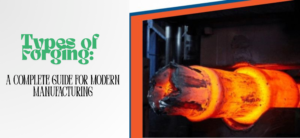

Forging is one of the oldest and most reliable manufacturing processes, yet it continues to be highly relevant in today’s modern industrial world. From automotive and aerospace to oil & gas and power generation, forged components are essential for ensuring strength, durability, and performance.
Whether you are exploring carbon steel forging, sourcing precision components like forging flanges, or looking for a trusted forging supplier in India, understanding the different types of forging processes is crucial.
What is Forging?
Forging is a metal shaping process that uses compressive forces, typically applied through hammers, presses, or dies. Unlike casting or machining, forging improves the internal grain structure of the metal, making it stronger and more resistant to fatigue and impact.
This enhanced strength is why forged components are widely used in high-stress applications where reliability is critical.
Different Types of Forging Processes
1. Open Die Forging
Open die forging, also known as smith forging, involves shaping heated metal between flat or simple dies that do not fully enclose the material.
This process is ideal for producing large and simple shapes like shafts, discs, and blocks. It offers excellent mechanical properties and improved grain flow, making it suitable for heavy-duty industrial applications.
2. Closed Die Forging
Closed die forging, or impression die forging, uses specially designed dies to shape metal into precise forms. The metal is placed inside a die cavity and compressed until it takes the desired shape.
This method is widely used for manufacturing complex and high-precision components such as forging flanges, automotive parts, and aerospace components. It ensures consistency, accuracy, and reduced material waste.
3. Ring Rolling Forging
Ring rolling is a specialized forging process used to produce seamless rings. A hole is first punched into a metal billet, and then it is rolled into a ring shape.
This process ensures superior grain structure and strength, making it ideal for bearings, gears, and large industrial rings used in heavy machinery and energy sectors.
4. Cold Forging
Cold forging is performed at or near room temperature. This process enhances surface finish, dimensional accuracy, and strength without the need for heating.
It is commonly used for producing fasteners, bolts, and small components in high volumes. Cold forging is also cost-effective and efficient for mass production.
5. Hot Forging
Hot forging involves heating the metal above its recrystallization temperature, making it easier to shape without cracking. This process is especially suitable for carbon steel forging, as it allows manufacturers to create complex shapes with improved ductility.
Hot forging is widely used in the production of heavy machinery parts, structural components, and industrial flanges.
6. Press Forging
Press forging uses continuous pressure rather than repeated hammer blows to shape the metal. This results in deeper penetration and uniform deformation throughout the material.
It is ideal for producing large, high-strength components with consistent quality and structural integrity.
Why Forging is Important in Modern Industry
Forging offers several advantages over other manufacturing processes:
Superior strength and toughness
- Improved grain structure
- High resistance to fatigue and impact
- Better reliability in critical applications
- Cost efficiency over the long term
These benefits make forging a preferred choice for industries where performance and safety cannot be compromised.
Choosing the Right Forging Partner
Selecting the right forging partner is just as important as choosing the right process. Businesses should look for manufacturers with expertise in carbon steel forging, the capability to produce precision components like forging flanges, and a strong track record in quality and delivery.
One such trusted name is CHW Forge, a leading forging supplier in India known for its advanced manufacturing capabilities and global presence. With a focus on innovation, quality, and customer satisfaction, CHW Forge delivers high-performance forged components across multiple industries.
Conclusion
Understanding the different types of forging processes helps businesses make informed decisions when selecting manufacturing solutions. Each method—whether open die, closed die, hot forging, or cold forging—offers unique advantages depending on the application.
As industries continue to evolve and demand higher performance materials, forging will remain a cornerstone of modern manufacturing. Partnering with an experienced and reliable company like CHW Forge ensures consistent quality, precision, and long-term value.