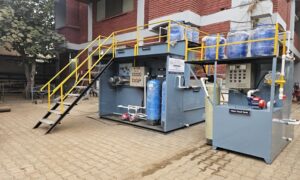

As the global population continues to expand, the demand for clean water is rising exponentially. Meanwhile, urban areas generate massive volumes of wastewater every day from homes, offices, industries, and institutions. Discharging untreated sewage into water bodies poses severe environmental and health hazards. This is where the Sewage Treatment Plant plays a critical role — converting wastewater into clean, reusable water through advanced treatment processes.
A Sewage Treatment Plant is not just an environmental necessity; it is an essential infrastructure for sustainable urban living. It ensures that wastewater is treated before being released into the environment or reused for non-potable purposes like gardening, flushing, or industrial applications.
What is a Sewage Treatment Plant?
A Sewage Treatment Plant is a facility designed to treat domestic or municipal wastewater through physical, chemical, and biological processes. The goal is to remove harmful contaminants, suspended solids, organic matter, and pathogens, making the water safe for discharge or reuse.
STPs are widely used in residential societies, commercial complexes, hospitals, educational institutions, hotels, and industrial zones. They help reduce water pollution, promote water recycling, and ensure compliance with environmental regulations.
How Does a Sewage Treatment Plant Work?
The STP process is a step-by-step sequence that treats sewage efficiently. Here’s how it typically works:
- Preliminary Treatment
- The wastewater first passes through screening chambers that remove large solids such as plastics, rags, and debris.
- Grit chambers then separate sand, gravel, and other heavy particles to prevent damage to mechanical equipment.
- Primary Treatment
- In this stage, wastewater enters sedimentation tanks, where heavier particles settle at the bottom as sludge.
- The clarified liquid (primary effluent) moves forward for biological treatment.
- Secondary (Biological) Treatment
- Microorganisms are introduced to decompose organic matter present in the wastewater.
- Popular biological processes include:
- Activated Sludge Process (ASP)
- Moving Bed Biofilm Reactor (MBBR)
- Sequential Batch Reactor (SBR)
- Membrane Bioreactor (MBR)
- These systems break down organic pollutants and drastically reduce BOD (Biochemical Oxygen Demand) and COD (Chemical Oxygen Demand).
- Tertiary (Advanced) Treatment
- This final stage involves filtration, chlorination, and disinfection to remove remaining impurities and pathogens.
- Advanced processes may include UV treatment, ozonation, or activated carbon filters to ensure high-quality treated water.
Types of Sewage Treatment Technologies
There are various STP technologies depending on capacity, purpose, and operational efficiency:
- Activated Sludge Process (ASP):
A conventional yet effective method that uses aeration and microbial activity to degrade organic waste. - Moving Bed Biofilm Reactor (MBBR):
Uses floating media that provides a large surface area for biofilm growth, improving treatment efficiency. - Sequential Batch Reactor (SBR):
A time-based process where aeration, settling, and decanting occur in the same tank, ideal for space-saving designs. - Membrane Bioreactor (MBR):
Combines biological treatment with membrane filtration to produce high-quality output suitable for reuse. - Extended Aeration System:
Designed for smaller units like housing societies or institutions, offering simple operation and low maintenance.
Benefits of Installing a Sewage Treatment Plant
The advantages of having an STP system go beyond compliance — it is a smart environmental and economic decision:
- ✅ Reduces Water Pollution: Prevents contamination of rivers, lakes, and groundwater.
- ✅ Enables Water Reuse: Treated water can be used for flushing, gardening, cooling towers, and car washing.
- ✅ Compliance with Environmental Norms: Helps organizations meet CPCB and SPCB discharge standards.
- ✅ Minimizes Odor & Health Risks: Properly treated sewage eliminates foul smells and prevents disease outbreaks.
- ✅ Supports Sustainable Living: Contributes to green building certifications like LEED or GRIHA.
- ✅ Lowers Operational Costs: Reduces freshwater demand and minimizes municipal water bills.
Kelvin Water Technologies Pvt. Ltd. – Trusted Name in STP Manufacturing
Kelvin Water Technologies Pvt. Ltd. is a leading Sewage Treatment Plant Manufacturer in India, offering state-of-the-art wastewater treatment solutions for all sectors. The company is known for its innovative design, high-quality manufacturing, and efficient project execution.
With years of experience in water and wastewater management, Kelvin Water Technologies provides turnkey solutions — from design and engineering to installation, commissioning, and maintenance. Their range of STP systems includes:
- Compact and Modular STPs
- Fully Automatic and Semi-Automatic Systems
- MBBR, SBR, and MBR Technology-based Plants
- Prefabricated FRP/STP Units for Small-Scale Applications
Each plant is designed to meet local discharge standards, optimize energy usage, and ensure easy operation and minimal maintenance.
Applications of Sewage Treatment Plants
Sewage Treatment Plants are essential in almost every sector generating wastewater:
- 🏢 Residential Societies & Apartments – To treat domestic wastewater and reuse it for landscape irrigation or flushing.
- 🏨 Hotels & Resorts – To manage greywater and blackwater sustainably.
- 🏭 Industries – For treating domestic waste from staff quarters and office complexes.
- 🏫 Institutions & Hospitals – Ensures hygienic and environmentally safe disposal.
- 🏙️ Municipalities – Large-scale STPs that manage city-level wastewater.
Environmental Importance of STPs
Untreated sewage is one of the biggest sources of water pollution. It depletes oxygen levels in water bodies, harming aquatic life and contaminating freshwater sources. By installing Sewage Treatment Plants, we can significantly:
- Reduce pollution load on the environment.
- Conserve freshwater resources.
- Improve groundwater recharge quality.
- Create opportunities for wastewater recycling and reuse.
Maintenance & Operation of STPs
For consistent performance, regular maintenance is vital. This includes:
- Checking aeration blowers and diffusers.
- Cleaning filters and screens.
- Sludge removal and disposal.
- Routine water quality testing.
- Periodic equipment calibration and servicing.
Future of Sewage Treatment in India
With growing emphasis on sustainability, smart cities, and industrial responsibility, the demand for efficient sewage treatment plants is rising rapidly. Technologies like IoT-based monitoring, membrane filtration, and AI-driven automation are revolutionizing the wastewater industry.
Kelvin Water Technologies Pvt. Ltd. continues to innovate in this space by integrating automation, energy-efficient designs, and advanced biological treatment systems that ensure optimal performance with minimum human intervention.
Conclusion
The Sewage Treatment Plant stands as a cornerstone of modern infrastructure — protecting public health, conserving natural resources, and promoting environmental sustainability. Whether for residential, commercial, or industrial use, STPs are no longer optional but essential for compliance and responsible resource management.
Kelvin Water Technologies Pvt. Ltd. is at the forefront of this transformation, providing advanced, cost-effective, and eco-friendly STP solutions across India. Through innovation and commitment, the company ensures that every drop of wastewater is treated responsibly — transforming waste into a valuable resource for a cleaner, greener future.