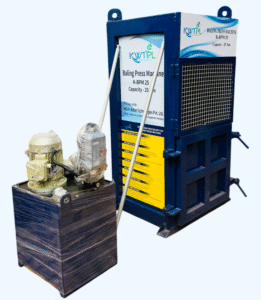

Waste management has become a critical concern for industries worldwide, especially in sectors generating large amounts of recyclable or compressible materials. From manufacturing units and recycling centers to warehouses and commercial facilities, businesses are under immense pressure to streamline waste handling while reducing operational costs. One technology that has revolutionized industrial waste handling is the Baling Press Machine — a powerful, efficient, and reliable solution that compacts loose waste into manageable, transportable bales.
This comprehensive guide explores how baling press machines work, their types, benefits, applications, components, and how they are shaping the future of industrial waste management.
What Is a Baling Press Machine?
A Baling Press Machine, often called a baler, is specialized equipment used to compress various types of waste materials—such as cardboard, plastic, paper, metal scrap, textile waste, PET bottles, and agricultural residue—into dense, uniform bales. These compact bales are easy to transport, store, recycle, and sell, making balers essential for industries aiming to optimize waste handling and recycling efficiency.
The machine uses hydraulic pressure to compress loose waste into a fixed-size bale. Depending on the capacity and model, balers can be manual, semi-automatic, or fully automatic.
Why Industries Use Baling Press Machine?
In modern industries, baling press machines are not just optional—they are essential for multiple reasons:
- Space Saving
Loose waste occupies significant floor area, leading to cluttered workspaces. Balers reduce waste volume by up to 90%.
- Improved Waste Handling
Compressed bales are easier to move, load, and store compared to loose waste.
- Higher Recycling Value
Scrap buyers prefer compact, uniform bales, which often fetch better market prices.
- Decreased Transportation Cost
Transporting waste in bale form reduces the number of trips required, lowering fuel and logistics expenses.
- Environmental Compliance
Balers support recycling efforts and help businesses meet sustainability and waste management norms.
How a Baling Press Machine Works: Step-by-Step Process?
While specific designs vary, the general working principle remains the same:
- Loading Waste
The operator places waste materials into the machine’s chamber manually or using conveyors (in advanced systems).
- Compression
Hydraulic cylinders apply high pressure to compact the material until it reaches the desired bale density.
- Wrapping or Binding
After compression, the bale is tied with steel wires, plastic straps, or ropes to keep it in shape.
- Ejection
The finished bale is automatically or manually ejected from the machine for storage or dispatch.
- Transport
Bales are stacked or loaded onto trucks for recycling centers or waste buyers.
Types of Baling Press Machines
Different industries have different needs. Here are the major categories of balers:
- Vertical Baling Press Machine
- Suitable for small to medium applications
- Economical and compact
- Ideal for cardboard, plastics, textiles
- Horizontal Baling Press Machine
- High-capacity industrial baler
- Suitable for continuous operations
- Handles large volumes of scrap
- Double-Box or Double-Compression Baler
- Used for metal scrap, aluminium, MS, SS, and heavy materials
- Offers high compression ratios
- Triple-Compression Baler
- Heavy-duty baler with three-stage compression
- Used in metal industries and scrap yards
- Fully Automatic Baling Press Machine
- Conveyor-fed
- Automated tying and bale ejection
- Best for large-scale recycling plants
- Scrap Baling Press Machine
- Specifically designed for metal scraps like iron, steel, aluminium
- Produces dense metal blocks
- Textile and Cotton Balers
- Used in garment factories, cotton mills, and textile waste handling
- PET Bottle Baling Machine
- Ideal for bottling plants and recycling centres
Applications of Baling Press Machines Across Industries
Baling machines play a vital role in:
- Recycling centers
- Scrap yards
- E-commerce warehouses
- Manufacturing units
- Logistics companies
- Supermarkets & retail stores
- Paper & pulp industries
- Automobile service centers
- Textile and garment factories
- Plastic processing plants
- Agricultural sectors
Key Components of a Baling Press Machine
A modern baler consists of:
- Hydraulic cylinder
- Power pack unit
- Control panel
- Compression chamber
- Bale ejector
- Conveyor system (in automatic balers)
- Strapping/wire tying system
- Structural frame
- Motor and pump set
Features of an Efficient Baling Press Machine
When selecting a baler, industries look for:
- High compression force
- Low power consumption
- Durable steel construction
- User-friendly controls
- Automatic feeding options
- Heavy-duty hydraulic systems
- Safety features such as emergency stop & interlocks
- Low maintenance design
- Custom bale size options
Benefits of Using Baling Press Machine
- Significant Cost Savings
Less transport cost, reduced storage space requirement, and higher scrap value all contribute to long-term savings.
- Better Workplace Hygiene
Baling eliminates scattered waste, promoting cleaner and safer work areas.
- Improved Operational Efficiency
Workers spend less time handling waste and more time focusing on core tasks.
- Higher Recycling Rates
Balers streamline recycling efforts, supporting sustainability goals.
- Enhanced Environmental Contribution
By reducing landfill waste and improving recyclability, industries actively support environmental conservation.
Choosing the Right Baling Press Machine
Before purchasing a baler, companies must analyze:
- Type of waste
- Daily waste generation
- Required bale size and density
- Operational space available
- Manual vs. automatic requirements
- Budget and long-term cost savings
Latest Innovations in Baling Press Technology
Technological advancements are reshaping the baling industry:
- IoT-enabled balers for remote monitoring
- Energy-efficient power packs
- PLC-controlled automation
- High-tensile steel construction for long life
- Automatic tying systems
- Noise and vibration reduction technology
Maintenance Tips for Long-Lasting Baler Performance
To ensure your baling press machine performs efficiently:
- Conduct routine hydraulic oil checks
- Inspect hoses and cylinders for leaks
- Keep the chamber clean and lubricated
- Monitor pressure settings regularly
- Train operators for safety and usage
- Schedule annual preventive maintenance
Conclusion
Baling press machines have become indispensable in every industry dealing with waste, recyclables, or scrap materials. They help businesses reduce waste volume, improve recycling processes, cut transportation costs, and enhance workplace organization. With advancements in automation, hydraulic technology, and recycling systems, modern balers deliver unmatched efficiency and reliability.
Whether you are managing plastic waste, cardboard scrap, metal scrap, textiles, or agricultural residue, a well-selected and properly maintained baling press machine can transform your waste management system—turning waste into valuable, profitable