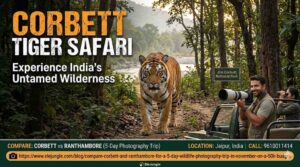

Are you ready to hear the raw, echoing roar of a Bengal tiger? Imagine sitting in an open 4×4 vehicle as the morning mist rises over the Ramganga River. Suddenly, a spotted deer sounds an alarm call. Your guide points silently toward the tall grass. A majestic tiger steps out into the open. This is not a dream. A wilderness excursion here offers one of the finest wildlife experiences in Asia.
Jim Corbett National Park rests smoothly in the picturesque foothills of the Himalayas in Uttarakhand. It spans over 1,300 square kilometers of deep valleys, massive lakes, and dense Sal forests. Most importantly, it holds the highest tiger population density among all national parks in India. This comprehensive guide provides everything you need to know to plan a perfect jungle adventure.
Why Choose Corbett for Your Next Wildlife Adventure?
High Density
The reserve hosts over 250 wild tigers. This statistic translates to incredible sighting opportunities. The vast terrain supports a healthy ecosystem where apex predators thrive naturally.
Historic Legacy
Established in 1936 as Hailey National Park, this is the oldest national park in India. It also represents the proud birthplace of Project Tiger. Tracking big cats here means walking through conservation history.
Scenic Landscapes
The park features stunning geographical diversity. You will explore massive grasslands known as Chaurs, rocky riverbeds, and hilly ridges. The beautiful landscape makes every single frame a photographer’s dream.
Rich Biodiversity
Beyond the majestic Bengal tigers, this protected reserve shelters a remarkable variety of wildlife. You can spot Asiatic elephants, leopards, sloth bears, and various deer species. The diverse ecosystem ensures that every single excursion offers unique wildlife encounters.
Exploring the Top Protected Wilderness Zones
The park operates through distinct tourism zones to manage crowds and protect the pristine habitat. Each zone features separate entry gates and unique wildlife landscapes.
+————————————————————-+
| CORBETT SAFARI ZONE OVERVIEW |
+——————-+——————–+——————–+
| ZONE NAME | CORE HIGHLIGHTS | BEST EXCURSION |
+——————-+——————–+——————–+
| Dhikala | Massive Grasslands | Canter Safari |
| Bijrani | Mixed Vegetation | Jeep Tracking |
| Jhirna | Year-Round Access | Sloth Bear Sightings|
| Dhela | Eco-Tourism Focus | Bird Watching |
+——————-+——————–+——————–+
| Note: Book permits at least 45 days early via official hub |
+——————-+——————–+——————–+
Dhikala Zone
This zone is the undisputed crown jewel of the reserve. It features the vast Dhikala Chaur, which is one of the largest grassland patches in Asia.
- Landscape: Open plains
- Key Animals: Wild elephants
- Safari Mode: Canter only
Bijrani Zone
Wildlife enthusiasts love this sector for its excellent tracking history. The area boasts deep drains and dense forest patches that provide perfect camouflage for the big cats.
- Landscape: Sal forest
- Key Animals: Bengal tigers
- Safari Mode: 4×4 Jeep
Jhirna Zone
Located on the southern boundary of the reserve, this area welcomes tourists throughout the entire year. It provides an excellent alternative option if core permits sell out completely.
- Landscape: Scrub land
- Key Animals: Sloth bears
- Safari Mode: 4×4 Jeep
Dhela Zone
This ecological zone highlights successful forest regeneration. It provides wonderful opportunities to witness nature reclaiming old farmland while offering rich biodiversity and excellent birdlife.
- Landscape: Mixed forest
- Key Animals: Birds, Tigers
- Safari Mode: 4×4 Jeep
Garjiya Zone
A newer addition to the tourism map, this beautiful zone features scenic landscapes alongside the Kosi River. It matches the high tiger density of neighboring sectors and offers fantastic morning tracking routes.
- Landscape: Hilly terrain
- Key Animals: Leopards, Tigers
- Safari Mode: 4×4 Jeep
Selecting Your Preferred Safari Vehicle Options
You can explore the wilderness through two primary government-approved vehicle modes. Both modes offer unique advantages for tracking animals.
Jeep Safari
Open 4×4 Gypsies offer the most intimate and flexible wilderness experience. A private jeep accommodates up to six adults comfortably. It allows you to move silently along narrow forest tracks and stop instantly for photographs.
Canter Safari
The open-roof 16-seater canter operates exclusively in the core Dhikala zone. It is the perfect cost-effective option for larger groups or solo travelers who want to access the deepest parts of the reserve without an overnight stay permit.
Timing Your Visit for Peak Tiger Sightings
The timing of your trip dictates your overall wilderness experience. Plan your itinerary around these seasonal changes.
+————————————————————-+
| SEASONAL TRAVEL FINDER |
+————-+———————–+———————–+
| SEASON | MONTHS | PRIMARY FOCUS |
+————-+———————–+———————–+
| Winter | November to February | Birding & Photography |
| Summer | March to June | Peak Tiger Tracking |
| Monsoon | July to October | Lush Green Scenery |
+————-+———————–+———————–+
Summer Focus
The months from March to June offer the highest probability for a successful jungle tour. Scorching heat dries up natural forest waterholes. Consequently, apex predators frequent the Ramganga River and major channels daily to cool down.
Winter Charm
November to February brings cool, pleasant weather and beautiful misty mornings. While thick winter vegetation makes mammal tracking slightly harder, the park welcomes over 100 species of migratory birds during these months.
Monsoon Quiet
From July to October, heavy rains transform the landscape into a vibrant green paradise. While major core zones close due to flooded roads, the buffer zones provide a serene experience for nature lovers.
Navigating the Official Safari Booking Rules
Securing a permit requires careful planning because the forest department enforces strict daily vehicle limits to protect the fragile environment.
Advance Planning
Indian citizens must book safari permits at least 45 days before the travel date. Foreign nationals should initiate booking 90 days in advance to guarantee slots during peak weekends.
Official Channels
Always use the registered forest department online portal for all your reservations. Avoid unauthorized third-party websites that use misleading brand variations or unofficial landing pages.
Strict Verification
You must provide a valid government-issued photo ID like a driving license or passport during booking. Carry the exact same physical ID to the entry gate for mandatory ranger verification.
Understanding Elephant Conservation Inside the Park
The park plays a critical role in preserving the Asian elephant population. Huge herds migrate across the Ramganga river basin regularly. Protecting these migration corridors remains a top priority for the forest department, ensuring that elephants and tigers coexist peacefully in this vast landscape.
Essential Packing List for the Jungle
- Earth Tones: Khaki clothing
- Sun Protection: Wide-brimmed hat
- Optics Equipment: Compact binoculars
- Hydration Source: Metal bottle
- Dust Defense: Cotton scarf
- Layered Clothing: Warm fleece
Expert Practical Wildlife Tracking Advice
- Maintain Silence: Avoid loud talking during the drive. Noise alerts predators and ruins the experience for everyone.
- Listen Closely: Pay attention to langur and deer alarm calls. These jungle warnings reveal predator movements instantly.
- Follow Rangers: Never step out of your designated vehicle. The wild animals deserve respect and space in their home.
- Keep Patience: Tiger tracking takes time and persistence. Enjoy the entire ecosystem, from giant trees to rare eagles.
Frequently Asked Questions
Which zone is best for a nature reserve tour?
The Dhikala and Bijrani zones offer the highest historical sighting success rates due to their water sources and grasslands.
Can I book a jeep safari on arrival?
No, spot bookings do not exist for core areas. You must secure official permits online well in advance.
Is mobile network coverage available inside the park?
No, core forest areas lack mobile signals entirely. The Supreme Court also bans phone usage during safaris.
Are night stays permitted inside the reserve?
Yes, you can book historical forest rest houses inside zones like Dhikala for a true wilderness experience.
What is the fee for an official jungle guide?
The mandatory guide fee is currently nine hundred rupees, payable directly at the entry gate.
How many tourists sit in one jeep safari?
A maximum of six adult tourists and two children can travel in a single registered 4×4 safari vehicle.
Conclusion
Planning a memorable wildlife holiday promises an unforgettable journey into India’s premier wild sanctuary. By understanding the diverse tourism zones, securing your permits early through official systems, and choosing the right season, you maximize your chances of witnessing magnificent big cats in their natural home during your Corbett tiger safari. Remember to pack neutral clothing, follow your guide’s instructions implicitly, and respect the jungle laws. The rich wilderness of Uttarakhand waits to show you its raw, untamed beauty.