
A business video can have beautiful lighting, expensive equipment, professional actors, and a polished edit—and still lose the viewer within seconds.
The problem is rarely the camera.
It is usually the first piece of information the viewer receives.
Most companies begin a video by introducing themselves. They show a building, display a logo, introduce the owner, or explain what the company does. That feels logical from the business side. From the viewer’s side, it can feel like waiting for the actual subject to begin.
A stronger approach is to start with a moment that creates a question.
What happened?
How was this made?
Why is this difficult?
What is about to happen?
That question becomes the reason to continue watching.
Start With an Unfinished Moment
One of the most useful techniques in commercial filmmaking is to avoid showing the complete picture immediately.
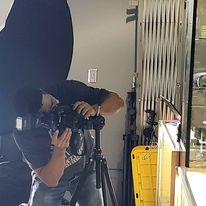
Imagine a close-up of a technician adjusting a piece of equipment. We do not yet know what the equipment does. We hear a conversation in the background. A second shot reveals a wider workspace. Then the person explains what is being prepared.
The viewer is assembling the situation while watching it.
This is very different from opening with a logo and a sentence such as, “We are a leading company providing professional solutions.”
The second approach gives information.
The first creates curiosity.
That distinction matters because attention is not created by volume, fast transitions, or dramatic music. It is often created by withholding just enough information to make the next shot useful.
The First Ten Seconds Should Have a Job
The opening of a business film should not exist simply because every video needs an introduction.
It should establish a direction.
A product video might begin with the problem the product solves.
A testimonial could open on the strongest sentence from the customer rather than their introduction.
A company profile might begin with the most visually revealing part of the operation.
A training video can start with the mistake the viewer needs to avoid.
An event video can begin with the moment when the atmosphere changes.
These openings feel different because they begin with the subject rather than the company’s need to introduce itself.
Shoot for the Edit, Not for the Camera
Another overlooked issue is coverage.
A beautiful shot can be nearly useless if there is nothing to connect it to.
Professional production requires a mixture of wide shots, medium shots, details, reactions, movement, environmental footage and clean audio. This gives the editor enough material to build rhythm without forcing unrelated clips together.
A close-up of hands working can connect an interview statement to a wider scene. A brief shot of someone entering a room can bridge two locations. Background activity can establish scale. Room tone can make an audio cut feel natural.
These details rarely become the headline of a production, but they often determine whether the final edit feels deliberate or assembled.
For businesses planning different forms of visual communication, Film Pro Productions’ video production services include company profiles, marketing videos, testimonial videos, product videos, training videos, web videos, animation, and live streams.
Let the Business Provide the Visual Language
Not every company should look cinematic in the same way.
A manufacturing environment may naturally provide mechanical movement, repetition, texture and sound.
A professional service may depend more heavily on people, interviews, conversation and carefully selected environmental details.
A product-based business may need controlled demonstrations.
An event may require anticipation because important moments happen only once.
The location should influence the production instead of becoming a generic background.
This is where a filmmaker’s observation becomes valuable. The camera should search for what is distinctive about the business, not simply what photographs well.
The Best Footage Is Often the Footage Nobody Requested
Clients commonly ask for obvious shots: the building, team photo, product, office, interview, and logo.
Those shots have value.
But the footage that gives a business film personality is often something else.
The employee checking something twice.
A preparation ritual before a job.
A customer interaction.
A tool being selected.
A moment of concentration.
A workspace before everyone arrives.
A small correction made by someone experienced.
These details create a sense of reality that staged hero images cannot provide on their own.
Film Pro Productions approaches projects across commercial, company profile, testimonial, product, training, web and live formats, where these small production decisions can shape how the finished piece communicates. Its portfolio shows examples across promotional, testimonial, event, full-production and other video work.
A Better Question for Business Owners
Before approving a shot list, there is one question worth asking:
“What happens inside our business that a new customer would never understand from reading our website?”
That answer may reveal the real opening scene.
It may be the preparation.
The process.
The people.
The difficult part.
The detail.
The moment before the finished result.
Once that moment is found, the video stops being a company introduction and becomes an experience.
That is the difference between showing a business and actually letting an audience see how it works.
And sometimes, the most effective beginning is not the most impressive image.
It is the image that makes the viewer think:
“Wait. What happens next?”