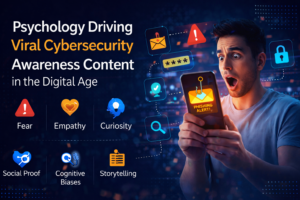

In today’s digital-first world, cybersecurity awareness is more important than ever. Yet, despite the growing number of threats such as phishing, ransomware, and social engineering, many awareness campaigns fail to engage users effectively. The reason is simple: traditional approaches often overlook human psychology. Viral cyber awareness content, on the other hand, succeeds because it taps into how people think, feel, and behave online.
Understanding the psychological factors behind viral content can help organizations create cybersecurity messages that not only capture attention but also drive real behavioral change.
The Power of Attention in a Crowded Digital Space
People today are constantly scrolling through content on their devices. With limited attention spans, users tend to ignore long, complex, or technical information. Cybersecurity content often falls into this category, making it difficult to engage audiences.
Viral cyber awareness content overcomes this challenge by being short, visually appealing, and easy to understand. It delivers key messages quickly, reducing cognitive effort. When users can grasp a concept in seconds, they are more likely to engage with it and remember it.
Emotional Triggers Drive Engagement
One of the biggest reasons cyber awareness content goes viral is its ability to evoke emotions. Human decisions are heavily influenced by feelings, and content that triggers emotions is more likely to be shared.
- Fear highlights the consequences of cyber threats, such as data loss or identity theft.
- Empathy connects users to real-life stories of victims, making threats feel personal.
- Curiosity encourages users to learn more about hidden risks or unknown dangers.
- Surprise grabs attention through unexpected facts or scenarios.
The key is balance. While fear can motivate action, combining it with practical solutions ensures users feel empowered rather than overwhelmed.
Storytelling Makes Cybersecurity Relatable
Storytelling is a powerful psychological tool. Instead of presenting technical explanations, viral cyber content often uses real-life scenarios. For example, a short video showing how an employee falls for a phishing email and causes a data breach is more impactful than a list of warning signs.
Stories help users visualize risks and understand consequences. They also make content more memorable. When people see themselves in a story, they are more likely to change their behavior.
Social Proof Encourages Sharing
Social proof plays a major role in making content go viral. When users see that a post has many likes, shares, or comments, they perceive it as valuable and trustworthy. This increases the likelihood of further engagement.
In cybersecurity, sharing awareness content also allows individuals to signal responsibility. People feel good about spreading useful information that can help others stay safe. This creates a ripple effect, amplifying the reach of the message.
Cognitive Biases Influence Behavior
Human behavior is shaped by cognitive biases, and effective cyber awareness content leverages these mental shortcuts.
- Loss aversion makes people more sensitive to potential losses than gains. Highlighting what users could lose—money, data, or privacy—drives action.
- Availability bias makes recent or memorable events feel more likely. Referencing real cyber incidents increases perceived risk.
- Recency effect ensures that users remember the last message they see, making strong conclusions important.
By aligning with these biases, cybersecurity messages become more persuasive and impactful.
Visual Content Enhances Understanding
Visual elements play a crucial role in engagement. Videos, infographics, and animations can simplify complex cybersecurity concepts. Bright visuals, icons, and short captions make information easier to process and remember.
In addition, sound and motion can enhance emotional impact. A short, well-designed video with the right tone can communicate urgency and importance far more effectively than text alone.
Relatability and Simplicity Are Key
For content to resonate, it must feel relevant. Viral cyber awareness campaigns focus on everyday situations—like using public Wi-Fi, clicking on emails, or creating passwords. These familiar scenarios help users connect with the message.
Simplicity is equally important. Avoiding technical jargon and using clear, concise language ensures that the message is accessible to everyone. The goal is to provide actionable advice that users can apply immediately.
Timing and Trends Matter
Content that aligns with current events or trending topics is more likely to gain attention. For instance, during a major data breach, awareness content related to that incident becomes highly relevant.
Using popular formats such as short videos or social media posts also increases visibility. Meeting users where they are and delivering content in familiar formats boosts engagement.
Conclusion
The success of viral cyber awareness content lies in its understanding of human psychology. By leveraging emotions, storytelling, social proof, and cognitive biases, organizations can create messages that resonate with users.
In a world where cyber threats are constantly evolving, awareness must go beyond information—it must inspire action. Viral content achieves this by making cybersecurity engaging, relatable, and easy to understand.
Ultimately, when cybersecurity communication aligns with how people naturally consume and respond to content, it becomes far more effective. By applying these psychological principles, organizations can build stronger awareness, encourage safer behavior, and foster a more secure digital environment.
Read More: https://cybertechnologyinsights.com/cybertech-staff-articles/why-emotional-cyber-videos-go-viral/