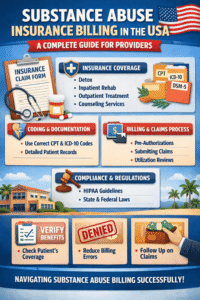

For every patient walking through the doors of a substance abuse treatment facility, there’s an equally critical journey happening behind the scenes. That journey involves navigating one of the most complex financial landscapes in American healthcare. With over 40 million Americans battling substance use disorders according to recent SAMHSA data, the pressure on treatment centers to deliver quality care while maintaining financial viability has never been more intense.
The reality is stark: even the most compassionate, evidence-based treatment programs can shutter their doors if they cannot effectively manage the revenue cycle. At the heart of this challenge lies substance abuse insurance billing, a specialized field that demands constant vigilance, regulatory expertise, and technological sophistication. As we move further into 2026, providers are discovering that success isn’t just about clinical outcomes anymore—it’s about creating sustainable financial operations that support long-term patient care.
The Unique Challenges of Substance Abuse Billing
Unlike general medical practices, substance abuse treatment centers face a distinct set of billing obstacles that can make or break their operations. The historical stigma surrounding addiction treatment has created a fragmented insurance landscape where coverage varies wildly between carriers, states, and even individual plans.
The Parity Act and Its Implementation Gaps
The Mental Health Parity and Addiction Equity Act (MHPAEA) was supposed to level the playing field, requiring insurers to cover mental health and substance abuse treatment at the same level as medical surgical benefits. On paper, this legislation created a foundation for equitable access. In practice, however, implementation has been inconsistent at best.
Consider this scenario: A patient with commercial insurance presents for residential treatment. The insurer approves the initial 30-day stay but suddenly denies coverage for the remaining week, citing “lack of medical necessity.” The provider is left with a $15,000 unpaid claim, the patient is discharged prematurely, and the facility’s revenue cycle suffers another blow.
This scenario plays out daily across America’s treatment centers. The complexity of substance abuse billing services has grown exponentially as insurers deploy increasingly sophisticated denial tactics while regulators struggle to enforce parity compliance.
Medical Necessity Documentation: The Battlefront
The cornerstone of successful substance abuse insurance billing lies in robust medical necessity documentation. Insurers require concrete evidence that each day of treatment is clinically necessary, medically appropriate, and that less intensive levels of care have been considered and ruled out.
What exceptional documentation looks like:
-
Admission criteria clearly documented and met
-
Daily progress notes that justify continued stay
-
Functionality assessments showing impairment levels
-
Specific treatment goals tied to diagnosis codes
-
Discharge planning initiated on day one
-
Evidence of patient engagement and participation
When these elements are absent or inadequate, denials multiply rapidly. This is where the expertise of specialized substance abuse billing companies becomes invaluable—they understand precisely what each payer requires and can guide clinical staff in documentation that withstands scrutiny.
The Financial Lifeline: Professional Revenue Cycle Management
The financial health of any treatment center depends on an efficiently managed revenue cycle. This isn’t simply about submitting claims and hoping for payment—it’s a comprehensive system that touches every department from admissions to discharge and beyond.
Patient Financial Clearance: The First Defense
Before a patient ever begins treatment, the groundwork for successful reimbursement must be laid. This initial phase often determines whether a facility will get paid or struggle with collections months later.
Essential steps in financial clearance:
-
Verification of benefits for mental health and substance abuse coverage
-
Prior authorization obtained for the specific level of care being recommended
-
Patient financial responsibility clearly communicated and documented
-
Secondary insurance identified and verified
-
Out-of-network benefits explored when necessary
Too many facilities rush through this process, eager to get patients into treatment. The result? Surprise denials, patient confusion, and revenue leakage that compounds over time. Revenue cycle management services that specialize in behavioral health understand these nuances and can implement verification protocols that protect the facility while ensuring patients receive timely care.
Credentialing: The Gateway to Reimbursement
One of the most overlooked yet critical components of successful billing is provider credentialing. Without proper credentials in place, services rendered may be deemed ineligible for reimbursement regardless of medical necessity.
Credentialing services ensure that:
-
Providers are properly enrolled with commercial and government payers
-
Contract rates are accurately applied
-
Recredentialing timelines are tracked and completed before expiration
-
New providers are onboarded without gaps in coverage
Imagine hiring an exceptional clinical psychologist only to discover they cannot bill for their services for 90 days while credentialing is processed. That’s significant revenue lost—not to mention the frustration for both the provider and the facility’s billing team. Professional credentialing services prevent these costly delays and ensure that every provider’s work translates into billable services.
Coding Precision: Translating Clinical Care into Billable Services
The connection between clinical documentation and billing codes is where the rubber meets the road in substance abuse insurance billing. Inaccurate or incomplete coding leads directly to denials, payment delays, and regulatory scrutiny.
Common coding challenges in substance abuse:
-
Distinguishing between detoxification and rehabilitation services
-
Proper use of ICD-10 codes for substance use disorders
-
Correct application of CPT codes for various therapeutic interventions
-
Understanding the nuances of partial hospitalization vs. intensive outpatient
-
Properly coding for medication-assisted treatment
Medical coding services specialized in behavioral health bring enormous value to treatment centers. These professionals understand the specific coding requirements for substance abuse treatment, stay current with annual code updates, and can identify documentation gaps before claims are submitted.
The Integration of Billing and Clinical Operations
Forward-thinking treatment centers are moving away from the traditional silo approach where billing operates separately from clinical services. Instead, they’re creating integrated systems where financial and clinical teams collaborate toward shared goals.
Daily Census Management
One of the most effective tools in substance abuse billing is daily census management. This involves real-time tracking of:
-
Active patients by level of care
-
Length of stay projections
-
Insurance coverage updates
-
Discharge planning status
-
Documentation completion rates
When these elements are actively managed, facilities can identify potential revenue issues days or weeks before they become problems. For example, if a patient’s insurance only covers 21 days of residential treatment, the team can plan for step-down care on day 18, ensuring continuity and preventing coverage gaps.
Denial Management: Turning Losses into Lessons
No billing department is immune to denials—what matters is how they’re handled. Leading facilities have transformed denial management from a reactive fire-fighting exercise into a proactive improvement system.
A structured approach to denial management includes:
-
Daily denial tracking by payer, reason code, and dollar amount
-
Root cause analysis to identify systemic issues
-
Corrective action plans involving clinical and administrative teams
-
Appeals management that pursues legitimate claims
-
Trend analysis showing improvement over time
Many facilities have found that working with medical billing and coding services that specialize in behavioral health can dramatically improve denial rates. These organizations bring expertise across multiple payers and can quickly identify patterns that internal teams might miss.
The Evolving Landscape of Substance Abuse Insurance Coverage
As we navigate 2026, several trends are reshaping the landscape of substance abuse insurance billing:
Telehealth Integration
The COVID-19 pandemic accelerated telehealth adoption permanently. Today, many treatment centers offer hybrid programs combining in-person and virtual services. This creates new billing complexities around:
-
Telehealth-specific modifiers
-
Different reimbursement rates for virtual vs. in-person services
-
State licensure requirements for tele-behavioral health
-
Audio-only vs. video requirements
Value-Based Care Models
While fee-for-service still dominates, value-based arrangements are gaining traction in behavioral health. These models tie reimbursement to outcomes rather than volume, requiring sophisticated data collection and reporting capabilities.
Implications for billing and coding include:
-
Outcome measure documentation
-
Quality metric reporting
-
Patient satisfaction tracking
-
Recidivism rate monitoring
State-Specific Mandates
States are increasingly passing legislation requiring coverage for substance abuse treatment, but these mandates vary widely. A facility operating in multiple states must navigate this complex patchwork of requirements.
Real-World Impact: A Case Study
Consider the experience of a 120-bed residential treatment center in the Midwest that was struggling with a 28% denial rate and average days in accounts receivable exceeding 65. The clinical team was frustrated by frequent interruptions regarding documentation requirements, and the administrative team was overwhelmed with appeals.
After partnering with a specialized substance abuse billing company, the facility implemented:
-
Standardized documentation templates aligned with payer requirements
-
Daily pre-bill audits to catch errors before submission
-
Automated insurance verification integrated with the EHR
-
Dedicated credentialing specialists for each provider type
-
Continuous staff education on coding and documentation
Within six months, the denial rate dropped to 12%, AR days decreased to 42, and the clinical team reported spending significantly less time on administrative tasks. The financial improvement allowed the center to expand its scholarship program for uninsured patients, fulfilling its mission more effectively.
Building a Sustainable Billing Infrastructure
For treatment centers looking to optimize their substance abuse insurance billing, several foundational elements are essential:
Technology Investments
Modern billing requires modern tools. Facilities should consider:
-
Integrated EHR and billing systems that eliminate duplicate data entry
-
Claim scrubbing software that catches errors before submission
-
Electronic eligibility verification for real-time coverage checks
-
Patient payment portals that simplify collections
-
Analytics dashboards for tracking key performance indicators
Staff Training and Development
Even the best technology cannot replace knowledgeable staff. Ongoing education should cover:
-
Coding updates and changes
-
New payer policies and requirements
-
Documentation best practices
-
Appeals writing and negotiation skills
-
Patient communication about financial matters
Compliance Infrastructure
Given the regulatory scrutiny on substance abuse treatment, compliance cannot be an afterthought. Key components include:
-
Regular internal audits
-
Clear policies and procedures
-
Documentation of clinical necessity
-
HIPAA compliance in all interactions
-
Up-to-date knowledge of anti-kickback and Stark Law provisions
The Patient Experience Connection
What many facilities miss is the direct connection between billing operations and patient satisfaction. When billing processes are smooth, patients experience less stress about financial matters and can focus on their recovery.
Ways billing impacts patient experience:
-
Clear communication about financial responsibility reduces anxiety
-
Fewer surprise bills build trust in the organization
-
Smooth insurance processing allows patients to focus on treatment
-
Transparent policies about payments and collections respect patient dignity
-
Flexible payment options demonstrate commitment to access
Looking Forward: The Future of Substance Abuse Billing
Several emerging trends will likely shape the landscape in coming years:
Artificial Intelligence and Automation
AI-powered billing solutions can identify claim errors before submission, predict which claims will be denied, and automate routine tasks. Early adopters are seeing significant efficiency gains and reduced denial rates.
Behavioral Health Integration
As healthcare moves toward integrated care models, substance abuse billing will increasingly intersect with primary care billing, creating new opportunities and challenges.
Government and Commercial Payer Alignment
Efforts to improve parity enforcement may reduce some of the current variation between payers, though this remains an evolving area.
Conclusion
The journey from patient admission to full payment is complex, but it’s a journey that every treatment center must master. Effective substance abuse insurance billing requires more than just submitting claims—it demands an integrated approach that connects clinical documentation, coding precision, and revenue cycle management.
When treatment centers invest in specialized expertise for substance abuse billing services, they’re not just protecting their bottom line—they’re ensuring that they can continue serving patients for years to come. Whether through medical coding services that ensure accurate claim submission, credentialing services that prevent reimbursement delays, or comprehensive medical billing and coding services that streamline the entire process, the right support can transform financial operations.
The organizations that succeed in today’s challenging environment are those that view billing not as a necessary evil but as an essential component of their mission. They understand that financial sustainability enables clinical excellence, and they invest accordingly. For treatment centers seeking to strengthen their financial operations, 247 Medical Billing Services represents the kind of specialized partnership that can make a tangible difference in denial rates, cash flow, and overall financial health.
In the end, effective substance abuse insurance billing is about more than money—it’s about ensuring that America’s recovery centers can continue their vital work of healing individuals, strengthening families, and building healthier communities.
Frequently Asked Questions
1. What is the difference between substance abuse billing and general medical billing?
Substance abuse billing involves specific challenges that general medical billing doesn’t encounter. These include navigating mental health parity laws, dealing with varying levels of care (detox, residential, partial hospitalization, intensive outpatient, and outpatient), obtaining prior authorization for each level, and documenting medical necessity for continued stay. Additionally, substance abuse claims face higher scrutiny and denial rates than general medical claims, requiring specialized expertise in appeals and payer-specific requirements.
2. How can a treatment center reduce claim denials for substance abuse services?
Reducing denials requires a multi-pronged approach. First, ensure robust insurance verification and prior authorization before admission. Second, implement clinical documentation templates that specifically address medical necessity criteria required by major payers. Third, conduct pre-bill audits to catch errors before claims are submitted. Fourth, track denial patterns to identify systemic issues. Finally, invest in ongoing staff training on coding, documentation, and payer requirements. Many facilities find that partnering with specialized billing companies significantly reduces their denial rates.
3. Why is credentialing important in substance abuse billing?
Credentialing ensures that providers are properly enrolled with insurance carriers and eligible for reimbursement. Without active credentials, services may be denied regardless of medical necessity. Credentialing also affects contract rates, timely payment, and the facility’s ability to participate in provider networks. Given that credentialing can take 60-120 days for new providers, proactive management is essential to prevent revenue gaps when bringing on new clinical staff.
4. What are common coding errors in substance abuse billing?
Common errors include improper use of ICD-10 codes for substance use disorders, incorrect application of CPT codes for therapeutic services, confusion between detoxification and rehabilitation coding, failure to use appropriate modifiers for telehealth services, and inadequate linkage between diagnosis codes and procedure codes. These errors often result from insufficient training on behavioral health-specific coding requirements and can be significantly reduced through specialized medical coding services.
5. How does medical necessity documentation affect insurance reimbursement?
Medical necessity documentation is arguably the most critical factor in insurance reimbursement for substance abuse treatment. Insurers require evidence that each day of treatment is clinically necessary and that less intensive levels of care have been considered. Documentation must demonstrate the patient’s functional impairment, specific treatment goals, engagement in therapy, and progress toward discharge. When documentation is weak or inconsistent, claims are routinely denied for “lack of medical necessity,” regardless of the treatment’s clinical value.
6. Can outsourcing billing services improve a treatment center’s financial performance?
Outsourcing substance abuse insurance billing to specialized companies can significantly improve financial performance for many treatment centers. These organizations bring expertise across multiple payers, sophisticated technology platforms, dedicated denial management teams, and economies of scale that individual facilities cannot replicate. However, the decision to outsource should consider the center’s size, complexity, and internal capabilities. Many facilities find that a hybrid approach—outsourcing complex payer management while maintaining internal relationships—offers the best balance of expertise and control.