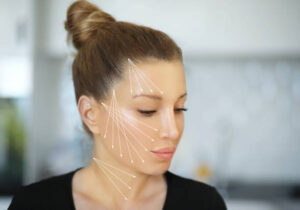

The thread lift market in Dubai has expanded rapidly, leaving patients confused by the array of options. Facelift with Silhouette Threads in Dubai represents the gold standard in suspension technology, utilizing bidirectional PLLA cones that anchor into the subdermal plane for mechanical lift and collagen induction. The primary benefit over standard PDO threads is superior anchoring strength and significantly longer-lasting results—18 to 24 months compared to 6 to 9 months.
The Engineering Behind the Lift
Why Not All Threads Are Equal
Thread lifts are often discussed as a single category, but the materials and design differ dramatically. PDO threads are made from polydioxanone, a polymer that has been used in surgical sutures for decades. They typically feature small barbs or cogs that catch tissue during insertion. These barbs provide a temporary mechanical grip but degrade quickly as the PDO dissolves over 4 to 6 months.
Silhouette Soft threads represent a fundamentally different approach. Instead of barbs, they feature smooth, resorbable cones made from poly-L-lactic acid (PLLA). These cones act as tissue anchors, distributing tension across a wider surface area. This design prevents the “cheese-wiring” effect—where a thin barbed thread slices through delicate facial tissue under tension—and provides a more durable lift from day one.
The Collagen Question
Both PDO and PLLA stimulate collagen production. The difference lies in the duration and intensity of that stimulation. PDO threads create a mild inflammatory response that stimulates collagen for approximately 3 to 4 months. PLLA cones create a more sustained response, with collagen deposition continuing for up to 12 months as the PLLA slowly hydrolyzes into lactic acid.
For patients seeking a facelift with Silhouette Threads in Dubai, this extended collagen phase means that results often improve over time. The lift is immediate, but the skin quality, thickness, and elasticity continue to enhance as the PLLA does its work.
Data Comparison: Silhouette Soft vs PDO Threads
Clinical Parameters for Facial Lifting
The table below provides a direct comparison between Silhouette Soft and PDO cog threads across the parameters that matter most for facial lifting outcomes.
| Parameter | Silhouette Soft Threads | PDO Cog Threads |
|---|---|---|
| Material | Poly-L-lactic acid (PLLA) | Polydioxanone (PDO) |
| Anchoring System | Smooth bidirectional cones | Barbed or cogged suture |
| Tension Distribution | Wide surface area (cones) | Narrow points (barbs) |
| Risk of Tissue Tearing | Low | Moderate to high |
| Immediate Lift Strength | Strong | Moderate |
| Collagen Stimulation Duration | Up to 12 months | 3-4 months |
| Longevity of Results | 18-24 months | 6-9 months |
| Procedure Time | 30-45 minutes | 20-30 minutes |
| Cost per Session | Higher | Lower |
| Sessions Needed Annually | 0.5-0.7 (one every 18-24 months) | 1-1.5 (one every 6-9 months) |
When evaluating lifetime cost, the Silhouette option is often more economical despite the higher upfront price. Patients requiring PDO threads every 6-9 months will spend more over a two-year period than a patient receiving one Silhouette treatment.
Clinical Protocol: Thread Selection Logic
The Assessment Process
At Tajmeels Clinic, the choice between Silhouette Soft and PDO threads is not based on patient preference alone—it is a clinical decision informed by tissue quality, laxity severity, and aesthetic goals. The practitioner begins with a pinch test to assess skin elasticity. Patients with good elasticity and mild laxity may be candidates for either option. Patients with moderate laxity or a history of failed PDO treatments are directed toward Silhouette Soft.
The practitioner also assesses the depth of the superficial musculoaponeurotic system (SMAS). If the SMAS has descended significantly, PDO barbs are unlikely to hold the tissue in place. The cone-based anchoring of Silhouette Soft provides the necessary grip to reposition the SMAS and sustain the lift.
The Insertion Technique Differences
PDO threads are typically inserted using a sharp cannula or needle. The barbs catch tissue during insertion, but they also create micro-tears that contribute to post-procedure swelling and bruising. The sharp tip carries a higher risk of neurovascular injury, particularly in the temple region where the temporal branch of the facial nerve lies.
Silhouette Soft threads are inserted using a blunt-tipped cannula. This design pushes aside vessels and nerves rather than cutting through them. The result is a safer procedure with significantly less post-procedure bruising. For patients seeking a facelift with Silhouette Threads in Dubai, this safety profile is a critical differentiator.
“I had PDO threads done at another clinic and the result disappeared after four months. The Silhouette lift at Tajmeels was more expensive, but a year later, my jawline is still defined. I wish I had done this first.”
— Layla H., Dubai Hills
The Recovery Comparison
Both procedures involve some degree of post-treatment swelling. PDO threads typically cause more bruising due to the sharp needle trauma. Silhouette Soft threads, placed with a blunt cannula, result in less vascular disruption. Patients can typically return to work within 48 hours for Silhouette Soft, compared to 3-4 days for PDO threads placed with a sharp cannula.
Expected Results and Maintenance
The Longevity Differential
The most significant difference between the two modalities is longevity. PDO threads dissolve completely within 4 to 6 months. Once the thread is gone, the lift is gone—the collagen stimulated during this period is minimal and fades quickly. Silhouette Soft threads also dissolve, but the PLLA cones leave behind a dense collagen matrix that maintains the lift for an additional 12 to 18 months.
This is why patients who have experienced both treatments describe them as fundamentally different. PDO feels like a temporary tightening. Silhouette Soft feels like a structural restoration. The difference is not in the immediate result—both lift—but in what happens at month six.
“I asked my doctor why the Silhouette threads cost more than PDO. He said, ‘Because they are still working when the PDO would be gone.’ He was right. Nine months in, my skin still feels firm.”
— Omar S., Palm Jumeirah
Maintenance Scheduling
For PDO thread patients, maintenance treatments are typically scheduled every 6 to 9 months. This creates a cycle of repeated procedures, each with associated downtime and cost. For Silhouette Soft patients, maintenance is scheduled at 18 to 24 months. The extended interval reduces cumulative downtime and provides a more stable aesthetic result over time.
For those seeking the most durable clinical outcome, opting for a professional Facelift with Silhouette Threads in Dubai at a center that prioritizes material science over marketing hype guarantees a result that endures beyond the initial swelling.
The Strategic Investment
Why Material Science Matters
A thread lift is only as good as the material it is made from. PDO threads served a purpose when they were introduced—a minimally invasive option for patients not ready for surgery. But the technology has been superseded. The cone-based anchoring system of Silhouette Soft represents the current standard in tissue suspension technology.
The Dubai Context
Dubai patients are sophisticated consumers. They research, compare, and ask hard questions. Tajmeels Clinic understands that transparency about materials, longevity, and expected outcomes builds trust. The goal is not to sell threads—it is to provide the right thread for the right patient at the right time.
Frequently Asked Questions
1. Why is Silhouette Soft more expensive than PDO threads?
Silhouette Soft uses PLLA cones that require more complex manufacturing than barbed PDO sutures. The extended longevity—18 to 24 months versus 6 to 9 months—means fewer treatments over time. When calculated on a per-month basis, Silhouette Soft is often more economical.
2. Can I switch from PDO to Silhouette threads?
Yes. Many patients try PDO threads first due to the lower upfront cost, then switch to Silhouette Soft when they experience disappointment with longevity. There is no medical contraindication to switching. The practitioner will simply assess your current tissue quality and plan accordingly.
3. Which thread type is safer for the temple area?
Silhouette Soft threads are safer for the temple region because they are inserted with a blunt cannula. The temporal branch of the facial nerve runs through this area, and a sharp needle or cannula carries a higher risk of injury. The blunt design pushes the nerve aside rather than cutting through it.
4. Do PDO threads really disappear after six months?
Yes. PDO is fully absorbed by the body within 4 to 6 months. Once the thread is gone, the mechanical lift is gone. The limited collagen stimulated during this period may provide a marginal improvement, but it does not maintain the lift.
5. How do I know if Silhouette Soft is right for me?
The best way to determine candidacy is a clinical assessment with a practitioner experienced in both modalities. If you have mild to moderate skin laxity and want results that last beyond one year, Silhouette Soft is typically the stronger recommendation.
6. Can I combine PDO threads with Silhouette threads?
There is no clinical benefit to combining the two. Silhouette Soft threads provide superior anchoring and longevity. Adding PDO threads would not enhance the result and would increase the trauma to the tissue. A single, well-planned Silhouette treatment is more effective.