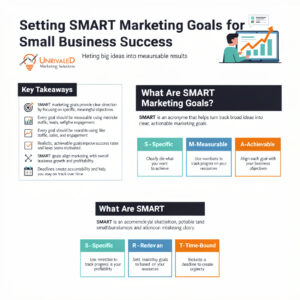

Key Takeaways
- SMART marketing goals provide clear direction by helping small businesses focus on specific and meaningful objectives.
- Every goal should be measurable so you can track progress using metrics like website traffic, leads, sales, and engagement.
- Realistic and achievable goals improve success rates and keep teams motivated throughout the marketing process.
- SMART goals should align with overall business objectives, ensuring every marketing effort contributes to growth and profitability.
- Setting deadlines creates accountability and helps businesses stay on track while measuring results over a defined period.
Running a small business can feel like trying to reach a destination without a map. You know where you want to go, but without clear directions, it can be hard to get there. This is where SMART marketing goals can help.
SMART marketing goals give businesses a simple way to plan, track progress, and achieve better results. Instead of guessing what works, business owners can focus on specific targets and measure their success along the way.
Whether you want to attract more customers, increase website traffic, improve social media engagement, or boost sales, setting SMART marketing goals can make your marketing efforts more effective.
In this guide, you’ll learn what SMART marketing goals are, why they matter, and how to create them for long-term small business success.
What Are SMART Marketing Goals?
SMART is an acronym that stands for:
- S – Specific
- M – Measurable
- A – Achievable
- R – Relevant
- T – Time-Bound
These five elements help turn broad business ideas into clear and actionable goals.
Example
Not SMART:
“I want more customers.”
SMART:
“I want to increase website leads by 20% over the next three months through SEO and social media marketing.”
The second goal provides a clear target and timeline, making it easier to track progress.
Why SMART Marketing Goals Are Important
Many small businesses spend money on marketing without knowing if their efforts are working. SMART goals help solve this problem.
Benefits of SMART Marketing Goals
- Provide clear direction
- Help measure success
- Improve decision-making
- Keep teams focused
- Increase return on investment (ROI)
- Make marketing campaigns more effective
When goals are clear, businesses can spend their time and budget on strategies that deliver results.
Specific: Know Exactly What You Want to Achieve
The first step in setting SMART marketing goals is making them specific.
A specific goal answers questions like:
- What do I want to accomplish?
- Who is involved?
- Where will it happen?
- Why is it important?
Examples of Specific Goals
Instead of saying:
“I want more website visitors.”
Say:
“I want to increase organic website traffic from local customers searching for my services.”
Instead of saying:
“I want more sales.”
Say:
“I want to generate 50 new leads through my website each month.”
Specific goals remove confusion and create a clear path forward.
Measurable: Track Your Progress
A measurable goal includes numbers that show whether you’re moving in the right direction.
Without measurement, it’s difficult to know if your marketing strategy is successful.
Common Marketing Metrics
You can measure:
- Website traffic
- Leads generated
- Email subscribers
- Social media followers
- Conversion rates
- Online sales
- Customer inquiries
Example
Instead of:
“Increase social media engagement.”
Use:
“Increase Facebook engagement by 25% over the next 60 days.”
The number makes it easy to track progress and evaluate results.
Achievable: Set Realistic Goals
Big dreams are important, but goals should still be realistic.
An achievable goal challenges your business without being impossible.
Ask Yourself
- Do I have the resources to achieve this goal?
- Do I have the time needed?
- Is the goal realistic based on my current situation?
Example
If your website currently gets 500 visitors per month, aiming for:
“100,000 visitors next month”
may not be realistic.
A better goal might be:
“Increase website traffic by 15% over the next three months.”
Achievable goals keep your team motivated and focused.
Relevant: Align Goals With Business Objectives
Every marketing goal should support your overall business goals.
A goal may be measurable and achievable, but if it doesn’t help your business grow, it may not be worth pursuing.
Examples of Relevant Marketing Goals
If your business wants more local customers:
- Improve local SEO rankings
- Increase Google Business Profile views
- Generate more local leads
If your business wants more online sales:
- Increase website conversions
- Improve email marketing performance
- Reduce cart abandonment rates
Always ask:
“How does this goal help my business succeed?”
If you can’t answer that question, the goal may not be relevant.
Time-Bound: Set a Deadline
A goal without a deadline often gets delayed.
Time-bound goals create urgency and help businesses stay accountable.
Examples
Instead of:
“Increase website traffic.”
Use:
“Increase website traffic by 20% within six months.”
Instead of:
“Get more email subscribers.”
Use:
“Add 300 new email subscribers within 90 days.”
Deadlines encourage consistent action and make progress easier to measure.
How to Create SMART Marketing Goals
Follow these simple steps to build effective SMART goals.
Step 1: Identify Your Business Objective
Start with your overall business goal.
Examples include:
- Increase revenue
- Attract more customers
- Improve brand awareness
- Generate more leads
Step 2: Choose a Marketing Strategy
Decide how you will achieve your objective.
Common digital marketing strategies include:
- Search Engine Optimization (SEO)
- Content Marketing
- Social Media Marketing
- Email Marketing
- Pay-Per-Click Advertising (PPC)
- Local SEO
Step 3: Add SMART Elements
Turn your objective into a SMART goal.
Business Objective: Generate more leads.
SMART Goal: Increase website leads by 25% within the next four months through SEO and content marketing.
Step 4: Track Results
Use tools such as:
- Google Analytics
- Google Search Console
- Social media insights
- Email marketing reports
Tracking helps you understand what’s working and where improvements are needed.
Examples of SMART Marketing Goals for Small Businesses
SEO Goal
Increase organic website traffic by 20% within six months by publishing two optimized blog posts each week.
Local SEO Goal
Improve local search visibility and increase Google Business Profile calls by 15% within three months.
Social Media Goal
Grow Instagram followers by 500 new followers over the next 90 days through regular content posting.
Email Marketing Goal
Increase email open rates from 20% to 28% within four months.
Lead Generation Goal
Generate 40 qualified leads per month through website contact forms within six months.
Common Mistakes to Avoid
Many businesses make mistakes when setting marketing goals.
1. Setting Vague Goals
Goals like “get more customers” are difficult to measure.
2. Ignoring Data
Always use analytics and reports to track progress.
3. Setting Unrealistic Expectations
Goals that are too ambitious can lead to frustration.
4. Not Setting Deadlines
Without a timeline, goals often get pushed aside.
5. Failing to Review Progress
Regular reviews help identify problems early and keep campaigns on track.
Best Practices for Achieving SMART Marketing Goals
Stay Consistent
Marketing results often take time.
Review Performance Monthly
Check key metrics regularly.
Adjust When Necessary
If a strategy isn’t working, make improvements instead of giving up.
Focus on High-Impact Activities
Spend more time on marketing efforts that generate the best results.
Celebrate Small Wins
Recognizing progress helps maintain motivation and momentum.
Conclusion
Setting SMART marketing goals is one of the most effective ways for small businesses to achieve success. SMART goals are Specific, Measurable, Achievable, Relevant, and Time-Bound, making it easier to create focused marketing strategies and track results.
By setting clear objectives, measuring performance, and regularly reviewing progress, small businesses can make better marketing decisions and maximize their return on investment. Whether you’re working on SEO, social media marketing, local SEO, or lead generation, SMART marketing goals provide a roadmap for growth.
Start by creating one SMART goal today, track your progress, and watch your business move closer to long-term success.
Frequently Asked Questions (FAQs)
What are SMART marketing goals?
SMART marketing goals are goals that are Specific, Measurable, Achievable, Relevant, and Time-Bound. They help businesses create clear marketing plans and track progress more effectively.
Why are SMART marketing goals important for small businesses?
SMART marketing goals provide direction, improve focus, help measure success, and ensure marketing efforts support overall business growth. They also make it easier to track return on investment (ROI).
How do I create a SMART marketing goal?
Start by identifying your business objective, choose a marketing strategy, and then make sure your goal is specific, measurable, achievable, relevant, and includes a deadline.
What are some examples of SMART marketing goals?
Examples include increasing website traffic by 20% in six months, generating 40 new leads per month, growing social media followers by 500 in 90 days, or improving email open rates by 8% within four months.
How often should I review my SMART marketing goals?
It’s best to review your SMART marketing goals at least once a month. Regular reviews help you monitor progress, identify challenges, and make adjustments to improve results.