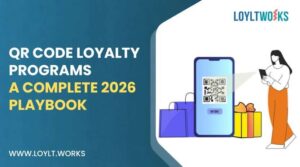

A painter in Kochi scans a QR code printed on a paint can. Within seconds, loyalty points appear in his WhatsApp wallet, taking him one step closer to the premium power drill he has been working toward for the past two months.
He does not need to fill out a form, call a helpline, remember a registration number, or wait for manual verification.
He simply scans. He earns. He moves on.
That frictionless, instant, mobile-first experience represents the future of channel loyalty across FMCG and building materials. In 2026, it is rapidly becoming the present for manufacturers that understand the unique capabilities of QR-based loyalty programs.
QR codes can do far more than reward a participant for a transaction. When designed correctly, they can create direct engagement with contractors, painters, retailers, distributors, and other channel participants while simultaneously generating valuable information about where, when, and how products are being used.
This playbook explains why QR codes are particularly effective for FMCG and building materials, the six major types of QR loyalty programs, the seven-layer fraud prevention framework, sector-specific implementation strategies, the technology infrastructure required for scale, and the key metrics manufacturers should use to measure performance.
Most importantly, QR codes should not be viewed simply as a loyalty mechanic. They can become a powerful channel intelligence layer for manufacturers whose products move through complex, multi-tier distribution networks.
1. Why QR Codes Are the Ideal Loyalty Mechanic for FMCG & Building Materials
Channel loyalty in FMCG and building materials has a fundamental challenge: manufacturers often do not have a direct relationship with the person who ultimately uses or influences the use of their products.
A product may travel through a manufacturer, distributor, dealer, retailer, contractor, painter, plumber, electrician, mason, or other intermediary before it reaches its final point of use.
Traditional loyalty programs can work effectively at the distributor or dealer level. Points may be awarded for purchase orders, sales volume, or achievement of predefined tiers.
However, these programs often stop at the channel partner.
They cannot directly engage the contractor who specifies the product at a construction site. They cannot reward the painter who recommends a particular paint brand to a homeowner. They cannot independently verify whether a product purchased in bulk was genuinely used, returned, diverted, or moved into another market.
QR codes printed on product packaging create a direct digital connection between the manufacturer and the person actually interacting with the product.
The participant can scan the product when it is opened, used, or received. That single interaction can connect loyalty, authentication, usage verification, geographic information, and channel intelligence.
The Five Things QR Loyalty Programs Can Deliver
1. Direct Influencer Engagement
Manufacturers can directly reward contractors, painters, applicators, installers, and other professionals who influence product selection.
This creates a direct relationship without necessarily disrupting the existing distributor or dealer structure.
2. Genuine Usage Verification
A QR scan at the point of use provides an additional indication that a product has actually been opened or used rather than simply purchased in bulk.
This is particularly valuable in categories where contractors and applicators play an important role in product selection.
3. Real-Time Geographic Intelligence
Every scan can generate a geographic data point.
Over time, these scan events can help manufacturers understand where products are actually being used, which regions are performing strongly, which products are gaining traction, and where unusual distribution patterns may exist.
4. Anti-Counterfeiting
Serialised QR codes can be designed for one-time use and validated against a live database.
If the same code is scanned again, the platform can identify the duplicate attempt and potentially flag it for investigation.
This creates an additional layer of product authentication and counterfeit detection.
5. Independence From Distributor Data
Traditional channel programs often depend on distributors or sales representatives to submit information.
QR-based programs create a direct data channel between the participant and the manufacturer.
That means the program can continue generating participant and product-level information even when distributor data is incomplete.
2. The Six Types of QR Code Loyalty Programs
Not every QR loyalty program should follow the same structure.
The right approach depends on the product category, distribution model, target participant, and commercial objective.
There are six major QR loyalty program types.
1. Pack or Unit Scan Programs
A unique QR code is printed on each product unit, such as a bag, can, carton, or box.
The participant scans the code when the product is opened or used and receives loyalty points.
This is one of the most common models for paints, building materials, and selected FMCG applications.
2. Invoice QR Programs
QR codes are placed on invoices or delivery documents.
Retailers or dealers scan the code to confirm receipt of products and trigger loyalty points.
This approach is particularly useful when the primary objective is to validate purchases or strengthen dealer-level engagement.
3. Project Registration Programs
Contractors register a project and associate product QR scans with that project.
As additional products are scanned, the participant builds progress toward a project-level reward or completion bonus.
This model is particularly relevant to construction and building-material categories.
4. Training QR Programs
QR codes can be included in training materials, product manuals, event collateral, or educational content.
Participants scan the code to access training modules, product information, or attendance confirmation.
This can combine loyalty engagement with professional development and product education.
5. Hidden or Under-Label QR Programs
The QR code is placed underneath a peel-off label or inside sealed packaging.
The participant can access the code only after purchasing and opening the product.
This makes it more difficult for codes to be collected or scanned before genuine product usage.
6. Batch or Lot QR Programs
Instead of assigning a code to every individual unit, a QR code is associated with a production batch or pallet.
Distributors or dealers scan the code when receiving products.
This creates an additional layer of supply-chain traceability.
Choosing the Right QR Model
The strongest programs may combine multiple QR mechanics.
For example, a building-material program could use unit-level QR codes for contractor engagement, invoice QR codes for dealer verification, and project registration for construction-site tracking.
The important principle is to design the QR architecture around the business objective rather than treating the QR code itself as the strategy.
3. Sector-by-Sector Implementation Guide
QR loyalty programs should be adapted to the realities of each industry.
The participant profile, product type, distribution structure, and desired behavior can vary significantly between FMCG, building materials, paints, and agricultural inputs.
FMCG & Consumer Goods
FMCG QR programs primarily target retailers and kirana store owners who stock, display, and sell products.
The objective can extend beyond simply rewarding purchases. Manufacturers can use the program to encourage genuine stocking, display compliance, and sell-through behavior.
Possible mechanics include:
- QR codes on inner cartons or retail units that retailers scan while stocking products.
- Display-compliance activities where retailers submit photographs along with QR scan confirmation.
- Reorder triggers that use scan activity and stock information to generate reorder suggestions.
- Earn rates calibrated to SKU margins, allowing higher-margin products to generate points at different rates.
The program therefore becomes both a loyalty mechanism and a way to encourage specific commercial behaviors.
Building Materials & Cement
Cement, tiles, waterproofing products, and structural materials often depend heavily on contractors, masons, and site-level influencers.
For these programs, the physical durability of the QR code is critical.
QR printing should withstand dust, moisture, rough handling, and demanding construction-site conditions.
GPS verification can add another layer of protection by checking whether the scan location corresponds with the registered project location.
Project-level grouping can also be introduced. Multiple product scans associated with the same construction project can contribute toward a project-completion bonus.
A dual-layer model can combine batch-level QR codes at the distribution stage with unit-level QR codes at the contractor stage, creating stronger supply-chain visibility.
Paints & Coatings
Painter loyalty programs can be particularly sophisticated because painters frequently influence the brand selected by homeowners.
A painter may recommend a product, apply it, and influence whether the customer uses the same brand again.
Potential mechanics include:
- QR codes placed inside the paint-can closure or underneath a label.
- Training QR codes that allow painters to earn points for completing application training.
- Photo submissions showing completed work to qualify for bonus earn events.
- Product multipliers that provide higher earning rates for premium products such as exterior emulsions or waterproofing solutions.
The program can therefore combine loyalty, product education, application quality, and brand advocacy.
Agri-Inputs & Rural Distribution
For seed, fertilizer, and crop-protection manufacturers, QR codes can help authenticate products while also creating engagement with farmers and rural distributors.
Connectivity is a major consideration.
Offline scanning is essential because construction sites, rural fields, and remote distribution environments may have unreliable mobile data.
Regional-language support is equally important. Programs may need to support languages such as Hindi, Marathi, Telugu, Tamil, and Punjabi depending on the target market.
Village-level extension workers can also act as program ambassadors, helping participants understand how the program works.
Earn calendars should be aligned with agricultural cycles such as sowing and harvesting seasons.
Pharma & Healthcare: A Special Case
Pharmaceutical and healthcare programs require additional regulatory consideration.
QR infrastructure can potentially support stockist loyalty, product authentication, and verification-related activities such as cold-chain compliance.
However, promotional programs in pharmaceutical categories may be subject to specific regulatory requirements.
Specialist legal review should therefore be part of program design.
4. The Seven-Layer QR Fraud Prevention Stack
A QR loyalty program is only as strong as its fraud-prevention architecture.
Without sufficient controls, participants or supply-chain actors may photograph and share codes, scan codes before products reach the market, create multiple accounts, or exploit gaps between production and distribution.
A robust program should therefore use multiple layers of protection.
01. Unique Serialised Codes
Every QR code should be unique and registered in the platform database.
A successful scan deactivates the code permanently.
Any subsequent attempt to scan the same code can be flagged as suspicious.
This is the foundation of QR fraud prevention.
02. Scan Velocity Limits
Each participant account should have daily, weekly, and monthly scan limits based on realistic purchasing behavior.
For example, a painter who normally uses a limited number of cans per day should not suddenly be able to scan hundreds of codes within minutes without triggering a review.
Limits should be calibrated according to participant profile and program tier rather than using one universal threshold.
03. Geographic Plausibility Validation
The platform can capture scan location and compare it with registered participant locations, project addresses, and supply-chain information.
A code associated with a shipment to one market but repeatedly scanned in another may create a geographic anomaly.
This can help identify diversion and market leakage.
04. Device Fingerprinting
The platform can generate a device fingerprint for scanning devices.
If multiple participant accounts repeatedly operate from the same device, the system can flag the behavior for review.
This helps prevent account farming, where one individual creates multiple accounts to increase potential earnings.
05. Delayed Points Release
Points generated through QR scans can initially remain in a pending state for a defined period, such as 24–72 hours.
During this window, the platform can conduct additional validation, compare events with ERP purchase records, and identify suspicious patterns.
The delay can also provide an opportunity to reverse points associated with returned products.
06. ERP Cross-Reference
QR scans can be compared with ERP production and dispatch records.
For example, if a QR code belongs to a production batch dispatched to one distributor and territory, an unexpected scan from another market can be flagged.
ERP integration therefore becomes an important part of the fraud-control architecture.
07. AI-Powered Anomaly Detection
Machine-learning models can identify patterns that rules-based systems may miss.
Potential signals include:
- Sudden spikes in scan activity.
- Unusual scan timing.
- Multiple accounts operating from one location.
- Abnormal participant behavior.
- Statistical clustering across multiple accounts.
Together, these seven layers create a significantly stronger fraud-prevention system than relying on QR serialisation alone.
5. QR Code Design & Packaging Integration
The physical placement of a QR code can determine whether a loyalty program succeeds.
If participants cannot find the code, access it easily, or scan it in real-world conditions, adoption will suffer.
QR placement should therefore be designed around the actual product and usage environment.
Printing cost is often raised as a concern, but the incremental cost can be relatively low depending on the printing method and program design.
Standard offset or flexographic printing can support digitally generated unique QR codes, with incremental costs indicated in the source at approximately ₹0.05–₹0.20 per code.
Serialised packaging requiring digital or inkjet overprinting may cost approximately ₹0.50–₹2.00 per unit depending on application method and volume.
The business case should ultimately be evaluated against the value created through loyalty, counterfeit detection, diversion control, and increased wallet share.
6. The Technology Infrastructure You Actually Need
The QR code is only the visible part of a much larger technology ecosystem.
A production-ready platform needs to manage code generation, validation, supply-chain integration, fraud detection, points management, communication, and analytics.
Offline Scan Capability
Offline scanning is particularly important for contractors, painters, rural distributors, and field users.
Construction sites, warehouses, and rural environments may have poor connectivity.
A scan that completely depends on an active internet connection can create frustration and reduce participation.
The platform should therefore support offline scanning with automatic synchronisation once connectivity is restored.
Sub-Second Validation
The ideal scan experience should feel immediate.
Validation, fraud checks, points credit, and confirmation should happen within seconds.
Long delays between scanning and receiving confirmation can reduce the sense of instant gratification that encourages repeat behavior.
WhatsApp-Native Communication
In India, WhatsApp provides a highly relevant channel for scan confirmation and loyalty communication.
A participant could receive an immediate message confirming the points earned, current balance, tier status, and progress toward the next reward.
This creates a direct connection between the physical product interaction and the digital loyalty experience.
ERP-Level Code Registration
QR code generation should ideally connect directly with ERP production records.
This ensures that codes are created and registered as products are manufactured rather than relying on manual upload processes.
The source identifies integrations with systems such as Tally, SAP, Oracle, as well as REST API connectivity as relevant infrastructure capabilities.
7. The Six-Step Implementation Framework
Step 1: Define Participants and Objectives
Before printing a single QR code, identify exactly who the program is designed to reward.
This could include distributors, dealers, contractors, end consumers, or multiple participant groups.
Then define the behavior you want to influence: product usage, training completion, project registration, geographic expansion, or another commercial outcome.
Step 2: Design the QR Architecture and Fraud Stack
Select the QR types appropriate to each participant segment.
Define placement, earn rates, product categories, geographic rules, and fraud controls.
Step 3: Integrate With ERP and Supply Chain Systems
Connect QR generation with production and batch-management systems.
Establish which codes belong to which territories, distributors, product categories, and supply-chain stages.
Step 4: Run a Controlled Regional Pilot
Before a national rollout, test the program in one geography with approximately 50–200 participants.
The pilot should evaluate scan success, packaging usability, fraud controls, participant activation, and actual usage.
A critical metric is the percentage of QR-enabled products that are scanned.
If the scan rate is below the desired threshold, the activation experience should be improved before scaling.
Step 5: Build Activation Into Distribution
Printing a QR code is not enough.
Participants need to know that the program exists, understand how to scan, and have a clear reason to participate.
Activation can include sales-team briefings, dealer kits, WhatsApp communication, and regional-language instructions printed on packaging.
Step 6: Continuously Monitor Program Health
Three key indicators should be monitored continuously:
Scan Rate: The percentage of codes that are actually scanned.
Fraud Rate: The percentage of scan events flagged as suspicious.
Participant LTV: The cumulative value generated by registered participants over time.
These metrics should guide adjustments to earn rates, fraud parameters, participant communication, and program design.
8. India-Specific Considerations for 2026
GST E-Invoicing Integration
India’s GST e-invoicing ecosystem creates an opportunity to connect invoice-level verification with product-level QR engagement.
GST e-invoices contain an Invoice Reference Number and a government-generated QR code.
A loyalty platform that can work with invoice information alongside product-level QR codes can create a dual-verification structure.
Dealer purchase can be validated at the invoice level, while contractor or end-user activity can be validated through product scans.
UPI-Based Reward Disbursement
Participants increasingly expect fast digital rewards.
Instant UPI transfers and digital vouchers can provide a more immediate experience than traditional reward-distribution methods.
The ability to connect scan activity with rapid reward fulfilment can therefore become an important part of participant engagement.
Regional Language Communication
A scan confirmation delivered only in English may not provide the best experience for participants in non-metro markets.
Points balances, tier notifications, challenges, and reward communications should be available in the participant’s preferred language.
Localization should go beyond direct translation and consider appropriate tone, language style, and local usage.
DPDPA Compliance
QR programs can collect personal and behavioral information, including participant details, location data, device identifiers, and scan history.
India’s Digital Personal Data Protection Act creates obligations around the collection, storage, and use of personal data.
Programs should therefore incorporate appropriate consent, data-management processes, and participant rights into their design.
9. ROI Framework: Measuring QR Loyalty Program Success
A QR loyalty program should be evaluated through more than redemption numbers.
There are four major dimensions of ROI.
1. Direct Revenue Uplift
Compare purchasing and wallet-share behavior between enrolled participants and a suitable control group.
Track the difference at six, twelve, and eighteen months.
The source identifies a target of a 15–25 percentage-point wallet-share advantage for enrolled participants within twelve months.
2. Anti-Counterfeiting Value
Duplicate scans and authentication events can help identify potential counterfeit activity.
In categories where counterfeiting is significant, the value of identifying genuine versus suspicious products can become a meaningful part of the overall program business case.
3. Market Intelligence
Every scan creates potential insight into product usage.
Manufacturers can understand where products are being used, which product categories are preferred, and which regions are underperforming.
This information can influence sales, marketing, and distribution decisions.
4. Specification Influence
In categories such as paints and building materials, contractors and painters can influence downstream product selection.
A participant may generate value not only through their own purchases but also through recommendations to homeowners, project owners, or other users.
That influence should be considered when evaluating the full economic impact of the program.
10. The Future of QR Loyalty Through 2030
QR loyalty programs are moving beyond simple scan-and-reward mechanics.
Dynamic QR Experiences
Static QR codes provide the same experience to every participant.
Dynamic QR systems can deliver personalized experiences based on participant identity, loyalty tier, history, and behavior.
A Gold-tier contractor and a Bronze-tier retailer could receive different earn rates, product information, challenges, and reward recommendations after scanning the same type of product code.
Augmented Reality
QR codes can increasingly become gateways to augmented-reality experiences.
A contractor could scan a waterproofing product and access an application-technique visualization.
A painter could scan a paint product and preview how a color may appear on a wall.
These experiences can combine product education with loyalty engagement.
AI-Powered Reward Recommendations
As loyalty platforms collect more participant behavior data, AI can help predict which rewards are most likely to motivate individual participants.
Instead of showing every participant the same reward catalogue, the platform can surface rewards based on historical earning and redemption behavior.
Smart Packaging and IoT
QR codes are also likely to coexist with NFC and sensor-enabled packaging.
NFC can provide faster product interactions, while sensors can potentially capture information such as temperature, humidity, and handling conditions in premium or specialized categories.
By 2028, multi-modal smart packaging that combines QR, NFC, and sensor data could become increasingly relevant in high-value product categories.
Conclusion
QR codes have evolved far beyond their role as simple links printed on packaging.
For FMCG and building-material manufacturers, they can create a direct connection between the physical product and the digital loyalty ecosystem.
A well-designed QR loyalty program can reward the people who influence product choice, verify genuine product usage, strengthen anti-counterfeiting efforts, provide geographic intelligence, and create a direct source of channel data.
But successful implementation requires more than printing a QR code.
Manufacturers need the right participant strategy, QR architecture, packaging design, fraud-prevention framework, ERP integration, communication channel, reward structure, and analytics model.
The strongest programs are built around the participant’s real-world behavior.
A painter should be able to scan a paint can without friction. A contractor should be able to earn from genuine project usage. A retailer should be able to confirm stock and receive meaningful rewards. A rural participant should be able to use the program despite connectivity limitations.
When all of these elements work together, the QR code becomes more than a loyalty trigger.
It becomes a bridge between the product, the channel partner, the end user, and the manufacturer.
And that is what makes QR-based loyalty particularly powerful for complex FMCG and building-material ecosystems in 2026 and beyond.