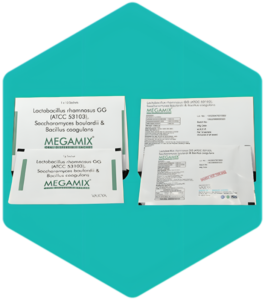

Probiotic sachets and suspensions are becoming increasingly popular in the health and pharmaceutical industries because they offer convenient and user-friendly ways to deliver beneficial microorganisms. These dosage forms are designed to provide selected probiotic strains while supporting stability, quality, and ease of administration.
For manufacturers, pharmaceutical companies, nutraceutical brands, and healthcare businesses, understanding the differences between probiotic sachet and suspension formats can help in selecting the right product for different consumer needs.
What Are Probiotic Sachets?
Probiotic sachets are single-dose powder formulations containing selected probiotic strains. The powder can generally be consumed directly or mixed with a suitable liquid or food, depending on the product formulation and usage instructions.
A major advantage of probiotic sachets is their convenience. They are lightweight, easy to pack, and suitable for distribution across different markets. Sachet packaging can also provide protection against environmental factors when an appropriate moisture- and oxygen-barrier material is used.
Key Benefits of Probiotic Sachets
- Convenient single-dose format
- Easy to carry and store
- Suitable for a variety of probiotic strains
- Flexible packaging and branding options
- Convenient for domestic and international distribution
- Can be formulated with supporting ingredients such as prebiotics, depending on the product
What Are Probiotic Suspensions?
Probiotic suspensions are liquid formulations containing viable probiotic microorganisms dispersed throughout a liquid medium. They are particularly useful when a liquid dosage form is preferred for administration.
Probiotic suspension formulations require careful attention to strain selection, formulation compatibility, microbial stability, storage conditions, and packaging. Maintaining probiotic viability throughout manufacturing and shelf life is an important consideration.
Advantages of Probiotic Suspensions
- Easy-to-administer liquid format
- Suitable for consumers who have difficulty swallowing solid dosage forms
- Can provide a convenient alternative to capsules or powders
- Useful for pediatric-oriented formulations when appropriately developed
- Can be designed around specific probiotic strains and formulation requirements
Probiotic Sachet vs Suspension: Which Is Better?
There is no universal answer because the appropriate dosage form depends on the target market, probiotic strain, intended application, formulation requirements, packaging, and storage conditions.
Probiotic sachets are generally attractive when portability, single-dose packaging, and powder stability are priorities. Probiotic suspensions may be preferred when a ready-to-use liquid format and ease of administration are important.
| Feature | Probiotic Sachet | Probiotic Suspension |
|---|---|---|
| Dosage form | Powder | Liquid |
| Portability | High | Moderate |
| Administration | Directly or after mixing, as directed | Ready-to-use liquid |
| Packaging | Individual sachets | Bottles or suitable liquid containers |
| Storage considerations | Moisture protection is important | Temperature and formulation stability are important |
| Consumer convenience | High | High |
Why Probiotic Strain Selection Matters
The effectiveness and characteristics of a probiotic product depend heavily on the selected strain. Different probiotic microorganisms have different properties, stability profiles, and intended applications.
Commonly used probiotic microorganisms include species from genera such as Lactobacillus, Bacillus, and Saccharomyces. The strain should be selected according to the intended product application, formulation compatibility, target consumer group, and regulatory requirements.
For example, spore-forming probiotic strains may offer formulation and stability advantages in certain applications, while other strains may require more controlled processing and storage conditions.
Manufacturing Considerations for Probiotic Products
Producing high-quality probiotic sachets and suspensions requires controlled manufacturing processes. Important considerations include raw material quality, strain identification, microbial purity, potency, formulation compatibility, processing conditions, packaging, and stability testing.
Manufacturers also need to consider environmental exposure because factors such as moisture, oxygen, temperature, and processing stress can influence probiotic viability.
For probiotic sachets, moisture-barrier packaging can be particularly important. For suspensions, manufacturers need to evaluate factors such as physical stability, microbial viability, homogeneity, and container compatibility.
Applications of Probiotic Sachets and Suspensions
Probiotic sachets and suspensions are used across pharmaceutical, nutraceutical, healthcare, and wellness applications. Depending on formulation and regulatory positioning, they may be developed for different consumer segments and product categories.
Their flexible formats make them suitable for brands looking to offer convenient probiotic products beyond traditional capsules and tablets.
Choosing a Reliable Probiotic Manufacturer
Selecting an experienced probiotic sachet and suspension manufacturer is important for developing consistent and high-quality products. Businesses should evaluate manufacturing capabilities, quality systems, strain expertise, formulation development, packaging options, testing facilities, and scalability.
A reliable manufacturer should also have appropriate quality controls throughout raw material sourcing, production, filling, packaging, and finished-product testing.
Conclusion
Probiotic sachets and suspensions provide two practical formats for delivering probiotic microorganisms to consumers. Sachets offer portability and convenient single-dose packaging, while suspensions provide an easy-to-administer liquid option.
As demand for convenient probiotic products continues to grow, choosing the right strain, formulation, packaging, manufacturing process, and quality controls becomes increasingly important. Working with an experienced probiotic sachet and suspension manufacturer can help brands develop reliable products that meet their target market and quality requirements.