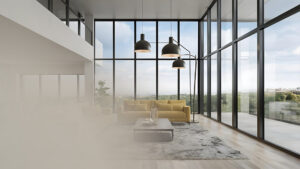

Most people want two things from their glass at once: plenty of natural light and a sense that nobody is looking in. In the UAE, where sunlight is strong and homes and offices often sit close to roads, neighbours and busy corridors, getting that balance right matters. A well-chosen decorative glass film for windows or a simple frosted glass film can blur the view while still letting daylight flood the room.
This guide walks through practical ideas room by room. It covers patterns, gradients, eye-level strips and the markings that make glass doors safer, so you can plan privacy that looks deliberate rather than improvised.
Why Film Works Better Than Curtains in Many Spaces
Curtains and blinds block the view, but they also block light. Once they are closed, a bright room becomes a dim one, and many people end up switching on lights in the middle of the day.
Translucent film works differently. It scatters light as it passes through the glass, so shapes on the other side become soft and unreadable while the room stays bright. There is nothing to open, close, wash or replace, and nothing hangs in front of the window collecting dust.
Film also suits places where fabric is awkward:
- Shower screens and bathroom windows where humidity is high
- Glass office partitions where blinds would look out of place
- Entrance doors and side panels that are opened many times a day
- Large fixed glazing that is hard to reach
Light Diffusion Versus Light Blocking
It helps to think in terms of diffusion rather than blocking. A diffusing film spreads the light evenly, which can actually reduce harsh glare and hot spots on floors and desks. The room feels calmer, and you still get a sense of the time of day and the weather outside.
A Note on Night-Time
One point often surprises people. Translucent film gives privacy by blurring, but when it is dark outside and your lights are on, silhouettes can still show through, especially close to the glass. For bedrooms and bathrooms at night, a denser finish or a combination with blinds may be sensible. During the day, most translucent finishes perform very well.
Bathrooms: Full Privacy With a Bright Feel
Bathrooms are the most common starting point. A small window can make a big difference to how fresh and open the room feels, so covering it with a solid blind is a shame.
A full-coverage frosted glass film is the classic choice here. It gives an even, satin look similar to acid-etched glass, lets in soft daylight and is easy to wipe down. Because it sits on the glass surface, it is not affected by the steam and splashes that make fabric blinds go mouldy.
Shower Screens and Glass Enclosures
Clear shower screens look modern, but in a shared family bathroom or an en-suite with no door they can feel exposed. A band of translucent film across the middle section, roughly from waist to head height, keeps the enclosure looking light while screening the body.
Leave the top and bottom clear if you want the enclosure to feel open. If you prefer a softer, more spa-like look, a full sheet with a thin clear border can look very neat.
Choosing Density
Not all translucent films are equally opaque. Some are light and airy, others are close to white. For a bathroom window that faces a neighbour, a denser finish is worth it. For an internal glass door between a bedroom and en-suite, a lighter finish may be enough.
Office Partitions: Focus Without Walls
Open-plan offices with glass meeting rooms and cabins are common across Abu Dhabi and Dubai. Glass keeps the floor bright and makes the space feel larger, but it can also mean that every meeting is on display and every screen can be read from the corridor.
Film is one of the simplest ways to fix this without rebuilding anything.
Eye-Level Strips
The most popular approach for partitions is a horizontal band placed at seated and standing eye level. A band from around desk height to just above head height hides faces and screens, while the clear glass above and below keeps the room feeling connected to the rest of the office.
Some practical tips:
- Measure the band from the floor, not the frame, so it lines up across different panels
- Consider two heights: seated for desks, standing for corridors
- Keep lines consistent across the whole floor for a clean, intentional look
Gradient Films
Gradient designs fade from solid at one edge to clear at the other. On a partition, a gradient that is dense at the bottom and fades upwards hides legs, bags and desk clutter while leaving the upper glass almost clear. Reversed, it screens the upper part and keeps a view of the floor.
Gradients are softer than a hard-edged band. They work well in spaces where you want a hint of privacy rather than a firm division, such as a manager’s cabin that still needs to feel approachable.
Patterns and Branding
Linear stripes, dots, geometric shapes and subtle textures are all widely available. A decorative glass film for windows and partitions can carry a pattern that ties into the interior, such as thin vertical lines in a law office or a soft organic print in a wellness clinic.
Cut-out designs are another option. A logo, room name or simple motif can be cut into a translucent band so it appears as clear glass against the frosted background. This adds identity without the cost of printed signage.
Entrances and Glass Doors: Privacy and Safety Together
Entrance glazing has two jobs. It should welcome visitors and let light into the lobby or hallway, but it should also stop passers-by from seeing straight into the home or office. On top of that, fully clear glass doors can be a genuine hazard.
Manifestation Markings
Manifestation is the term used for markings placed on glass doors and full-height panels so that people notice the glass and do not walk into it. It is common practice in commercial buildings, and many building owners and facility managers treat it as a basic safety measure.
Typical manifestation ideas include:
- A continuous band or a row of dots at roughly adult eye level
- A second band lower down so children and wheelchair users can see it
- A logo, company name or simple motif repeated across the door
- Contrasting shapes that stand out against the background behind the glass
Local building rules and landlord requirements can vary, so it is worth checking with your building management or fit-out consultant about any specific heights or contrast needs before finalising a design.
Side Panels and Fanlights
Many villas and apartments have narrow glass side panels beside the front door, or a fanlight above it. These are often the weakest point for privacy, because anyone at the door can look straight in.
A fully translucent finish on side panels keeps the hallway bright while stopping visitors from seeing inside. On a fanlight, a patterned or textured film can add character, especially on traditional or Arabic-inspired front doors where geometric designs sit comfortably.
Street-Facing Windows: Screening the Outside World
Ground-floor apartments, villas close to the road and offices with shopfront glazing all face the same challenge. The view out may not be special, but the view in is the real problem.
Lower-Half Coverage
A simple, effective idea is to cover the lower half or two thirds of a street-facing window. People walking past cannot see in, but anyone inside still sees the sky, trees and daylight above the film line. It is a modern version of the café curtain, without the fabric.
This works especially well in:
- Ground-floor living rooms and bedrooms
- Home offices that face a pavement or car park
- Clinics, salons and small shops that want light but also client privacy
Horizontal Bands and Louvre Effects
Instead of one solid area, some people use a series of horizontal translucent bands with small clear gaps. From the street, the effect is similar to slatted blinds. From inside, you can still catch a glimpse of the outside through the gaps. It feels lighter and more architectural than a single block of frosting.
Design Tips for a Clean, Intentional Look
Privacy film looks best when it is planned as part of the interior, not added as an afterthought. A few simple principles help.
Keep Heights and Lines Consistent
If several windows or partitions sit side by side, align the edges of every band and gradient. Mismatched heights are the quickest way to make film look temporary.
Match the Style of the Space
- Minimal, modern interiors suit plain frosting, thin lines and subtle gradients
- Traditional or Arabic-inspired homes suit geometric lattice and mashrabiya-style patterns
- Creative offices and retail spaces can take bolder shapes, colour tints and graphics
Think About the View Through
Before choosing, stand inside and outside at different times of day. Decide what you want to hide and what you want to keep. Often, the best design hides the lower or middle part of the glass and keeps the sky visible.
Sample Before Committing
Most suppliers can provide small samples. Stick a sample on the actual glass and look at it in morning and evening light. Density, texture and colour can look quite different on real glass compared with a brochure.
Practical Points: Care, Fitting and Removal
Film is mainly chosen for privacy and appearance, but a few practical questions come up often.
Cleaning
Most films can be cleaned with a soft cloth and a mild, non-abrasive glass cleaner. Avoid scouring pads, blades and harsh chemicals. In bathrooms, a quick wipe after showers helps prevent limescale from building up on the surface.
Removal and Changes
One advantage of film over permanent treatments is that it can usually be removed later without damaging the glass. This is useful for tenants, for offices that reconfigure layouts, or for anyone who may want a different design in a few years. A frosted glass film installed today does not lock you into that look forever.
Professional Fitting
Small panels can be a manageable DIY job, but large windows, tall partitions and doors benefit from professional fitting. A good installer will clean the glass properly, avoid bubbles and dust, and line up edges neatly across multiple panes. Ask whether the film is suitable for your specific glass type, particularly for double-glazed or toughened units, to avoid any risk of thermal stress.
Final Thoughts
Privacy does not have to mean a darker room. With the right mix of full frosting, eye-level bands, gradients and patterns, you can screen bathrooms, soften office partitions, secure entrances and hide street-facing rooms while keeping the natural light that makes UAE homes and workplaces feel open.
Start by walking through each space and asking what needs to be hidden, from where and at what time of day. Then choose a frosted glass film for areas that need steady, even privacy, and a patterned decorative glass film for windows and doors where you also want character or branding. Planned carefully, a decorative glass film for windows becomes part of the design rather than a cover-up.