
Choosing a modular classroom solution means that project owners have to make decisions about building configuration, technical specifications, supplier capability, logistics and compliance. Product brochures may describe the general features of a modular system, but a finished project may be a more practical starting point to understand how that system is applied.
A project case study allows buyers to think about how a building system relates to the purpose for which it is to be used. It also can identify what design questions should be answered before a new project goes out to tender.
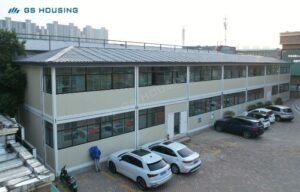
The GS Housing project for the Zhengzhou Second Experimental Primary School shows how a flat-pack container house system can be adapted for an educational application.
What a Project Case Study Can Teach Buyers
A good case study should contain information on the project context, the type of building system used, the key design requirements and the features that are included in the final solution.
For procurement teams, these details can help shape the questions they ask potential suppliers. Buyers can look to see if similar alterations are required on their own site if a previous project involved changes to building height, windows or structural framing.
A case study, however, should not be a substitute for technical due diligence. What works in one school may not be automatically transferable to another in terms of climate conditions, occupancy, local building codes or intended service life.
The review of prior projects is not intended to assume that all configurations can be adopted without modification, but to understand design possibilities and to identify relevant evaluation criteria.
The Zhengzhou Second Experimental Primary School
The Zhengzhou Second Experimental Primary School project has 42 sets of flat-pack container houses, according to the project information published by GS Housing.
The project employed several design elements to address the educational environment. The building was made taller all around, the bottom frames were strengthened and the windows were lifted to improve daylight access. The corridor was lined with full-length thermal-break aluminum windows and a gray imitation-style hipped roof was chosen to complement the surrounding architecture.
These features provide a number of useful points of reference for future buyers.
The increased height raises questions about interior proportions, structural requirements and transport limitations. The reinforced bottom frames emphasize the importance of reviewing structural modifications during construction against the approved design. The window and roof details illustrate how the architecture’s look and environmental concerns are factored into the modular building proposal.
These elements should be compared to the actual requirements and not blindly copied for another school project.”
Turning Case Study Findings into Procurement Questions
A finished project helps the buyer produce a more accurate technical brief.
First the buyer must establish the intended use and anticipated service life. The design must consider the occupation of the building, the space needs and appropriate educational standards.
Second, the buyer has to figure out what features he needs to customize. This may have to do with room size, window placement, external appearance, circulation, insulation or utility arrangements.
Thirdly, the buyer should ask the potential suppliers how their proposed system will meet these requirements . Relevant evidence may include technical drawings, structural documentation, material specifications, quality-control procedures and examples of comparable applications.
Finally the buyer should define a clear commercial scope including production, transport, installation, inspection and handover.
Supplier Experience Under the Microscope
Not all project references are created equal. The buyer needs to differentiate between a product demonstration and a project with similar building functions, design constraints and delivery requirements.
When reviewing a supplier’s portfolio, useful questions include whether the project involved a similar application, whether the supplier’s scope is clearly identified, and whether relevant technical documents are available for review.
It is also important to check the supplier’s role. Manufacturing, design, installation and general contracting are separate responsibilities and a case study should not be taken as evidence that a single supplier carried out all of the tasks, unless project documentation confirms it.
GS Housing is named as the project contractor in the Zhengzhou case, which documents the use of 42 sets of flat-pack container houses. The architectural and structural features listed provide a concrete basis for further technical discussion.
From Reference Project to Tailored Solution
A modular school case study is useful for education authorities, developers and EPC contractors in asking better questions and providing better specifications.
The Zhengzhou Second Experimental Primary School project shows how a standardized modular system can be adapted to an educational environment through building height, framing, windows, corridor glazing and roof design.
These details can be used by potential buyers to guide discussions with architects and suppliers and to independently verify the engineering, compliance and performance requirements of their own projects.
Good procurement is built on the lessons of past projects, a clear brief, verifiable technical information and transparent comparison of supplier proposals.