

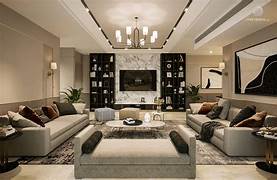

Living Room Interior Solutions help transform an ordinary hall into a comfortable, attractive, and functional space for everyday family life and entertaining guests. A successful living room should balance aesthetics with practical requirements such as seating, circulation, storage, lighting, entertainment, and easy maintenance. Contemporary living-room design approaches increasingly focus on planning the layout around how people actually use the room rather than simply filling the available floor area with furniture.
The selection of Home Furniture is an important part of creating a cohesive living room. Sofas, chairs, coffee tables, TV units, consoles, storage cabinets, and display furniture should be chosen according to the room’s dimensions, architectural features, lifestyle, and overall design theme. Furniture that is correctly scaled to the room can improve circulation while creating a more balanced and comfortable appearance.
Understanding the Living Room
The living room often serves several purposes within a home. It may be used for entertaining guests, watching television, spending time with family, reading, relaxing, or even working occasionally.
Because of this multifunctional nature, the design should begin by identifying the activities that take place in the space. This helps determine seating capacity, furniture placement, storage requirements, lighting, and the location of key focal points.
Smart Space Planning
Space planning is the foundation of effective living room design. Furniture should be positioned so that people can move naturally between the entrance, seating areas, balcony, dining space, and other parts of the home.
The position of doors and windows should be considered before finalizing the layout. Keeping circulation paths around rather than through the main seating arrangement can make the room feel more open and easier to use.
Comfortable Seating
The sofa is usually the primary furniture element in a living room. Its size, shape, upholstery, and position should be selected according to the available space and number of people who regularly use the room.
L-shaped sofas can work well in larger family spaces, while straight sofas with accent chairs may offer greater flexibility in smaller rooms. Modular seating can also be useful when the layout needs to accommodate different types of gatherings.
TV Unit and Feature Wall
For many Indian homes, the television remains an important focal point. A thoughtfully designed TV unit can combine entertainment equipment with closed storage, display niches, lighting, and cable management.
The wall behind the TV can also become a design feature using wood textures, fluted panels, stone finishes, wallpaper, textured paint, or other materials. The design should remain proportionate to the room rather than overwhelming the rest of the interior.
Storage Without Visual Clutter
Living rooms often accumulate books, electronics, children’s belongings, decorative objects, and everyday accessories. Poor storage can quickly make the space look crowded.
Built-in cabinets, floating TV units, sideboards, display shelves, and concealed storage can provide practical solutions while maintaining a clean appearance. Storage should be planned according to what the household actually needs rather than simply adding cabinets wherever there is unused wall space.
Layered Lighting
Lighting can dramatically influence the mood and appearance of a living room. Instead of relying on one bright ceiling fixture, designers can combine ambient, task, and accent lighting.
Cove lighting, recessed lights, pendant fixtures, floor lamps, wall lights, and display lighting can create different levels of illumination for different activities. Recent Indian living-room design guidance similarly recommends layered lighting to create depth and flexibility.
Colours and Materials
The colour palette should complement the room’s natural light, flooring, furniture, and architectural features. Neutral foundations can provide flexibility, while carefully selected accent colours can introduce personality.
Materials also influence the character of the space. Wood finishes can add warmth, stone can create a premium appearance, textured surfaces can add depth, and fabrics can soften the overall environment.
Rugs, Curtains, and Soft Furnishings
Soft furnishings can make a living room feel more complete and comfortable. A suitably sized rug can visually connect the seating arrangement, while curtains can control daylight and add texture.
Cushions, throws, upholstery, and other textiles can introduce colour and pattern without requiring major structural changes. Soft surfaces can also help reduce the echo created by hard flooring, walls, and glass.
Designing Small Living Rooms
Small living rooms require careful selection of furniture and storage. Instead of filling the room with multiple small pieces, a few appropriately scaled elements can create a cleaner appearance.
Wall-mounted TV units, compact sofas, nesting tables, multifunctional furniture, vertical storage, mirrors, and lighter visual finishes can help make a compact room feel more organized.
Large and Luxury Living Rooms
Large living rooms require a different approach. Oversized spaces can feel empty if furniture is pushed against the walls without creating defined zones.
Conversation areas, reading corners, entertainment zones, display areas, and seating groups can be arranged within the larger room. Rugs, lighting, furniture groupings, and feature walls can help establish visual boundaries without closing the space.
Open-Plan Living Spaces
When the living room connects directly to the dining area or kitchen, furniture can help define individual zones. A sofa arrangement, rug, lighting change, console, or ceiling treatment can visually separate the living area while maintaining an open connection.
This approach allows the home to feel spacious without making different functions appear unrelated.
Personalizing the Interior
A successful living room should reflect the personality and lifestyle of the residents. Artwork, photographs, books, plants, decorative objects, travel collections, and customized furniture can make the space feel personal.
Rather than following every interior trend, homeowners should prioritize elements that they will enjoy using for years. Current design advice also emphasizes selecting a focal feature and avoiding unnecessary clutter to achieve a more refined appearance.
Choosing Living Room Interior Solutions
When selecting a professional provider for Living Room Interior Solutions, homeowners should consider experience with residential space planning, furniture design, storage solutions, lighting coordination, material selection, and project execution.
A good design team should understand the relationship between architecture, furniture, lighting, finishes, and everyday use. It should also be capable of adapting the design to the size of the room, budget, family requirements, and preferred aesthetic.
Conclusion
Living Room Interior Solutions can transform the most frequently used social space in a home into an environment that is stylish, comfortable, organized, and functional. From furniture layout and storage to lighting, colours, materials, and decorative elements, every decision should contribute to the way the room is actually used.
The best living room is not necessarily the most heavily decorated one. It is the space where furniture feels appropriately scaled, circulation remains comfortable, lighting creates the right atmosphere, storage keeps clutter under control, and every design element works together. With thoughtful planning and personalized solutions, homeowners can create living rooms that remain attractive and enjoyable for everyday living as well as special occasions.