

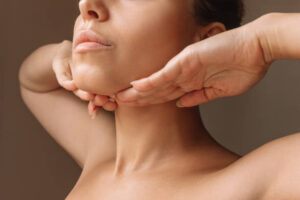

A Liquid Facelift in Dubai is a customized injectable treatment designed to restore facial support, improve proportions, and soften visible signs of aging without surgical tissue removal. Its effectiveness depends less on simply adding filler and more on accurately mapping facial anatomy, selecting appropriate injection planes, and placing conservative amounts where structural support has changed.
Why Liquid Facelift in Dubai Requires More Than Filler
Facial aging is three-dimensional. Changes can involve skin quality, fat compartments, ligamentous support, muscle activity, and underlying skeletal structure.
That is why treating every visible wrinkle independently can produce an unnatural result. A sophisticated liquid facelift instead considers how different facial regions interact.
For example, loss of midface support may make the nasolabial region appear deeper. Adding large amounts of filler directly into the fold may increase fullness without adequately addressing the structural reason the fold became more visible.
A better strategy can involve restoring selected support points first and reassessing the surrounding features before deciding whether additional correction is necessary.
Facial Mapping in a Liquid Facelift in Dubai
Facial mapping is the planning stage that connects the patient’s aesthetic concern with the underlying anatomy.
During assessment, an injector may evaluate:
- Facial proportions
- Midface projection
- Cheek volume
- Temple hollowing
- Under-eye transition
- Nasolabial folds
- Marionette region
- Chin projection
- Jawline definition
- Skin laxity
- Facial movement
- Symmetry and asymmetry
The purpose is not to follow a fixed injection template. Modern filler practice increasingly emphasizes anatomy-based treatment, with injection location, tissue layer, filler characteristics, and treatment objectives considered together. A 2026 review describes this shift from isolated volumization toward functional anatomy-based lifting.
Upper-Face Assessment
The upper face can change through temple volume loss, forehead contour changes, brow position, and dynamic muscle activity.
However, not every hollow or wrinkle should be filled. The injector must consider surrounding structures and whether restoring volume would improve overall balance or create excessive fullness.
Midface Assessment
The midface is often central to liquid facelift planning because cheek projection contributes to facial contour and the transition between the lower eyelid and cheek.
Strategic restoration may improve the appearance of adjacent areas without directly filling every line. This is one reason a full-face assessment can produce a more coherent result than treating individual wrinkles separately.
Lower-Face Assessment
The lower face can change through reduced chin projection, softening of the jawline, pre-jowl changes, and downward movement of soft tissue.
Treatment planning therefore needs to consider the relationship between the chin, jawline, lips, and midface rather than treating each feature as an independent target.
How Liquid Facelift in Dubai Differs From Simple Filler Placement
A conventional filler appointment may focus on one concern such as lips, cheeks, or nasolabial folds.
A liquid facelift takes a broader approach.
| Treatment approach | Main objective | Planning emphasis |
|---|---|---|
| Single-area filler | Correct one localized concern | Specific facial region |
| Multi-area filler | Improve several concerns | Proportion and balance |
| Liquid facelift | Restore broader facial support | Full-face anatomy and structural relationships |
| Wrinkle-relaxing treatment | Reduce dynamic muscle activity | Muscle movement and expression |
| Surgical facelift | Reposition and remove tissue | Structural surgical correction |
A liquid facelift is therefore better understood as a treatment strategy rather than a single injection or universally defined formula. Current clinical descriptions commonly characterize it as a combination or full-face approach using injectable treatments according to individual anatomy and aesthetic goals.
Injection Planes Matter in Liquid Facelift in Dubai
Where an injectable is placed can influence how it interacts with the surrounding tissues.
Facial anatomy contains multiple layers, including skin, subcutaneous fat, facial muscles, retaining ligaments, deeper fat compartments, and the SMAS-related structures.
An experienced injector considers the intended tissue plane rather than treating the face as a flat surface.
Deep Structural Placement
In selected regions, deeper placement can provide structural support or projection.
The amount used must be controlled because excessive product can alter proportions rather than restore them.
Superficial Correction
More superficial injections may be appropriate for selected fine lines, contour transitions, or skin-level concerns.
These techniques require careful product selection and placement because superficial irregularities can become visible when the filler is not appropriately integrated with the tissue.
Plane Selection and Filler Characteristics
Filler rheology, elasticity, cohesivity, viscosity, and water interaction can influence how a product behaves within different facial planes.
The correct product is therefore not simply the one marketed as the “best” filler. It should match the anatomical location, desired projection, tissue characteristics, and intended aesthetic effect.
Where a Liquid Facelift in Dubai May Address Facial Aging
A treatment plan may involve several areas, depending on the patient’s anatomy and objectives.
Potential treatment regions include:
- Cheeks and midface
- Temples
- Chin
- Jawline
- Pre-jowl region
- Nasolabial area
- Marionette region
- Selected under-eye concerns
- Perioral lines
- Dynamic expression lines when wrinkle-relaxing injections are appropriate
Not every patient needs every area.
A conservative plan can sometimes create a stronger overall improvement than treating every visible sign of aging. The objective is facial harmony, not maximum product volume.
Natural Results Depend on Proportion
One of the most important concepts in injectable aesthetics is that improvement should remain compatible with the patient’s existing facial identity.
Overcorrection can create:
- Excessive cheek projection
- Heavy lower-face appearance
- Unnatural lip-to-chin relationships
- Facial stiffness
- Loss of normal expression
- Visible contour transitions
Natural-looking treatment does not mean producing no visible change. It means the change should remain proportionate to the patient’s anatomy and aesthetic goals.
This is particularly relevant in Dubai, where patients may move frequently between outdoor heat, intense sunlight, air-conditioned environments, professional settings, and social events. A treatment plan that creates excessive swelling or conspicuous changes may not fit every patient’s lifestyle.
Planning a Liquid Facelift in Dubai Around Dubai’s Climate
Dubai’s climate introduces practical considerations for injectable patients.
High temperatures and strong sun exposure can make post-treatment facial swelling more noticeable. Air-conditioned indoor environments can also contribute to skin dryness, although they are not themselves a cause of structural facial aging.
After treatment, patients generally benefit from following their injector’s specific aftercare instructions regarding heat exposure, strenuous exercise, pressure on treated areas, skincare products, and sun protection.
Lifestyle planning can be particularly important for people with frequent outdoor activities, travel schedules, fitness routines, or social commitments.
How to Evaluate a Liquid Facelift in Dubai Treatment Plan
Patients can make a consultation more productive by asking specific anatomical and procedural questions.
Ask what is actually being corrected
A practitioner should be able to explain whether the main concern is:
- Volume loss
- Skin laxity
- Dynamic muscle activity
- Reduced facial projection
- Contour change
- A combination of these factors
This distinction helps prevent filler from being used to compensate for a concern that may require another treatment category.
Ask why each injection point was selected
A sound plan should have an anatomical reason behind it.
The practitioner should be able to explain how the proposed placement relates to facial support, contour, proportion, or tissue movement.
Ask how much product is planned
More filler does not automatically produce more lifting.
Conservative placement at strategically selected locations may be preferable to distributing large volumes throughout the face.
For patients researching non-surgical facial rejuvenation in Dubai, the most useful comparison is not simply the number of syringes proposed. It is whether the treatment plan is anatomically justified and proportionate to the patient’s needs.
Liquid Facelift in Dubai Versus Surgical Facelift
A liquid facelift and surgical facelift address facial aging through fundamentally different mechanisms.
Injectables can restore selected volume, modify contours, and soften certain lines without surgically repositioning or removing skin.
A surgical facelift, by contrast, can address more pronounced tissue descent and excess skin through surgical repositioning.
A liquid facelift may be more appropriate when the primary concerns involve early or moderate volume-related changes and the patient wants a non-surgical approach.
More advanced skin laxity, substantial jowling, or significant neck changes may require discussion of surgical alternatives.
The decision should therefore be based on anatomy rather than the desire to make an injectable procedure perform the job of surgery.
Safety Depends on Anatomy and Technique
Dermal filler injections are medical procedures and are not risk-free.
Expected short-term reactions can include:
- Temporary swelling
- Redness
- Tenderness
- Bruising
- Mild asymmetry while swelling settles
Rare but serious vascular complications can occur when filler enters or compresses a blood vessel. Appropriate anatomical knowledge, injection technique, patient assessment, product selection, and preparedness for complications are therefore essential.
A qualified medical practitioner should also assess contraindications, previous filler treatments, relevant medical history, active skin conditions, and the patient’s expectations before treatment.
What Makes a High-Quality Liquid Facelift in Dubai Consultation
A strong consultation should not begin with a predetermined number of syringes.
Instead, the process should establish:
- What the patient wants to improve
- Which anatomical changes contribute to the concern
- Which areas actually require treatment
- Which injectable category is appropriate
- Where product should be placed
- What result is realistically achievable
- Whether another treatment would be more suitable
- How the face will be monitored after treatment
Photographs taken under standardized conditions can also help document baseline facial proportions and support later evaluation.
Understanding the Limits of Injectable Lifting
The term “lift” can create unrealistic expectations if it is interpreted as equivalent to surgical tissue repositioning.
A liquid facelift can improve support, contour, volume distribution, and the appearance of selected folds. It cannot reproduce the anatomical changes created by a surgical facelift.
Current aesthetic literature emphasizes the importance of facial anatomy and conservative, plane-specific filler placement when seeking lifting effects.
That distinction helps patients make better decisions and prevents the treatment from being marketed as a universal replacement for surgery.
The Strategic Investment
The strongest liquid facelift outcomes begin with planning rather than product selection. Facial mapping, tissue-plane awareness, conservative dosing, anatomical knowledge, and careful assessment allow injectable treatment to enhance facial structure without turning rejuvenation into simple volume addition.
For patients considering a personalized Liquid Facelift in Dubai, choosing a medically supervised provider with an anatomy-led approach can be more important than selecting the largest treatment package or the greatest number of injection points. A consultation with Tajmeels Clinic can provide an opportunity to discuss facial proportions, treatment objectives, suitable injectable options, and realistic expectations before proceeding.