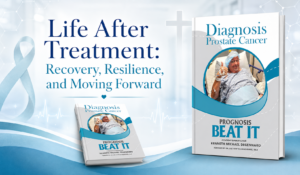

Completing cancer treatment is a milestone worth celebrating.
Life may have revolved around doctor’s appointments, scans, prescription medications, operations, and treatment plans for months or even years. Patients frequently place a great deal of emphasis on finishing the course and envisioning the day when their treatment will be over, and their lives will once again be normal.
Yet many survivors discover something unexpected.
The cancer journey does not often stop with the conclusion of therapy.
It is, in many respects, the start of a new chapter that will involve healing, adjustment, and personal development. Survivors frequently have to deal with physical changes, mental difficulties, and residual uncertainties that last long after treatment is over, despite friends and family’s assumption that life returns to normal right away.
Recovery is rarely a single event.
It is a process.
It involves healing the body, rebuilding confidence, adapting to changes, and learning how to move forward while carrying the lessons of the cancer experience.
Amazon: BEAT IT: Diagnosis Prostate Cancer MARCH 2026
For many survivors, life after treatment becomes a journey of resilience, gratitude, and renewed purpose.
The Emotional Reality of Finishing Treatment
Most people assume that cancer patients feel only relief when treatment ends.
Relief is certainly part of the experience.
Reaching the end of active treatment can feel like a huge success after months of appointments, side effects, and uncertainty. Regaining independence, getting back to their regular routines, and spending less time in hospitals are common goals for patients.
However, many survivors are surprised by the emotions that emerge afterward.
Patients are surrounded by medical professionals, well-defined programs, and organized schedules while receiving therapy. There is a sense that something is actively being done to fight the disease.
When treatment ends, that structure often disappears.
Appointments become less frequent. Medical teams become less involved in daily life. Survivors may suddenly feel as though they are navigating recovery on their own.
This transition can create anxiety.
Some individuals worry constantly about recurrence. Others feel uncertain about what comes next. Many experience mixed emotions, celebrating the end of treatment while simultaneously fearing the future.
These feelings are completely normal.
Recovery involves emotional healing as well as physical healing.
Understanding this reality helps survivors approach life after treatment with greater patience and self-compassion.
Physical Recovery Takes Time
One of the most important lessons cancer survivors learn is that recovery does not happen overnight.
Even when treatment is successful, the body often requires significant time to heal.
Surgery, radiation therapy, hormone therapy, chemotherapy, and other treatments can place considerable stress on the body. Long after therapy is over, symptoms like fatigue, weakness, soreness, and decreased stamina may still exist.
Many patients expect to feel better immediately.
Instead, they discover that recovery unfolds gradually.
Over the course of weeks or months, energy levels may gradually increase. Physical strength often returns gradually rather than all at once. Activities that once seemed effortless may require patience and persistence.
This can be frustrating.
Survivors often want to move forward quickly, but the body heals according to its own timeline.
Accepting that recovery is a process rather than a destination helps reduce unnecessary frustration.
Celebrating small improvements can make a significant difference.
Each step forward matters.
Every walk completed, every activity resumed, and every milestone reached represents progress.
Managing Long-Term Side Effects
For some survivors, recovery involves learning to manage long-term treatment effects.
Modern cancer treatments have improved dramatically, but certain side effects may persist beyond active treatment.
For prostate cancer survivors, these challenges can include urinary issues, sexual health concerns, hormonal changes, fatigue, and alterations in physical strength or endurance.
Urinary incontinence is one concern that some patients experience after surgery or radiation treatment.
Recovery can differ greatly from person to person, even though many people experience gradual improvement over time. Medical therapies, rehabilitation programs, and pelvic floor exercises may help alleviate symptoms and boost self-esteem.
Sexual health is another important aspect of recovery.
Patients and their partners may experience changes in intimacy, libido, or erectile function. These challenges are often difficult to discuss, yet they are common and treatable.
Many treatment options and supportive therapies are available to help patients address these concerns and maintain healthy relationships.
Hormone therapy may create additional long-term effects.
Patients who receive androgen deprivation therapy may experience weight gain, decreased muscle mass, hot flashes, mood changes, or reduced energy levels.
Managing these symptoms often requires a combination of medical guidance, exercise, nutrition, and lifestyle adjustments.
The goal is not simply surviving treatment.
The goal is to achieve the highest possible quality of life afterward.
The Importance of Follow-Up Care
Even after treatment ends, medical care remains an important part of survivorship.
Regular follow-up appointments allow healthcare providers to monitor recovery, evaluate treatment outcomes, and identify potential concerns early.
For prostate cancer survivors, PSA testing often becomes a key component of ongoing monitoring.
These tests help physicians detect signs of recurrence and assess long-term treatment success.
Follow-up appointments can sometimes create anxiety.
Many survivors experience nervousness before blood tests, scans, or consultations. This phenomenon is so common that some patients refer to it as “scanxiety.”
The fear of recurrence is understandable.
However, routine monitoring provides reassurance and allows healthcare teams to address concerns promptly if they arise.
Maintaining recommended follow-up schedules is one of the most important ways survivors can protect their long-term health.
Embracing a New Normal
One of the most important concepts in survivorship is understanding that life may not return to exactly what it was before cancer.
Instead, many survivors create a “new normal.”
This new normal incorporates the lessons learned through treatment and recovery. It acknowledges physical changes, emotional growth, and new priorities.
Importantly, a new normal is not necessarily worse.
It is simply different.
For many individuals, it includes healthier habits, stronger relationships, greater resilience, and a deeper appreciation for life.
Accepting this reality allows survivors to focus less on reclaiming the past and more on building a meaningful future.
Moving Forward With Strength and Hope
Life after cancer treatment is a journey of recovery, adaptation, and growth.
It involves healing the body, managing long-term effects, rebuilding confidence, strengthening relationships, and rediscovering purpose.
The road may not always be easy.
There may be setbacks, fears, and challenges along the way.
Yet there is also tremendous opportunity.
Every survivor carries a story of perseverance.
Every recovery reflects courage.
Every step forward demonstrates resilience.
Cancer may leave lasting marks, but it does not have to define the future.
For many survivors, life after treatment becomes a powerful testament to human strength and determination. They learn that healing is not simply about overcoming disease—it is about reclaiming life.
With patience, support, and hope, survivors can move beyond treatment and embrace the future with confidence, gratitude, and renewed purpose.
The cancer journey may change a person forever, but it can also reveal extraordinary resilience, deepen appreciation for life, and open the door to a future filled with possibility.