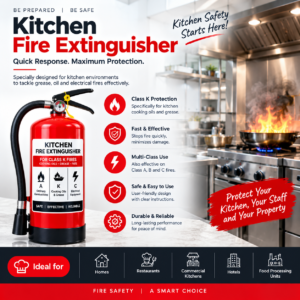

Kitchen safety is essential in homes, restaurants, hotels, canteens, and commercial food preparation areas. Cooking equipment, electrical appliances, gas connections, and hot cooking oils can create fire hazards if proper precautions are not taken. A small fire can quickly spread and cause serious damage to property, equipment, and human life. Installing a suitable kitchen fire extinguisher is an important step toward improving fire safety and preparing for emergencies.
Fire Extinguishers India offers fire protection products for residential, commercial, and industrial applications. Selecting the right fire extinguisher depends on the type of cooking equipment, the materials involved, and the potential fire risks in the kitchen. Understanding different extinguisher types and their correct applications helps property owners and kitchen managers make informed fire safety decisions.
What Is a Kitchen Fire Extinguisher?
A kitchen fire extinguisher is a fire protection device designed to control or extinguish specific types of fires that may occur during cooking and food preparation. Depending on its extinguishing agent, it may be suitable for fires involving cooking oils, solid combustible materials, flammable liquids, or electrical equipment.
Not every fire extinguisher is suitable for every kitchen fire. For example, a fire involving burning cooking oil requires a different approach from a fire involving an electrical appliance. Choosing the correct extinguisher and ensuring that users understand how to operate it are important parts of a kitchen fire safety plan.
Types of Kitchen Fire Extinguishers
Different kitchens face different fire hazards. The following extinguisher types may be considered according to the specific risks present.
-
Wet Chemical Fire Extinguisher
A wet chemical fire extinguisher is commonly recommended for commercial kitchens where deep-fat fryers, cooking oils, and animal or vegetable fats are used. Its specially formulated agent helps cool the burning oil and create a surface layer that helps prevent reignition.
Wet chemical extinguishers are often used in restaurants, hotels, catering facilities, and commercial food preparation areas. Before purchasing one, check its fire rating, certification, capacity, and suitability for the equipment being protected.
-
ABC Dry Powder Fire Extinguisher
An ABC dry powder fire extinguisher is designed for certain fires involving ordinary combustible materials, flammable liquids, and flammable gases, subject to its rating and local requirements. It can be useful in kitchens with multiple types of potential fire hazards.
However, dry powder can contaminate food, damage sensitive equipment, and reduce visibility. It should not automatically be treated as the best option for every kitchen, particularly where cooking oil or deep-fat fryer fires are a concern.
-
Carbon Dioxide (CO2) Fire Extinguisher
A carbon dioxide fire extinguisher is commonly used for suitable fires involving electrical equipment and certain flammable liquids. It can be useful near kitchen control panels, electrical appliances, and other approved equipment locations.
CO2 extinguishers are not the preferred choice for deep-fat fryer fires or burning cooking oil because they may not cool the oil sufficiently to prevent reignition. Their suitability also depends on the surrounding environment and the fire risk.
-
Water-Based Fire Extinguisher
Water-based extinguishers may be suitable for fires involving ordinary combustible materials, such as paper, cardboard, and certain wood products, when their rating permits.
Never use an ordinary water extinguisher on burning cooking oil or grease. Water can cause hot oil to splatter violently and spread the fire. Water-based equipment must also be selected carefully around electrical hazards.
Why Is a Kitchen Fire Extinguisher Important?
Protects People and Property
A suitable extinguisher can help control a small, manageable fire before it spreads, provided it is safe to respond. It supports a wider fire safety plan designed to protect kitchen staff, customers, family members, and valuable property.
Helps Reduce Equipment Damage
Kitchen fires can damage cooking ranges, fryers, refrigerators, electrical appliances, ventilation systems, and surrounding structures. Appropriate fire protection equipment can help reduce losses when used correctly and at the right time.
Supports Workplace Fire Safety
Restaurants, hotels, cafeterias, and catering businesses need clear emergency procedures and suitable fire protection equipment. Maintaining accessible extinguishers and training staff can improve emergency preparedness and support applicable fire safety requirements.
Improves Emergency Preparedness
A visible, accessible, correctly selected fire extinguisher gives trained occupants a potential response option for an incipient fire. Regular inspections and staff training help ensure that equipment is ready when needed.
How to Choose the Right Kitchen Fire Extinguisher
Selecting the right extinguisher requires an assessment of the kitchen’s specific hazards.
Identify the Fire Risks
Review the equipment and materials present, including deep-fat fryers, gas stoves, electrical appliances, cooking oils, packaging, and storage areas. Commercial kitchens may require different protection from small domestic kitchens.
Select the Appropriate Fire Rating
Choose an extinguisher with ratings appropriate for the expected fire types. For cooking oil and fat hazards, consider a suitable wet chemical extinguisher. For electrical or ordinary combustible hazards, evaluate other rated options as required.
Check Capacity and Placement
The extinguisher must have an appropriate capacity for the identified risk. It should be installed in an accessible location along a suitable escape route, away from likely fire exposure where practical. It must not be hidden behind equipment or stored where a fire could block access.
Verify Standards and Certification
Check the product’s applicable standards, approval or certification, operating instructions, and maintenance requirements. Consult a qualified fire safety professional when planning protection for a commercial kitchen or complex cooking installation.
Consider Training and Maintenance
Even the correct extinguisher may be ineffective if it is discharged incorrectly or cannot be operated. Ensure staff receive appropriate training and that inspection, servicing, and refilling follow the manufacturer’s instructions and applicable regulations.
Essential Kitchen Fire Safety Tips
Good fire prevention practices reduce the chance of a kitchen emergency.
- Keep cooking areas clean and remove excess grease from equipment and surrounding surfaces.
- Never leave active cooking unattended, especially when using hot oil.
- Keep flammable materials away from burners, ovens, and other heat sources.
- Inspect gas connections and electrical appliances regularly.
- Keep suitable extinguishers visible, accessible, and properly maintained.
- Train kitchen staff on alarm procedures, evacuation routes, and the safe use of fire protection equipment.
- Maintain appropriate fire blankets and fixed suppression systems where the risk assessment recommends them.
- Follow the manufacturer’s instructions and local fire safety requirements.
What to Do During a Kitchen Fire
If a fire starts, alert nearby people and activate the fire alarm or emergency procedure where applicable. If the fire is spreading, smoke is heavy, or escape is uncertain, evacuate immediately and contact the fire service.
For a small cooking oil fire, turn off the heat only if it is safe to do so. Never pour water onto burning oil, and never carry a burning pan. Do not attempt to extinguish a fire if doing so places you at risk. Use an extinguisher only when it is appropriate for the fire, you are trained to use it, and you have a clear escape route.
Why Choose Fire Extinguishers India?
Fire Extinguishers India provides fire protection products for residential, commercial, and industrial applications. Its product range includes Wet Chemical K-Type Fire Extinguishers, ABC Fire Extinguishers, CO2 Fire Extinguishers, and other fire safety equipment for different hazards.
When selecting a kitchen fire extinguisher, buyers should consider the type of kitchen, the equipment in use, the applicable fire rating, and maintenance requirements. Fire Extinguishers India can help customers explore available products and identify options for their fire safety needs. For commercial kitchens, a site-specific assessment by a qualified fire safety professional is recommended to determine the correct protection.
Conclusion
A kitchen fire extinguisher is an important part of a complete fire safety plan. The correct type depends on whether the main risks involve cooking oils, ordinary combustible materials, flammable liquids, or electrical equipment. Wet chemical extinguishers are particularly relevant to commercial cooking oil and deep-fat fryer hazards, while other extinguisher types may be needed for additional risks.
By choosing appropriately rated equipment, arranging regular maintenance, training staff, and following safe emergency procedures, kitchens can improve preparedness and help protect people and property. Fire Extinguishers India offers fire protection products to help customers explore suitable solutions for their kitchen safety requirements.
Frequently Asked Questions (FAQs)
- Which fire extinguisher is best for a commercial kitchen?
A wet chemical fire extinguisher is commonly suitable for commercial kitchens with deep-fat fryers and cooking oil hazards. The final choice should depend on the equipment, fire risks, extinguisher rating, and applicable regulations.
- Can I use an ABC fire extinguisher on a cooking oil fire?
An ABC dry powder extinguisher should not be considered the preferred solution for a deep-fat fryer or burning cooking oil fire. Use a suitable, appropriately rated wet chemical extinguisher for this hazard and follow the emergency procedure.
- Can water be used to extinguish a kitchen fire?
Never pour water onto burning cooking oil or grease, as it can cause violent splattering and spread the fire. Water-based extinguishers should only be used for fire types covered by their rating and where their use is safe.
- Where should a kitchen fire extinguisher be installed?
Install the extinguisher in a visible, accessible location that can be reached without approaching the likely fire hazard or blocking an escape route. Placement should follow the site risk assessment, manufacturer’s instructions, and applicable fire safety requirements.