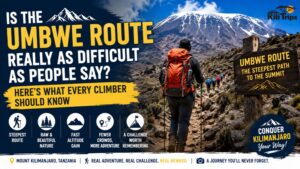

When researching Umbwe Route before planning a Kilimanjaro expedition, you’ll probably come across the same description again and again: the steepest and most challenging route on Mount Kilimanjaro.
While that’s true to some extent, it doesn’t tell the whole story.
Many experienced trekkers dismiss Umbwe as “too difficult,” while first-time climbers often avoid it because of its intimidating reputation. But difficulty alone doesn’t define a mountain route. What matters is understanding why it’s considered demanding, who it’s suitable for, and whether it matches your own trekking experience.
If you’re planning to Climb Mount Kilimanjaro, this article will help you understand what makes the Umbwe Route unique—and whether it’s the right choice for your adventure.
Where Does the Umbwe Route Begin?
The Umbwe Route starts on the southern side of Mount Kilimanjaro and is known for its direct approach toward the mountain.
Unlike some of the longer Mount Kilimanjaro Climbing Routes, Umbwe gains altitude quickly. Instead of gradually introducing climbers to higher elevations, it climbs steeply through dense rainforest before joining the Southern Circuit near Barranco Camp.
Its shorter approach makes it attractive for experienced hikers looking for a more demanding ascent, but it also explains why acclimatization becomes one of the route’s biggest challenges.
Why Is the Umbwe Route Considered Difficult?
The reputation of the Umbwe Route isn’t based on technical climbing.
You won’t need ropes or mountaineering equipment under normal conditions.
Instead, the difficulty comes from three main factors.
Rapid Elevation Gain
The trail climbs aggressively during the first few days.
Your body has less time to adapt compared with routes like Lemosho or Northern Circuit.
Altitude—not steep walking—is often the biggest obstacle.
Steep Forest Trails
The early stages pass through thick rainforest where the trail rises continuously.
Although the scenery is beautiful, the climb can feel relentless, especially after rainfall when sections become muddy and slippery.
Fewer Opportunities for Acclimatization
Because Umbwe reaches higher elevations quickly, climbers have fewer chances to adjust naturally.
This is why the route generally records lower summit success rates than longer itineraries that allow more gradual altitude adaptation.
What Makes the Umbwe Route Special?
Despite its reputation, many experienced trekkers describe Umbwe as one of Kilimanjaro’s most rewarding routes.
One reason is the sense of solitude.
Compared with popular trails such as Machame or Marangu, Umbwe usually attracts fewer climbers.
That means quieter camps, less crowded trails, and a stronger feeling of wilderness.
For travelers who enjoy peaceful mountain environments rather than busy trekking routes, this can be a major advantage.
The Rainforest Is One of the Route’s Hidden Highlights
Many people focus entirely on the summit and overlook the lower part of the climb.
That would be a mistake.
The rainforest section of the Umbwe Route is one of the most beautiful environments on Mount Kilimanjaro.
Towering trees, moss-covered branches, giant ferns, birdsong, and changing light create an atmosphere completely different from the alpine landscapes higher on the mountain.
Because visitor numbers are lower, the forest often feels quieter than other Mount Kilimanjaro Trekking routes.
For photographers and nature lovers, this section can become one of the most memorable parts of the expedition.
Is the Umbwe Route Suitable for First-Time Climbers?
This is probably the question most travelers ask.
The honest answer is:
It depends.
Being physically fit doesn’t automatically make Umbwe the right choice.
Altitude affects everyone differently, regardless of age or fitness level.
If this is your first multi-day trek or your first experience above 4,000 metres, choosing a route with a slower ascent often provides a more comfortable introduction to Kilimanjaro.
However, experienced hikers who understand their bodies at altitude and are comfortable with consecutive days of steep trekking may find Umbwe extremely rewarding.
Choosing a route should always be based on experience—not confidence alone.
How Does the Umbwe Route Compare with Other Kilimanjaro Routes?
Every route offers a different experience.
Umbwe stands out because it prioritizes directness rather than gradual acclimatization.
Compared with the Lemosho Route, Umbwe is shorter and steeper.
Compared with the Machame Route, it generally has fewer trekkers.
Compared with the Marangu Route, it offers a much wilder mountain experience.
There isn’t a universally “best” route.
The best route is the one that matches your fitness, available time, trekking experience, and personal goals.
What Should You Expect on Summit Day?
Like every Kilimanjaro route, summit night begins long before sunrise.
By this stage, you’ve already spent several days gaining altitude.
Temperatures can drop well below freezing, and progress becomes slower as the air becomes thinner.
On the Umbwe Route, summit day is mentally demanding as much as it is physically challenging.
Small, steady steps become more important than speed.
Most experienced guides encourage climbers to maintain a slow rhythm rather than trying to reach the summit quickly.
Patience is often more valuable than strength.
Is the Umbwe Route Good for Photography?
Absolutely.
The changing scenery is one of the route’s biggest strengths.
Within a few days, you’ll move through:
- Dense rainforest
- Heather and moorland
- Alpine desert
- Volcanic landscapes
- Arctic summit zone
Few destinations offer such dramatic environmental changes during a single trek.
Early morning light above the clouds, mist drifting through the forest, and views across the Southern Ice Fields provide excellent opportunities for landscape photography.
Preparation Matters More Than the Route
Many climbers spend weeks comparing routes while forgetting something equally important—preparation.
Before attempting the Umbwe Route, focus on:
- Cardiovascular fitness
- Multi-day hiking practice
- Walking with a loaded backpack
- Breaking in hiking boots
- Learning basic altitude awareness
- Packing suitable mountain clothing
Good preparation won’t eliminate altitude challenges, but it can make the overall trekking experience far more enjoyable.
Can You Combine the Umbwe Route with Other Tanzania Adventures?
Many international visitors combine Mount Kilimanjaro Trekking with other experiences after completing the climb.
Popular choices include:
- Tanzania Wildlife Safaris in Serengeti or Ngorongoro
- Relaxing in Zanzibar
- Visiting coffee farms near Moshi
- Exploring Maasai cultural villages
- Short Adventure Travel in Tanzania experiences around Arusha
A safari after several days on the mountain provides a completely different perspective on Tanzania’s incredible landscapes.
Choosing the Right Tour Operator Matters
Because the Umbwe Route gains altitude quickly, careful planning becomes especially important.
When comparing Kilimanjaro Climbing Packages, don’t focus only on price.
Look for operators that provide:
- Experienced mountain guides
- Daily health monitoring
- High-quality camping equipment
- Nutritious meals
- Proper acclimatization guidance
- Clear emergency procedures
The quality of your support team can significantly influence both safety and overall enjoyment throughout the climb.
Final Thoughts
The Umbwe Route has earned its reputation as one of Kilimanjaro’s most demanding routes—but difficulty alone shouldn’t define it.
It’s a trail designed for trekkers seeking a quieter, steeper, and more direct journey through one of Africa’s most remarkable mountains.
For experienced hikers, the route offers solitude, dramatic scenery, and a genuine sense of adventure.
For first-time climbers, however, it’s worth considering whether a longer itinerary with more gradual acclimatization may provide a safer and more enjoyable experience.
The best Kilimanjaro climb isn’t necessarily the hardest one.
It’s the one that gives you the greatest chance to reach the summit safely while enjoying every stage of the journey.
If you’re planning your next Adventure Travel in Tanzania, take the time to understand each route, prepare thoroughly, and choose the climb that matches both your ambition and your experience.