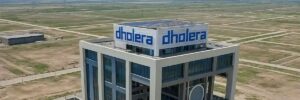

India has been focusing heavily on expanding its manufacturing sector and strengthening its industrial infrastructure over the past decade. One of the most ambitious projects aligned with this vision is the development of Dholera Special Investment Region (Dholera SIR) in the western state of Gujarat. The project is frequently described as India’s first greenfield smart industrial city and has attracted considerable attention from investors, policymakers, and global technology companies.
However, an important question remains: Can Dholera truly become the future industrial city of India? While the project offers many promising opportunities, it is also important to examine the practical challenges and realities associated with such a massive development. Understanding both sides provides a clearer picture of what Dholera could become in the coming decades.
What Is Dholera SIR?
Dholera Special Investment Region is a large-scale urban and industrial development project located in Gujarat, approximately 100 kilometers from the city of Ahmedabad. The project forms part of the broader Delhi–Mumbai Industrial Corridor (DMIC), one of India’s most significant infrastructure initiatives designed to boost industrial activity between the national capital region and the financial hub of Mumbai.
The planned development area of Dholera spans roughly 920 square kilometers, making it one of the largest planned industrial zones in India. The city is being designed as a smart industrial region, with integrated infrastructure, modern transport networks, and advanced digital systems.
Unlike traditional cities that expand gradually over time, Dholera is a greenfield project, meaning it is being built entirely from scratch. This allows planners to design the city with modern infrastructure such as underground utilities, smart traffic systems, efficient water management, and high-capacity power networks.
Strategic Importance of the Location
One of the major advantages of Dholera is its strategic location within Gujarat. The region lies close to several important industrial and commercial centers, including Ahmedabad, Vadodara, and Bhavnagar.
To support industrial development, multiple large infrastructure projects are being developed around the region. These include expressways, logistics corridors, and improved rail connectivity designed to facilitate the movement of goods and people.
Another major infrastructure project associated with the region is the development of Dholera International Airport. The airport is expected to improve connectivity with major cities and international destinations, making the region more attractive for global investors and manufacturing companies.
Strong transportation and logistics infrastructure is a critical requirement for industrial hubs because manufacturing companies depend heavily on efficient supply chains and export networks.
The Emerging Semiconductor Ecosystem
One of the most significant developments associated with Dholera is the emergence of a semiconductor manufacturing ecosystem. Semiconductor chips are essential components used in modern electronics, automobiles, telecommunications systems, and advanced computing technologies.
A major milestone in this direction is the semiconductor fabrication plant being developed by Tata Electronics in collaboration with Powerchip Semiconductor Manufacturing Corporation. This large-scale investment represents one of the most important technology manufacturing projects currently underway in India.
The facility is expected to manufacture semiconductor wafers that are used in a wide range of electronic devices. Establishing domestic semiconductor production is strategically important because India currently imports a significant portion of its semiconductor requirements.
The presence of a semiconductor fabrication facility could also attract additional investments from companies involved in chip design, packaging, testing, and related technologies. Over time, this could lead to the development of a complete semiconductor ecosystem in the region.
Government Support and Policy Initiatives
The development of Dholera Smart City is strongly supported by both the central and state governments. The project is managed by Dholera Industrial City Development Limited, which is responsible for planning and implementing infrastructure in the region.
At the national level, initiatives such as the India Semiconductor Mission aim to encourage domestic semiconductor manufacturing and attract global companies to invest in the country.
These initiatives include financial incentives, infrastructure development, and policy support designed to make India a competitive destination for advanced manufacturing industries.
Government funding is also being allocated to build essential infrastructure in the region, including transportation networks, power systems, water supply, and digital connectivity. Such investments are essential for supporting large industrial projects and creating a favorable environment for businesses.
Economic Opportunities
If Dholera develops according to its long-term vision, it could bring several economic benefits to India.
Job Creation
Large industrial projects typically generate significant employment opportunities. Manufacturing plants, logistics centers, and technology companies require a wide range of skilled and semi-skilled workers.
In addition to direct jobs within factories and offices, many indirect jobs can emerge in sectors such as construction, transportation, retail, and services.
Growth of Advanced Manufacturing
The establishment of industries such as semiconductor manufacturing can help strengthen India’s position in global technology supply chains. Developing domestic manufacturing capabilities may reduce dependence on imported components and improve the resilience of the country’s electronics industry.
Regional Development
The development of a major industrial city often stimulates economic activity in surrounding regions. New roads, railways, and airports improve connectivity, which can benefit nearby towns and businesses.
Over time, supporting industries such as logistics providers, research centers, and educational institutions may also develop in the region.
Increased Global Investment
Large-scale infrastructure projects and technology investments can attract international companies seeking new manufacturing locations. If Dholera successfully develops its industrial ecosystem, it could become an important destination for global investment.
Challenges and Practical Realities
Despite its promising vision, the development of Dholera also faces several challenges.
Long Development Timeline
Large urban and industrial projects often take decades to fully develop. While some infrastructure and industrial projects are already underway, the complete vision for Dholera will likely take many years to achieve.
Infrastructure Implementation
Industrial growth depends heavily on reliable infrastructure. Roads, airports, power supply systems, water resources, and digital networks must be completed and maintained efficiently for businesses to operate smoothly.
Any delays in infrastructure development could slow the pace of industrial growth.
Skilled Workforce Requirements
High-technology industries such as semiconductor manufacturing require highly trained engineers, technicians, and researchers. Developing a skilled workforce capable of supporting these industries will require investment in education, training programs, and research institutions.
Real Estate Speculation
Large development projects sometimes lead to speculation in land and property markets. Some investors purchase land expecting future price increases. However, industrial development can take time, and real estate markets may fluctuate depending on the pace of actual progress.
Long-Term Outlook
Dholera is a long-term project designed to develop gradually over multiple phases. Each phase focuses on building infrastructure, attracting industries, and developing residential and commercial areas.
If the project continues to receive government support and major companies establish operations in the region, Dholera could evolve into a significant manufacturing and technology hub in the future.
However, it is important to recognize that successful industrial cities are typically built over long periods of time. Transformations of this scale require sustained investment, careful planning, and consistent policy support.
Conclusion
Dholera Special Investment Region represents one of India’s most ambitious attempts to create a modern industrial city from the ground up. With strong government backing, major infrastructure projects, and significant investments in advanced manufacturing sectors such as semiconductors, the region has considerable potential.
At the same time, the development of such a large industrial ecosystem requires time, planning, and continued investment. While it may still be too early to determine the final outcome, Dholera clearly represents an important step in India’s long-term strategy to strengthen its manufacturing sector and build globally competitive industrial infrastructure.
If development progresses as planned, the region could play a major role in shaping the future of India’s industrial economy in the decades ahead.